Another ‘China Shock?’
 Facebook
 Twitter
 Linkedin
 Google +
With its sufficient capacity, China will contribute to shaping a new world economic order that is more sustainable and equality-based.
During U.S. Treasury Secretary Janet Yellen’s April visit to China, one of the issues covered was the U.S. concern about China’s “overcapacity.” Since late 2023, the U.S. has claimed that in China-U.S.?economic relations, the most pressing issue facing the Biden administration is the “threat” posed by China’s exports of green energy products on the U.S.’ trillion-dollar industries. On May 14, U.S. President Joe Biden unveiled steep tariff increases on an array of Chinese imports including electric vehicles (EVs), batteries, solar panels and semiconductors.
U.S. policy researchers and media outlets have been creating hype around an “economic war” launched by China. The move aims to convince the world that China, facing economic downturn, is selling cheap goods to the globe to reverse the trend. These sources also claim that Chinese enterprises are propped up by cheap, state-directed loans to sell their surplus products in overseas markets. The Wall Street Journal calls it “China Shock 2.0,” “a multitrillion-dollar sequel to the China shock that hit global manufacturing more than two decades ago.”
Both the “overcapacity” concern and the “economic war” are part of the cognitive warfare that has been launched by the West against China in recent years and we can expect similar narratives to continue emerging over the years to come. As Chinese Premier Li Qiang stressed during his meeting with Yellen in Beijing on April 7, it’s hoped the U.S. will view the issue of production capacity objectively from a market-oriented and global perspective as the surge of China’s exports has been driven by global demand. Premier Li emphasized the role of the balance of supply and demand. If there’s overcapacity, it will be temporary and the market will fix it.
During his visit to Paris on April 7, Chinese Commerce Minister Wang Wentao described the accusations of overcapacity by the U.S. and Europe as groundless. The rapid growth of Chinese EV makers is resulting from improving innovation and supply chains, instead of subsidies from the government, Wang said, referring to China’s comparative advantage in the new-energy sector.
This is not the first time Western countries have accused China of overcapacity. After China joined the World Trade Organization (WTO) in 2001, it began to export Chinese-made products to the world on a large scale. It was criticized for “overcapacity” and even viewed as a threat by some in both Western and Southeast Asian countries. Western countries made the same accusation for a second time around a decade ago, when China launched its Belt and Road Initiative (BRI), an endeavor to boost connectivity along and beyond the ancient Silk Road routes. Some Western countries accused it of “neoimperialism,” “neocolonialism,” or “debt-trap diplomacy.” The “overcapacity” narrative has emerged again now, despite China’s exports of new-energy products being in line with Western countries’ pursuit of environmental sustainability.
As Bloomberg Opinion columnist David Fickling wrote in his article, Yellen Junks 200 Years of Economics to Block China Clean Tech, published on April 9, “One of the most distinguished living economists is rejecting what’s been one of the most fundamental principles of economics for more than 200 years—comparative advantage. If a country can manufacture goods at lower costs than you can, you shouldn’t raise tariff barriers. Instead, you should import the goods, and send back something in return where your industry is more efficient.”
Historically, countries with comparative advantage advocate free trade, while countries with less comparative advantage pursue a protective trade policy. Comparative advantage is now decided by an economy’s ability to produce a particular good or service at a lower opportunity cost than its trading partners. Western countries used to have comparative advantage, so they advocated free trade. Now China is leading in manufacturing, it advocates free trade also.
Manufacturing hub
Since 1980, Western countries have reallocated their local manufacturing industries to other countries due to rising domestic labor costs.
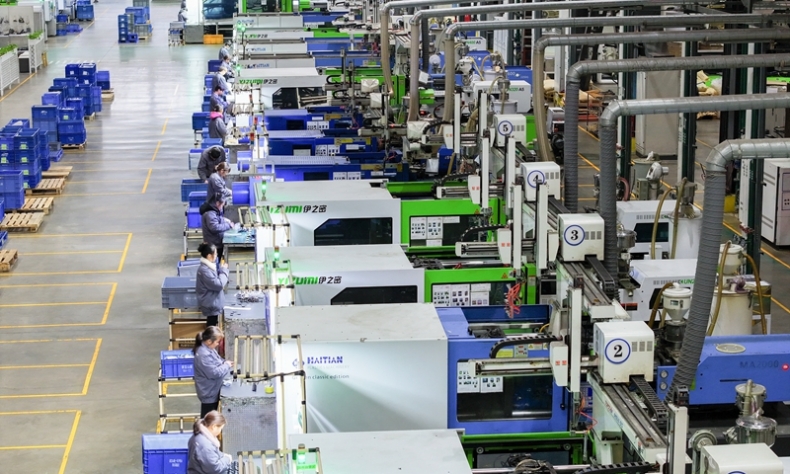
China’s manufacturing sector has developed and grown stronger during this industrial relocation. By 2023, the value-added output of China’s manufacturing industries accounted for about 30 percent of the world’s total. The country has seen the transition from insufficient capacity to surplus capacity. The role of the government during the
transition can’t be neglected. In modern times, all countries’ governments have played key roles in their economic growth. The Chinese Government has seized opportunities and turned the country into a manufacturing powerhouse.
Today, China has the world’s most complete industrial system. Although the high-end manufacturing industry in China still has much room for growth, it has absolute advantage in medium- and low-end manufacturing industries.
Beginning with the Donald Trump administration, the U.S. has introduced policies to achieve reindustrialization, but it is not easy for the U.S. to make its industries return, as it has lost its comparative advantage in medium- and low-end manufacturing.
For China, whose manufacturing sector is still in the medium and low end, the upgrading of the manufacturing industry is an inevitable trend. It has shifted from imitation to independent technological innovation. Through its efforts to drive new quality productive forces, the upgrading of technologies and industries is accelerating.
Although some Western countries have been hyping the “China threat,” China’s rise is peaceful. It is widening its opening up to the world, with its companies going global and exporting green products. Unlike Western countries, China participates in globalization with no geopolitical goal. China only seeks to make free trade with other countries, instead of interfering with their internal affairs.
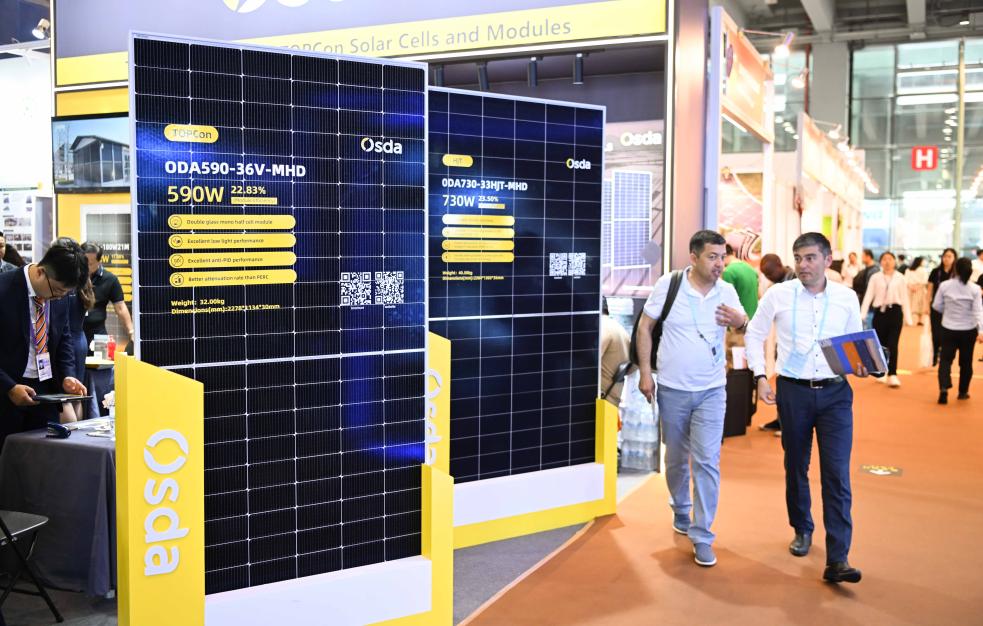
Western countries claim that China’s “overcapacity” is caused by government subsidies. China’s new-nergy sector has been driven by its industrial policies, and the U.S. and European countries have provided more subsidies to their new-energy industries than China has. According to data from the New Industrial Policy Observatory cited in a report in the Swiss German-language daily newspaper Neue Zürcher Zeitung, since the beginning of 2023, the U.S. has granted green-energy subsidies worth $539 billion and the EU countries issued subsidies worth $571 billion. In comparison, China lagged far behind, with subsidies of only $90 billion during this period.
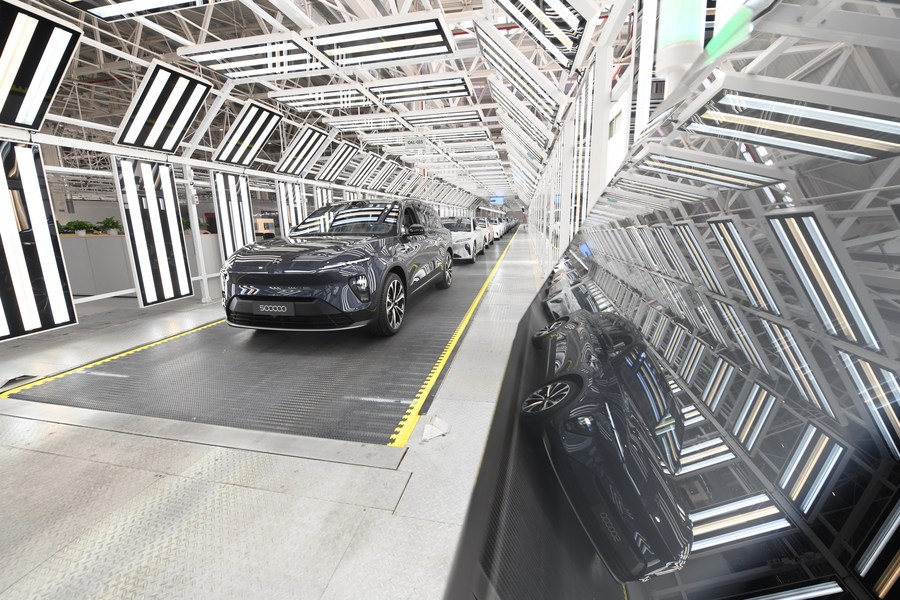
European carmakers have not attached sufficient importance to their own EV manufacturing and, when facing competition from China, have asked the European Commission to launch anti-subsidy investigations into Chinese EVs and to reduce the import quota. The story is similar in the U.S., with the world’s leading EV maker Tesla also facing competition in the Chinese market. Chinese automakers have been working toward introducing more connected and intelligent cars, and the quality of their products is catching up.
Facing slowing demand, European and U.S. carmakers are seeking to retain their markets for fuel vehicles, but the falling costs of EVs and pursuit of greener lifestyles have taken root in the minds of their consumers.
The U.S. picture
Changes have also taken place in the U.S. First, mercantilism is resurging in the country. The U.S. Government has markedly increased its trade protectionism. Since the Trump administration, the U.S. has been imposing high tariffs on Chinese products. With neomercantilism in the U.S., the global trading system will be more fragmented, which will affect not only China, but also the rest of the world.
State capitalism, which means government allocation of resources, has also reemerged in the U.S., especially in the chip industry. The Biden administration has announced $6.6 billion for Taiwan Semiconductor Manufacturing Co. Ltd., a major provider of the world’s most advanced microchips, to support the development of three leading-edge fabs, or semiconductor production plants, in the U.S. In fact, the U.S. Government has been providing billions of dollars to local semiconductor companies.
The U.S. Government also aims to reduce regulation and enhance U.S. companies’ international competitiveness, or competitive advantage over Chinese companies, to be exact. U.S. industrial insiders and politicians have been calling for the government to ease restrictions in the field of artificial intelligence (AI) to improve the competitiveness of U.S. firms. So far, the U.S. has launched less AI-related regulation than many other countries.
China’s role
After China’s entry to the WTO, some countries considered it a threat, accusing it of stealing their jobs. But their fears soon disappeared. China has taken over medium- and low-end manufacturing industries from Western and Southeast Asian countries, contributing to the economic transformation of these countries. Meanwhile, for many years, China contributed around 50 percent of global economic growth. Similarly, some Western countries’ accusations of China’s BRI also turned out to be false. Instead of debt traps, the BRI has brought substantial benefits to partner countries, such as the Jakarta-Bandung high-speed rail, the Laos-China railway and industrial parks in Africa. Local people in those countries can offer a more accurate perspective on the merits of the initiative.
Some claim that emerging economies such as Brazil, India and Mexico are joining Western countries in opposing the growth of Chinese exports, but this assertion is based on an exaggeration of facts. China’s exports will indeed have an impact on these economies, or at least on certain industries within these countries, and China will therefore need to further its opening up and increase its imports from those countries.
From the industrial perspective, Chinese companies still have a long way to go. Despite edges in several industries such as EV manufacturing, Chinese enterprises need to improve strength in more fields, especially hi-tech fields.
From the global perspective, China won’t turn to trade protectionism when facing external pressure, but will shoulder its obligation as a major country and drive high-level opening up for win-win results. For the rest of the world, China’s opening up is a public good for a rebalancing of the global economy.
With its sufficient capacity, China will contribute to shaping a new world economic order that is more sustainable and equality-based.
The author is president of the Qianhai Institute for?International Affairs at Chinese University of Hong Kong (Shenzhen) and Board Director of the?Guangzhou Institute of the Greater Bay Area.