China’s New Legislation Aims to Ensure the Supply of Grain and Related Products
 Facebook
 Twitter
 Linkedin
 Google +
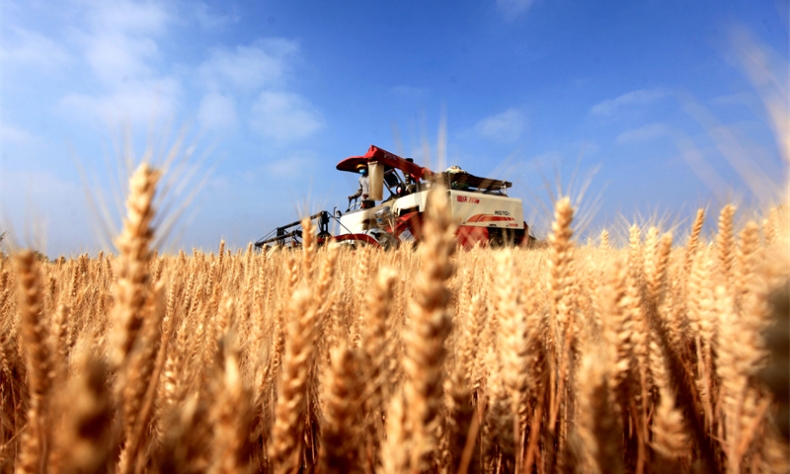
China continues to enhance its ability to ensure food security and deal with the uncertainties of the external environment by stabilizing and securing domestic grain supplies.
China’s Food Security Law came into effect on June 1, reinforcing efforts to ensure the supply of grain and to fend off food security risks, while safeguarding economic and social stability as well as national security.
The new law comprises 11 chapters with provisions that cover the protection of farmland and the entire grain supply chain, from production and reserves to distribution and processing.
For China, a nation with over 1.4 billion people, the maxim “having food brings peace of mind” has long been the cornerstone of its approach to food security.
In an interview with Beijing Review, Scott Reynolds Nelson, a historian at the University of Georgia in the U.S., highlighted how food has served as a cornerstone of national and global stability in ancient times and now.
Global relevance
For decades, the Chinese Government has placed immense importance on food security, driven by the belief that stable food supplies are essential for national peace and stability.
This focus on food security can be partly attributed to the intrinsic power associated with grain, a concept emphasized by Nelson in his book Oceans of Grain: How American Wheat Remade the World.?A Chinese translation of the book has been released by China Translation & Publishing House in December, 2023.?Nelson argues that food is power, a notion that has shaped international politics since the agricultural and industrial eras.
Nelson contends that this principle remains relevant in the digital age. While information is the most valuable contemporary asset, it cannot be eaten or drunk. Food remains the most fundamental necessity for human survival. The production and market competition of food, especially major agricultural products, continue to play a crucial role in international political?struggles.
In his book, Nelson details how, since the 20th century, the United States has gradually replaced Russia in controlling the grain market in Europe and even globally. He believes that the competition between Russia and the United States over grain, especially wheat supply, has profoundly changed the world economic structure and geopolitical landscape.
The book features a Russian grain trader and revolutionary with the pseudonym Parvus. Nelson considers Parvus’ intellectual contributions significant, noting that he was the first to creatively propose the concept of an “agricultural crisis” in 1895, explaining that the rise and fall of empires throughout history can be traced back to the fluctuations in grain trade.
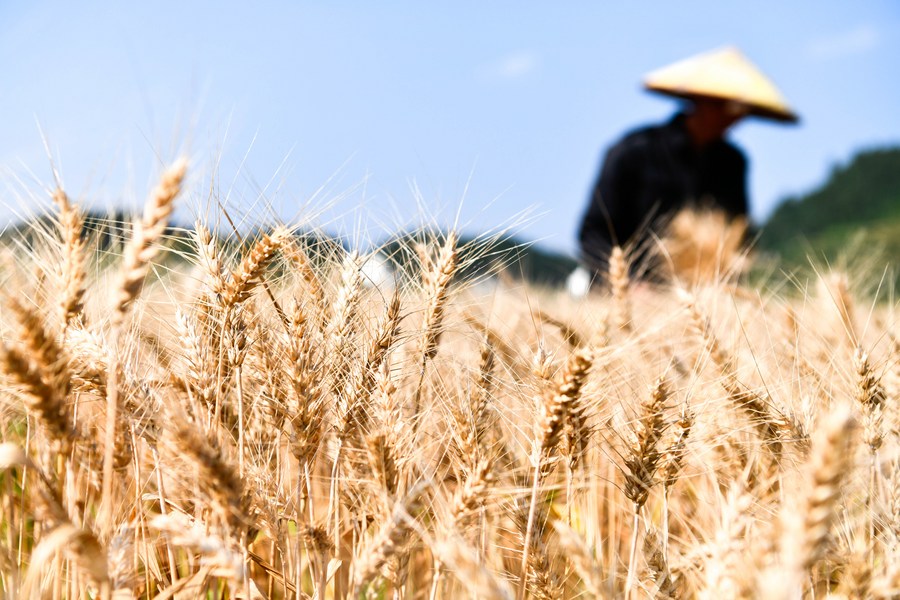
Nelson states that Parvus’ ideas were influenced by the French physiocrats of the 1770s, whose emergence coincided with the translation of Chinese philosopher Mencius’ thoughts into French. Mencius (372-289 B.C.) believed that without sufficient grain reserves, a country would struggle to respond to crises, and its stability would be threatened. This laid the foundation for thinking about the relationship between grain and the economy at the time. “But today, very few people consider the importance of grain,” Nelson remarked.
“As Mencius said, when you are building a state, you must think about food first, and about farmers first. You must make sure that farmers are happy and prosperous, and a prosperous state is built on food,” he concluded.
“The ideas of Mencius are crucial in the Chinese context, and have been for thousands of years,” he added.
Enacting the law
Previously, while there were numerous provisions related to food security in China, they were scattered across other laws concerning agriculture, land management, seed management and other fields. At the local level, a series of regulations related to food security have been introduced in recent years, but as normative documents, they carry relatively little legal authority.
In 2023, the No.1 Central Document focused on food security issues and proposed putting food security legislation on the agenda. The document, the first policy statement released at the start of each year by the Communist Party of China Central Committee and the State Council, China’s highest state administrative organ, has long served as an indicator of government priorities.
In China, national laws passed by the National People’s Congress (NPC), the top legislature, and its Standing Committee are considered to have greater authority than local regulations or administrative rules issued by lower levels of government.
In December 2023, the NPC Standing Committee adopted the Food Security Law at a session in Beijing. The general provisions of the law state that China “needs to ensure absolute security in staple foods and basic self-sufficiency in grains.”
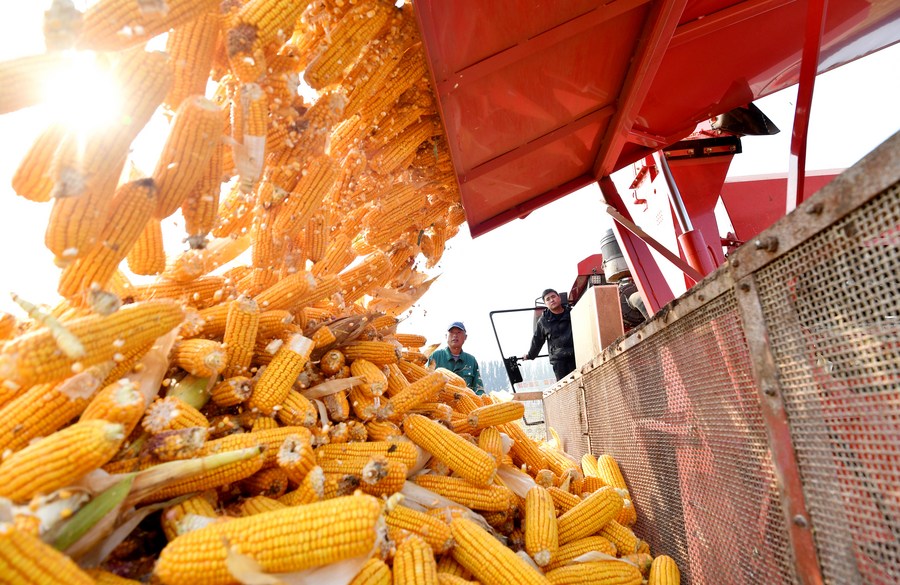
The annex of the law stipulates that “grain” refers to wheat, rice, corn, soybeans and coarse grains. Coarse grains include millet, sorghum, barley, buckwheat, oats, mung beans, potatoes and sweet potatoes. The word for “food security” literally translates as “grain security” in Chinese.
China’s food priority
Recognizing the importance of arable land protection, the law provides that redlines to protect farmland, permanent basic cropland and ecosystems, as well as urban development boundaries shall be drawn and maintained. Permanent basic cropland refers to agricultural land that is designated for the purpose of long-term protection to ensure food security. This type of land is protected by law to prevent its conversion to non-agricultural uses.
By asking provincial governments to include food security in their economic and development plans, and holding them accountable for grain security and farmland protection, the law will better regulate local governments’ behavior in ensuring food security, Li Guoxiang, a research fellow with the Rural Development Institute of the Chinese Academy of Social Sciences, told newspaper Global Times on June 2.
The country’s food security is well ensured, with grain output hitting a record high in 2023 and grain prices remaining stable despite international grain price fluctuations, Li said. China’s grain output rose 1.3 percent year on year to 695.41 million tons last year, data from the National Bureau of Statistics showed. This was the ninth consecutive year for China to register a grain harvest of over 650 million tons.
Nevertheless, China’s grain supply and demand are still characterized by a “tight balance.” And with a growing grain demand, China also faces multifaceted challenges, including limited and low-quality arable land, increasing difficulty in securing stable and higher grain output, extreme weather and uncertainties in global food supply market.
In particular, as the Russia-Ukraine conflict, extreme weather and other factors have disrupted the global food supply chain and international cooperation mechanism concerning food supply, global food insecurity and malnutrition are on the rise.
It is against this backdrop that China continues to enhance its ability to ensure food security and deal with the uncertainties of the external environment by stabilizing and securing domestic grain supplies.