Dialogue Among Civilizations
 Facebook
 Twitter
 Linkedin
 Google +
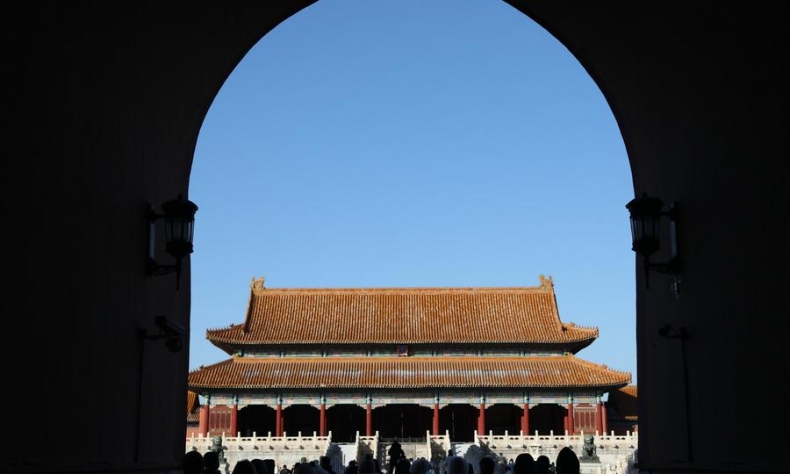
Peace and development must come from respecting differences and learning from each other, including each other’s sensitive but reasonable redlines. Competition needs to be healthy and not aimed at dominating each other at humanity’s expense.
The 78th Session of the UN General Assembly on June 7 adopted a China-proposed resolution, designating June 10 as International Day for Dialogue Among Civilizations. The resolution calls for “equal dialogue and?mutual respect” among different civilizations, reflecting the essence of the Global Civilizations Initiative (GCI). The GCI underlines respect for different civilizations and strengthened mutual learning between them.
“All civilizations created by human society are splendid,” President Xi Jinping said in a March 2023 speech, in which he introduced the GCI. “Chinese modernization, as a new form of human advancement, will draw upon the merits of other civilizations and make the garden of world civilizations more vibrant.”
While each country has its own historical background and social conditions, they also share many?common values and the same planet. Xi therefore calls for mutual respect and increased exchange among the world’s peoples. In recent interviews with Beijing Review,?Josef Gregory Mahoney, a professor of politics and?international relations at East China Normal University, and?Filipe Porto, a Brazilian researcher of international relations and an editorial consultant at China Hoje magazine, a sister publication of Beijing Review, shared their observations.
Beijing Review: What connotations does the term civilization have in China and Western countries??
Mahoney: In China, there is this idea that there is 5,000 years of civilization in Chinese history. What scholars tell us is that it is the oldest continuous civilization in history. This is distinctive. When the West considers its own history, it is unable to really compete with that concept of time for two reasons. First, in many respects, Western history is much more fragmented than Chinese history. Second, we see these fragments being actualized in terms of different states in different parts of the West. So we can talk about Roman civilization. We might say, to some extent, the United States has tried to emulate Roman civilization, but the United States does not consider itself to be part of the history of Roman civilization.
China has this one long, continuous idea, whereas the United States, the leading country of the West, really only has somewhere around 300 years that it can consider. Even within the context of those 300 years, there are tremendous differences, changes and ruptures. Now, in China, we’ve also had tremendous changes through time, but there has been continuity that other civilizations haven’t?experienced.
There are people in the West who think that when China talks about civilization, in some way, China is talking about a type of exceptionalism. They then immediately regard it as a narrative for an aggressive positioning, or some sort of moral exceptionalism that justifies the Chinese system versus the Western system. So many in the West find this threatening, particularly as they experience declines and feel vulnerable. This is why I think those people have resistance or confusions when it comes to understanding the Chinese concept of civilization.

How would you introduce the GCI’s overall purpose and its importance within China’s foreign policy??
Mahoney:?The overall purpose of the GCI is to extend the tenets long at work in Chinese foreign policy, including the Five Principles of Peaceful Coexistence (mutual respect for sovereignty and territorial integrity, mutual non-aggression, noninterference in each other’s internal affairs, equality and mutual benefit, and peaceful coexistence), reserving differences while emphasizing common ground, mutual recognition and respect, and seeking win-win solutions for mutual development, to account for cultural and civilizational differences internationally, as China continues to advance peacefully and self-confidently as a major country in the new era.
In this way the GCI also complements other key China-proposed initiatives, like the Global Development Initiative and the Global Security Initiative, which altogether provide an increasingly comprehensive approach to guide and advance major development initiatives like the Belt and Road Initiative (a China-proposed initiative to boost connectivity along and beyond the ancient Silk Road trade routes—Ed.). What we see here is the articulation of a well-rounded, principles-based foreign policy, and how these values manifest in practice. In short, all of these initiatives are rooted in the same fundamental principles, and altogether convey a reconcilable set of ethics.
So let’s focus briefly on why those principles are being reaffirmed and extended in the new era as China develops and deploys what President Xi Jinping has called “major-country diplomacy.” Here, the GCI is significant because it signals explicitly that China will continue to emphasize principles in its foreign policy philosophy and practice. This is important because it’s more commonly the case that some major countries tend to eschew principles and throw their weight around in self-serving ways, which can be hegemonic and imperialistic, especially toward weaker countries. It’s also the case that such strong countries tend to normalize no-holds-barred approaches to competition with other strong countries.
Therefore, the GCI is significant because some countries have long employed self-serving and unilateral foreign policies. The United States, for example, is still trying to impose a type of American-defined universalism on the world, undermining global cooperation and multilateralism and returning to a “clash of civilizations” model.
In this context, the GCI offers a very different message based on very different values: Peace and development must come from respecting differences and learning from each other, including each other’s sensitive but reasonable redlines. Competition needs to be healthy and not aimed at dominating each other at humanity’s expense. Cooperation with the goal of building a human community with a shared future must be?emphasized.

These values are themselves rooted in Chinese civilization, past and present, and are being renewed and expanded today. So, in this sense, the GCI is not only an expression of civilizational inclusiveness, it’s also an expression of civilizational values—Chinese civilizational values—that have been now expressed in Chinese foreign policy theory and practice. This is a positive message for everyone, including some Chinese or anyone around the world, who might have overly nationalistic or xenophobic tendencies, or who fear the Chinese leadership might harbor the same. In fact, as the GCI communicates, the opposite is true.
China and Brazil are two countries with vastly different cultures and traditions. What are the common values that have made inter-civilizational dialogue between them possible??
Porto:?China and Brazil share several significant parallels in their historical development and contemporary society. Both nations have been shaped by colonial legacies, boast diverse populations and have experienced rapid economic growth in recent decades.
Despite the geographical distance, cultural exchange between the two countries is increasing, with a growing appreciation for each other’s traditions and customs. Chinese traditions and cuisine have been gaining popularity in Brazil, and Brazilian culture is finding audiences in China.
Additionally, the presence of Chinese immigrant communities and the rise of Chinese language study in Brazil, as well as mutual interest in technology and innovation, further underscore the deepening ties between the two countries.
This deepening connection presents opportunities for further collaboration and understanding between our nations. In addition to Brazil’s appreciation of the Five Principles of Peaceful Coexistence, there are other aspects such as the Global South solidarity. As leading members of the Global South, China and Brazil often align on issues related to development assistance, South-South cooperation, and reform of global institutions to better represent the interests of developing countries.
Both China and Brazil recognize the importance of investing in infrastructure to support economic growth, improve living standards and enhance international security through development.
Cooperation in areas such as transportation, telecommunications and energy infrastructure demonstrates this shared priority. Through collaboration with China, Brazil now has 5G networks and the number of Chinese electric cars there is increasing.
The strategic partnership between the two countries is true to its name. China depends on Brazilian export products, such as soybeans, iron ore, proteins and cellulose. Additionally, China is present in many strategic sectors in Brazil, such as energy. Chinese electric utility company State Grid owns CPFL Energia, the largest energy distribution company in Brazil’s economic heart, S?o Paulo.
Both countries are strategically linked to each other, either through the products Brazil exports or in the areas where China has penetrated Brazil.