A Catalyst for More Integrated World
 Facebook
 Twitter
 Linkedin
 Google +
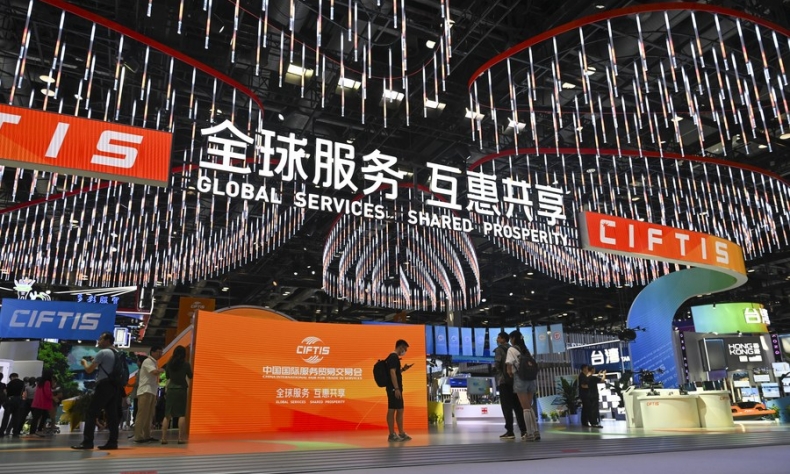
The BRI will be a catalyst for a more integrated world and more interconnected global trade instead of regional trade.
During the last 10 years there has been calls for deglobalisation and decoupling as means to curb the so-called unbalanced trade, rein in immigration, and mend inequalities of assets and wealth. Some consider the world to have entered a period of deglobalisation, citing recent events such as Brexit, Trumpism, Ukraine war, problems with supply chains, global energy crisis and decline in foreign direct investment.
Yet it would be a grave mistake to overlook the benefits of globalisation – which are being ignored to support populist politics – including interconnectivity between cultures, access to markets, lower cost of products, unimpeded trade, spread of technology and innovation, better utilisation of human resources, and higher standards of living across the globe. All these benefits are essential for economic growth, human development, and social stability.
Global interconnectedness
During the last three decades the world has also witnessed a gradual erosion of the UN’s credibility despite usefulness of many of its agencies. Many see it as an impotent organisation, paralysed by state rivalries. These views often ignore the fact that if we were to dismantle the UN system today, we would probably reinvent it tomorrow because of the global nature of today’s challenges. The UN agencies like UNICEF, World Food Programme and World Health Organization are in fact useful tools to address today’s challenges such as global warming, pandemics, human suffering, poverty, and green energy transition in a collective fashion. In other words, the failures of the UN Security Council in preventing wars, and shortcomings in preserving peace should not cloud our judgement of the usefulness of the UN system.
Similarly, the World Trade Organization (WTO) was set up with a view to facilitating trade for the benefit of all, managing competition, regulating trade, settling trade disputes, and serving as a forum to negotiate trade agreements. However, its authority and reputation have also been undermined by several factors, including delayed arbitration process; inability to agree on new rules for agricultural products highlighting opposite stands of developing and developed countries; rules which favour multinational companies while hinder developing nations from growing their infant industries; and persistence of protectionist tariffs.
As this negative sentiment translates into global action, the BRI offers a unique avenue to boost investment, create jobs, and upgrade infrastructure needed for trade perhaps in a way not seen since the end of World War II. Since its launch in 2013, it has been joined by 150 countries and 30 international organisations. Over 200 BRI agreements have been signed to connect multiple continents over land and sea.
Despite Western criticism of and scepticism towards the BRI, the US proposed in June 2021 the Build Back Better World initiative, and few months later the EU proposed the Global Gateway Initiative in December 2021, both of which mirror the objectives of the BRI, signifying that China has successfully challenged the existing geopolitical frameworks in Africa, Latin America and, more importantly, even in East and Southeast Asia. Both Western initiatives also prove that global trade is essential for human development and growth. Moreover, technology has unleashed powerful globalised trends which are irreversible, whether that is in international travel, finance, and trade, or borderless criminal, terrorist, and health threats.
Rhetoric and reality
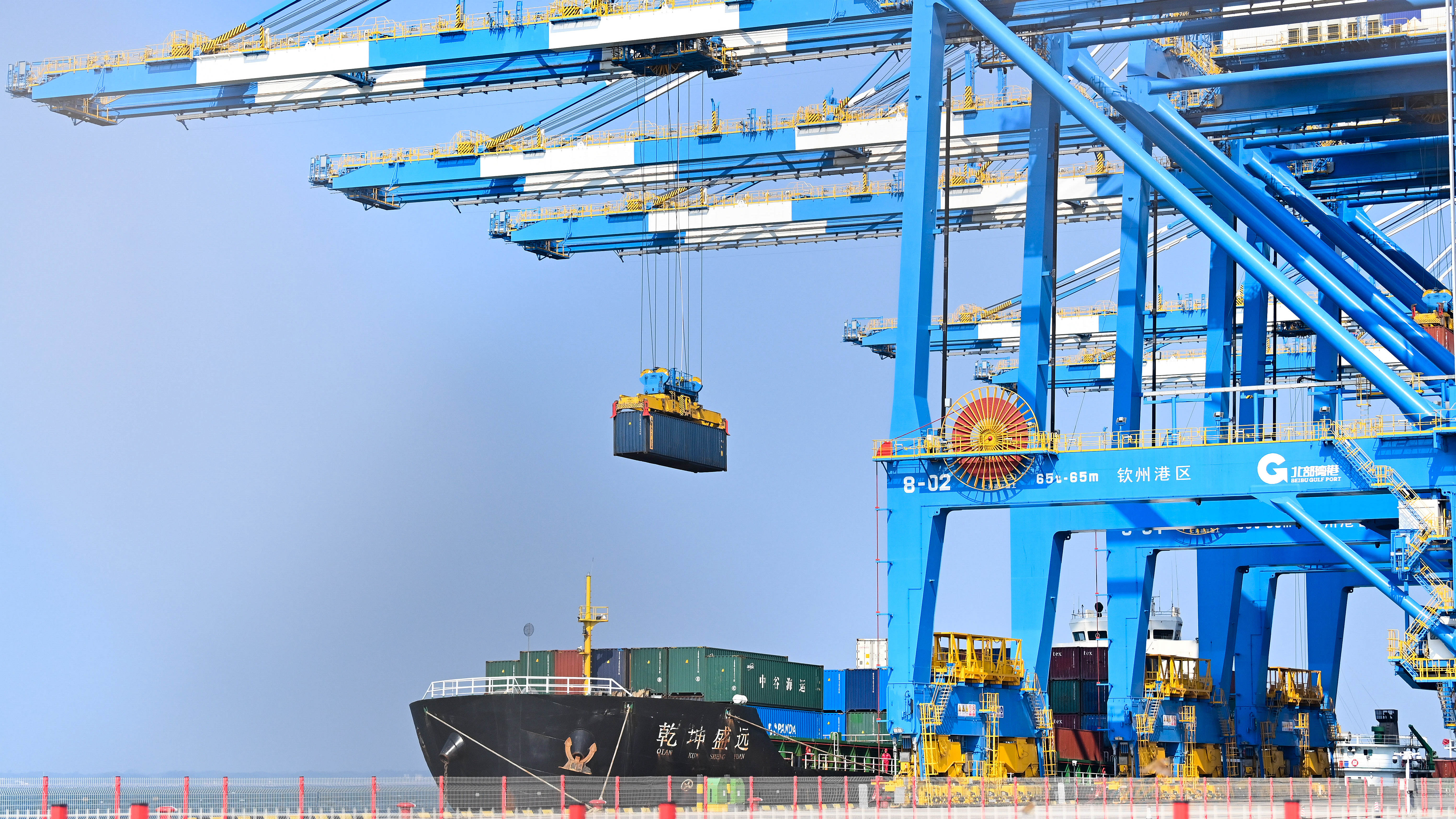
On the other hand, there is a problem with the assumption that deglobalisation is a fact on the ground: the data does not fully back it up. A closer look at economic data shows that even though governments have increasingly adopted policies aimed at strengthening their own resilience, the world economy is still evolving to become more, not less, globalised in key fields and more dependent on Chinese supply in particular. Global trade surged during the pandemic, and the world’s trade with China accelerated rather than slowed. A pandemic-era shift towards goods and away from services partly accounts for the acceleration. But the growth in trade with China also reflects the fact that China is simply producing hi-tech products such as electric vehicles, wind turbines, solar panels, and vital electronic and battery components – at prices few can match.
Between 2019 and 2023, China’s manufacturing surplus rose by about a percentage point of the global GDP; it is now far larger than the surpluses run by Germany and Japan combined. In terms of the FDI, there are also other explanations to the decline than initially thought. The decline after 2016, for example, has mainly resulted from specific changes in tax regulations that led to a change on how big corporations invest their capital.
The imposition of tariffs always gets news coverage, yet this should not be seen as evidence of deglobalisation. In reality, countries lacking preferential access to the US market, for example, can still do incredibly well within the WTO’s standard trade framework. In fact, U.S. imports from Southeast Asia have soared in the past several years. The Southeast Asian members of the TPP increased their exports to the US much more rapidly after Trump withdrew from the TPP. In fact, since the introduction of the Trump tariffs, China’s economy has become even more central to the global trade. Even with the rise in Western tariffs on China, the world economy is still deeply integrated. If anything, Western-Chinese interdependence has been masked, not reduced.
To sum up, allowing the WTO and international agreements and institutions to decay will only make the world less efficient in its efforts to safeguard peace and achieve prosperity. To counter deglobalisation, policy-makers need to reform international institutions, handing them sufficient power to operate efficiently. Equally important is to accept the reality that while we could form clusters based on our interests or values such as BRICS or OPEC, global interconnection and trade will remain central to the evolution of human civilization. The great convergence of East and West, and North and South as advocated by author Kishore Mahbubani may not be a far-fetched vision.
In her book Empire of Silver: A New Monetary History of China, Jin Xu argues that China’s adoption of silver for monetary tax payment in 1436 during the Ming Dynasty served as a catalyst for the emergence of an early form of global trade. I would argue that the BRI will be a catalyst for a more integrated world and more interconnected global trade instead of regional trade. The BRI is simply an initiative that the world needs and will strive to make it work.
The author is an ambassador, member of Egyptian Council for Foreign Affairs and member of Egyptian Chinese Friendship Association.