Unilateral Trade Restrictions Are a Double-Edged Sword
 Facebook
 Twitter
 Linkedin
 Google +
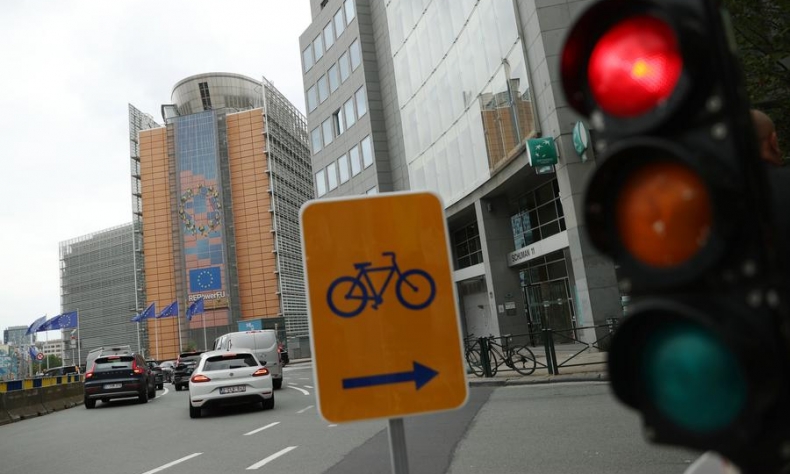
The imposition of new tariffs on Chinese EVs highlights the EU’s struggle to compete with China in most hi-tech sectors. The move is part of the EU’s broader protectionist trade policies.
Disregarding World Trade Organization (WTO) rules, several Western countries have introduced or are planning to introduce trade barriers to Chinese electric vehicles (EVs). In May, U.S. President Joe Biden increased several tariffs, including a fourfold increase in import duties on Chinese EVs. In July, the European Commission imposed provisional additional tariffs of up to 37.6 percent on Chinese EV makers. The commission on August 20 released a draft plan to make those tariffs definitive, at slightly revised rates, subject to approval by EU member states.
However, unexpected disagreements have arisen among Western partners. UK trade secretary said his country will not follow the EU’s example and will not impose harsh tariffs on imports of Chinese EVs. This decision could significantly impact the ongoing negotiations between China and the EU, underscoring the significance of this development in the international trade landscape. Notably, the UK exports only 7 percent of its domestic output to China, and its domestic EV market is dominated by brands that manufacture cars in China, including Tesla, BMW and MG owned by China’s SAIC Motors.
The issue at hand is why not all European countries view the development of the Chinese EV industry as a case of violating market rules. The answer is straightforward: Decisions are based on political, not economic, considerations.
EU’s stick of protectionism
Europe is an important market for Chinese EVs. Last year, the value of EU imports of electric cars from China totaled $11.5 billion, a significant increase from $1.6 billion in 2020. China-made EVs accounted for over 19 percent of all-electric cars sold in the EU that same year. More than half of these China-made all-electric vehicles were manufactured by Western automakers operating in China, a critical factor in the European EV market. Tesla and Renault accounted for 28 percent and 20 percent of the total, respectively, while Chinese brands represented only 7.9 percent. Chinese brands’ share of the European EV market, including the UK and Norway, remains on an upward trajectory this year, rising to 11 percent in June from 9 percent a year earlier.
After Brussels announced its intention to raise tariffs in June, Beijing responded sharply, vowing to take countermeasures. China and the EU have conducted more than 10 rounds of technical consultations on the case since the end of June.
The EU member states are set to vote on the matter at the end of October, and the decision is expected to come into force in November. Germany has publicly criticized the additional tariffs but abstained in a July consultative poll. A dozen EU members voted in support of the tariffs, four voted against and 11 abstained, according to media reports. The votes of 15 countries, representing 65 percent of the bloc’s population, are needed to overrule the European Commission. In an interview in early August, Valdis Dombrovskis, European Commissioner for Trade, said the 27 EU member states would likely support measures to impose higher import duties on Chinese electric cars in November.
Interestingly, China’s SAIC Motor Corp. Ltd. has downplayed concerns about the EU’s new anti-subsidy tariffs affecting its EV sales in the bloc. The company emphasizes the diversity of its product lines as a way to overcome trade protectionism.
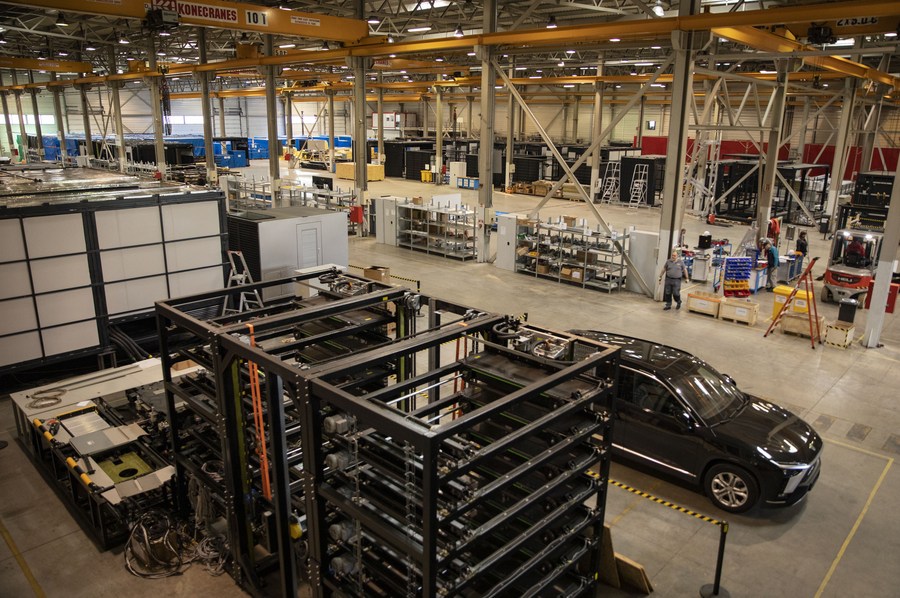
Naturally, Chinese EV brands have long understood that the Europeans would resist direct imports. As a result, to avoid tariffs, they have started establishing factories in the EU. In December 2023, BYD announced plans to build a new production hub in Hungary, hosting two EV factories and two EV battery factories funded by Chinese enterprises. In April, China’s Chery Auto and Spain’s EV Motors established a joint venture to produce electric cars. However, EU officials have cautioned that these efforts will only be successful if they adhere to rules of origin, also known as localization. These rules require creating a certain level of value within the EU.
On August 9, Beijing responded to the EU’s tariff hikes on Chinese EV exporters by filing a complaint with the WTO as part of an escalating trade dispute with Brussels. The Chinese Ministry of Commerce said the findings of the European Commission’s so-called anti-subsidy investigation into Chinese EVs seriously violated WTO rules and undermined global cooperation on climate change. The ministry called on the EU to “immediately correct its wrong practices” and protect economic and trade cooperation, as well as the stability of the EV industry.
China’s response
The imposition of new tariffs on Chinese EVs highlights the EU’s struggle to compete with China in most hi-tech sectors. The move is part of the EU’s broader protectionist trade policies. For instance, earlier this year, Brussels initiated anti-subsidy investigations into Chinese wind turbine and solar panel manufacturers. Furthermore, it has announced anti-dumping measures against Chinese biofuel imports, which took effect in mid-August.
The WTO complaint is the most recent action taken by China to safeguard against increasing European protectionism. China has taken similar measures, such as launching an anti-dumping investigation into French cognac imported into China in January in response to France’s support for an EV probe. Additionally, after Brussels announced tariff hikes on Chinese EVs in June, Beijing initiated an anti-dumping investigation into pork imports from the EU. According to the European agricultural industry, this move is expected to affect farmers in Belgium, Denmark, Germany, the Netherlands and Spain.
With access to green markets in the West shrinking, China is increasingly exploring opportunities for EV collaboration with partner countries of the Belt and Road Initiative.
In 2023, Southeast Asia made up 10 percent of China’s total EV exports, and sales of China-made EVs to the region doubled in the first quarter of 2024 compared to 2023. Chinese brands accounted for over 70 percent of total EV sales in regional countries. In 2022, Latin America accounted for 6.7 percent of China’s total EV exports, and the value of Chinese brands’ sales to the region more than doubled in 2023, reaching $2.7 billion. Similar growth was also observed in other countries in the Global South.
In a broad sense, China’s policy aims to promote fair competition and eliminate trade barriers. Many trade experts urge China to avoid taking more stringent measures that could harm the world’s second largest economy. However, all its trading partners must understand that unilateral and unfair trade restrictions are a double-edged sword.
The author is former prime minister of Kyrgyzstan, a distinguished professor at the Belt and Road School of Beijing Normal University and author of the book Central Asia’s Economic Rebirth in the Shadow of the New Great Game (Routledge, London, 2023).