The BRI: A Key Driver of a Community of Shared Future for Mankind
 Facebook
 Twitter
 Linkedin
 Google +
Economic relations are crucial in shaping bilateral ties while people-to-people bonds are the foundation of lasting and resilient international partnerships.
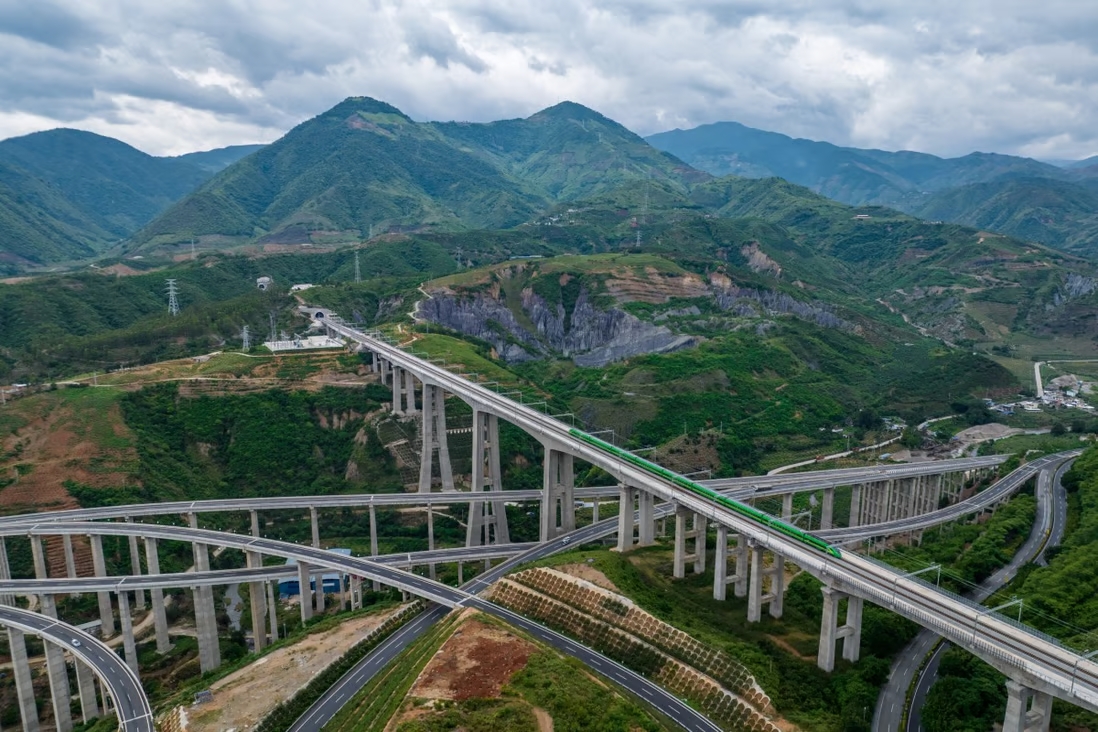
The Belt and Road Initiative (BRI) launched by China in 2013 began as a transnational economic cooperation project with primary focus on “hard?connectivity,” emphasizing the development of physical infrastructure to boost trade and economic cooperation. This includes the construction of highways, railways, seaports, airports, communication networks, power plants as well as oil and gas pipelines. Over the decade, the BRI has evolved into a more comprehensive initiative that also promotes “soft connectivity”. This broader scope encompasses policy coordination, trade facilitation, financial integration, and strengthening of people-to-people connections.
The BRI, however, is far more than a mammoth infrastructure project of the century. ?It is a means for advancing China’s vision of global governance, encapsulated in the concept of “A Community with a Shared Future for Mankind.” By enhancing infrastructure links and fostering trade cooperation, social, and cultural exchanges, the BRI plays a crucial role in realizing this vision.
This was highlighted in President Xi Jinping’s keynote speech at the Belt and Road Forum for International Cooperation held in Beijing on May 14, 2017. President Xi underscored that the BRI is not just an economic cooperation project but also carries China’s vision for global shared development, calling for collective efforts to build “A Community of Shared Future for Mankind.”
BRI draws inspiration from the ancient Silk Road
The Belt and Road Initiative (BRI) draws its inspiration from the ancient Silk Road, a historic network of trade routes that connected China to the Mediterranean as far back as the 2nd century BCE, during the Han Dynasty. Contrary to its name, the Silk Road was not a single road but rather a series of interconnected pathways that spanned across Asia, Central Asia, and parts of Europe.
These routes facilitated the exchange of goods such as silk, spices, precious stones, and luxury items. But their significance extended beyond trade. The Silk Road was also a conduit for the flow of ideas, religions, art, and technology, fostering profound cross-cultural interactions among civilizations.
The term “Silk Road” was coined by German explorer Ferdinand von Richthofen in his 1877 book series and later popularized by Swedish topographer Sven Hedin in his 1938 book,?“The Silk Road”. Hedin described the Silk Road as a critical artery linking two oceans—the Pacific and Atlantic—and two continents—Asia and Europe. He remarked that “the Chinese government, by reviving the Silk Road and opening it to modern means of communication, would render a great service to humanity and erect a monument to itself.”
The Belt and Road Initiative seeks to recreate the spirit of the ancient Silk Road in the 21st century, with a similar emphasis on enhancing connectivity, promoting trade, and fostering socio-cultural exchanges. However, the BRI has greatly surpassed the geographic limit and scope of the ancient Silk Road. It represents a new model for international economic collaboration, rooted in the “Silk Road Spirit” of peace and cooperation, openness and inclusiveness, mutual learning, and shared benefits.
In reviving the essence of the Silk Road, the BRI has indeed “erected a monument to itself,” as Hedin has said, while shaping a new global economic landscape.
From hard connectivity to soft connectivity
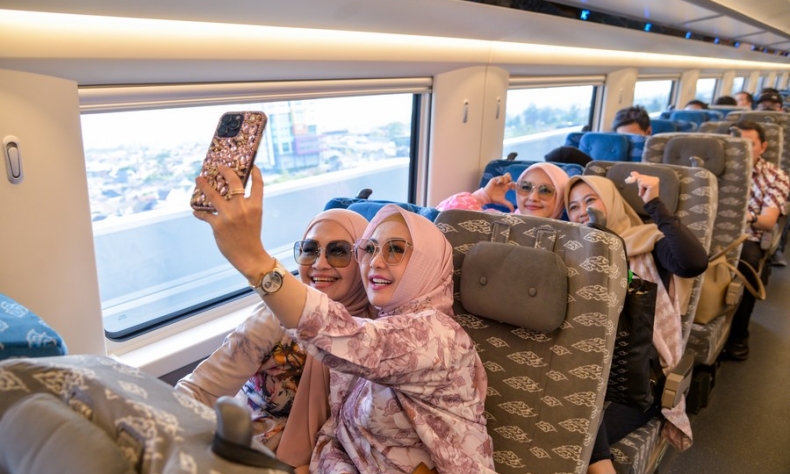
Ten years after its launch in 2013, the BRI has significantly expanded both in scope and geographical reach, now covering regions across Asia, Africa, Oceania and Latin America. The cumulative value of projects along BRI?participating countries?has surpassed $1.0 trillion, reaching a total of $1.053 trillion. Of?the total, $634 billion is attributed to construction contracts, while $419 billion represents non-financial investments. Some of the more notable BRI infrastructure projects include the Mombasa-Nairobi Standard Gauge Railway (Kenya), the Port of Piraeus (Greece), the Jakarta-Bandung High-Speed Railway (Indonesia), the China-Laos Railway (Laos), the Hambantota Port (Sri Lanka), and the Hungary-Serbia Railway (Hungary).
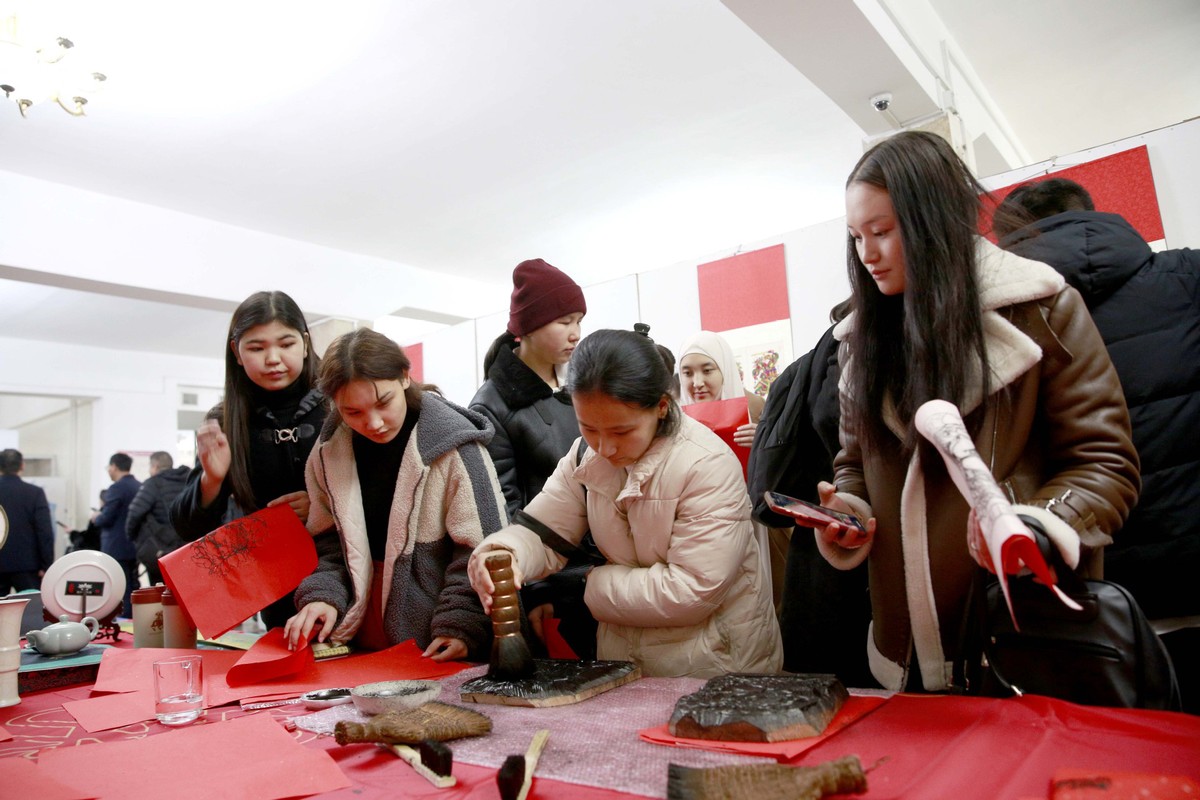
Over time, the BRI’s focus has broadened beyond physical infrastructure to encompass “soft connectivity,” which highlights the importance of policy coordination, trade liberalization and socio-cultural exchanges alongside infrastructure development. This evolution reflects China’s recognition that sustainable connectivity cannot rely solely on hard infrastructure but requires deeper, more comprehensive ties across multiple domains.
The long-term success and sustainability of the BRI depend on the balance between hard and soft connectivity. By promoting policy coordination, unimpeded trade, cultural exchanges and financial integration, the initiative aims to foster deeper and more resilient partnerships among participating nations.
According to the World Bank, “soft connectivity,” particularly in the form of trade liberalization, can have a more immediate and significant impact on economic growth than infrastructure investment alone. Reducing tariffs and trade barriers can increase economic growth by 1.0 to 1.5 percentage points annually, potentially boosting overall income by 10-20 percent over a decade. This highlights the critical role of policy coordination and trade facilitation in driving the BRI’s long-term benefits.
BRI:?Driver of a?Community with Shared Future
The Belt and Road Initiative (BRI) and the concept of “A Community with a Shared Future for Mankind” are deeply interconnected, reflecting China’s dual aspirations of providing global public goods and promoting a fair, inclusive global order. The BRI represents China’s effort to share its growing prosperity with the world, offering infrastructure and economic cooperation as a rising economic power. The concept of “A Community with a Shared Future for Mankind” is China’s vision for a more equitable international system rooted in the principles of mutual benefit, cooperation, and sustainable development.
This connection was made explicit by President Xi Jinping during the CPC Dialogue with World Political Parties on December 1, 2017, where he stated the Belt and Road Initiative aims precisely to bring about a “Community with a Shared Future for Mankind.”
President Xi first introduced the concept of “Mankind is a Community with a Shared Future” in his 2013 speech at the Moscow State Institute of International Relations. ?He emphasized?that “Mankind, by living in the same global village within the same time and space where history and reality meet, have increasingly emerged as a community of common destiny in which everyone has in himself a little bit of others.”
“A Community with a Shared Future for Mankind” is China’s response to a world beset by wars, conflicts, pandemics, climate change, and rising protectionism. The vision advocates for a global order built on openness, inclusiveness, mutual respect, and lasting peace. It seeks shared prosperity through cooperation, consultation, and mutual benefit, calling for an international system that is fair, just, and sustainable.
The concept of “A Community with a Shared Future for Mankind” has since been enshrined in the constitution of the Communist Party of China and incorporated into the preamble of China’s national constitution. It has become the guiding principle for China’s global governance, embodying its worldview and aspirations for a fair, inclusive, and just international order.
China has consistently emphasized that its peaceful rise presents an opportunity for the world. The BRI is a manifestation?of the Confucian principle of “sharing prosperity with the world when one is wealthy” (達則兼濟天下), while the concept of “A Community with a Shared Future for Mankind” echoes the ancient Chinese ideal of “Tianxia in great harmony” (天下大同). This ideal envisions a world where people live in peace and help one another, reflecting Confucianism’s emphasis on global harmony.
Both concepts, in essence, represent China’s application of traditional Chinese statecraft in the modern world. It is internationalism with distinctly Chinese cultural characteristics in the 21st century.
Economic relations are crucial in shaping bilateral ties while people-to-people bonds are the foundation of lasting and resilient international partnerships. Through the BRI, China has not only built infrastructure and promoted trade but also strengthened relationships by aligning development policies and fostering cultural and social exchanges. The BRI has become China’s key platform for global outreach and a critical mechanism for advancing its vision of a fair and just global governance system, encapsulated in the concept of “A Community with a Shared Future for Mankind.”
The article reflects the author’s opinions, and not necessarily the views of China Focus.