Breaking Down the Stimulus: What’s New and What’s Next?
 Facebook
 Twitter
 Linkedin
 Google +

The goal is to see a positive interaction between the stable, healthy growth of the capital market, improvements in corporate performance, structural transformation and upgrades, technological advancements, and the gradual stabilization of the macro-economy.
Recently, the term “stimulus package” has frequently popped up in discussions about China. This refers to a series of financial and fiscal policies introduced by the Chinese Government in late September and early?October, to address the country’s current economic challenges. To explore the rationale behind these?initiatives, Beijing Review reporter Zhang Shasha interviewed Xu Hongcai, Deputy Director of the Economic Policy Commission at the China Association of Policy Science. Edited excerpts of their conversation follow:
Beijing Review: What challenges is the Chinese economy currently facing?
Xu Hongcai:?The most pressing issue remains weak domestic demand, which is reflected in both weak investment and consumption.
In the short term, sectors like the capital markets and the real estate sector, which are undergoing structural adjustments, have considerably impacted the real economy, affecting both investment and consumption.
In addition, during economic restructuring and the shift from old to new growth drivers, our innovation capabilities are still not as strong as they need to be, especially when compared to developed countries. These are all key reasons for the current downward pressure on the economy.
We shouldn’t shy away from these challenges. I believe the recently introduced package of policies is highly targeted and designed to address these specific issues. By taking a problem-oriented approach, I’m optimistic that we can expect a significant improvement in the future of our economic development.
What are the highlights of the recent stimulus package? How effective have the new measures been so far?
As part of the fiscal moves, the government will further increase support for key groups. For instance, it will raise financial aid standards for college students. Before this year’s National Day holiday (October 1-7), one-time living subsidies were distributed to people facing difficulties. These measures address short-term issues, aiming to safeguard livelihoods, boost consumption and increase employment. Addressing long-term issues includes raising the debt ceiling in one substantial adjustment, aiming to consolidate and replace the existing hidden debts of local governments. It is the strongest debt alleviation measure introduced in recent years.
The main components of the financial policy package include lowering the reserve requirement ratio and policy interest rates. It also includes lowering mortgage rates on existing home loans and unifying the minimum down payment ratio for home loans. Additionally, the central bank has created a new monetary policy tool to support the stable development of the stock market.
[The reserve requirement ratio determines the minimum amount of reserves that commercial banks must hold. Lowering this ratio means banks can lend more money, increasing the money supply and potentially stimulating economic activity—Ed.]
Judging by the current impact, the policies have effectively shifted market expectations and alleviated the liquidity shortage, reactivating market activity. This has boosted confidence among both listed companies and consumers, which in turn stimulates investment and consumption.

When it comes to the real estate market, the government has?implemented many policies in the past, but they were often modest. This time, however, the measures are unprecedented in scale and have boosted confidence. Of course, the structural adjustment due to population aging will have a long-term impact on the market. I believe that over the next few months to a year, we may see the market gradually bottom out and stabilize, reaching a new equilibrium between supply and demand.
The goal is to see a positive interaction between the stable, healthy growth of the capital market, improvements in corporate performance, structural transformation and upgrades, technological advancements, and the gradual stabilization of the macro-economy. This kind of mutually reinforcing dynamic is what everyone is hoping for.
This package has drawn comparisons to the 4-trillion-yuan ($586-billion) plan introduced in 2008 in response to the global financial crisis. How do you view this?comparison?
I believe there is some merit to linking the current stimulus package with that plan. Similarly, the latest policy is an extraordinary response to the pressures of economic slowdown and deflation.
This time, however, there are some key differences. Back then, the primary focus was on expanding investment. Now, we have to tackle the problem of weak domestic demand and the longstanding issue of debt risk. We are facing both new and old challenges, which makes today’s pressure heavier and the situation more severe than it was at that time.
The current policies are indeed more solid than before. It’s not simply about releasing large amounts of liquidity. That approach no longer works. Banks may offer loans to businesses, but the demand for loans isn’t as high as it was a decade ago. Back then, companies were more willing to take out loans. In terms of government investment, the situation is also different because much of the traditional infrastructure is already saturated, so now the focus is on developing new infrastructure.
The bigger issue, however, is consumption. To expand consumption, we need to increase incomes. If bank loans keep flowing to businesses, it only leads to more inventory and worsens overcapacity, which doesn’t address the core issue of boosting consumption.
Expanding consumption also means a big change in how fiscal funds are used compared to the past. For instance, China will issue ultra-long special treasury bonds over each of the next several years to implement major national strategies and build up security capacity in key areas, starting with 1 trillion yuan ($140 billion) of such bonds this year. While these are still investment-driven measures, they contribute to optimizing the supply-side structure. The focus is no longer just on building more ports, roads or bridges. Funds are being allocated to areas like education, healthcare, elderly care and public services, meaning the way these resources are used has changed.
The stimulus package also emphasizes strict control over general expenditures, intending to free up resources to protect basic livelihoods, secure wages, maintain government functions and prioritize spending in key areas. Initiatives like supporting low-income families, helping university students and raising pensions all contribute to boosting consumption—and all require fiscal backing. This highlights a shift in the direction and allocation of fiscal funds. While investment is still necessary, the focus cannot be solely on supply-side projects like infrastructure development. More attention must go to demand-side measures, such as expanding employment opportunities.
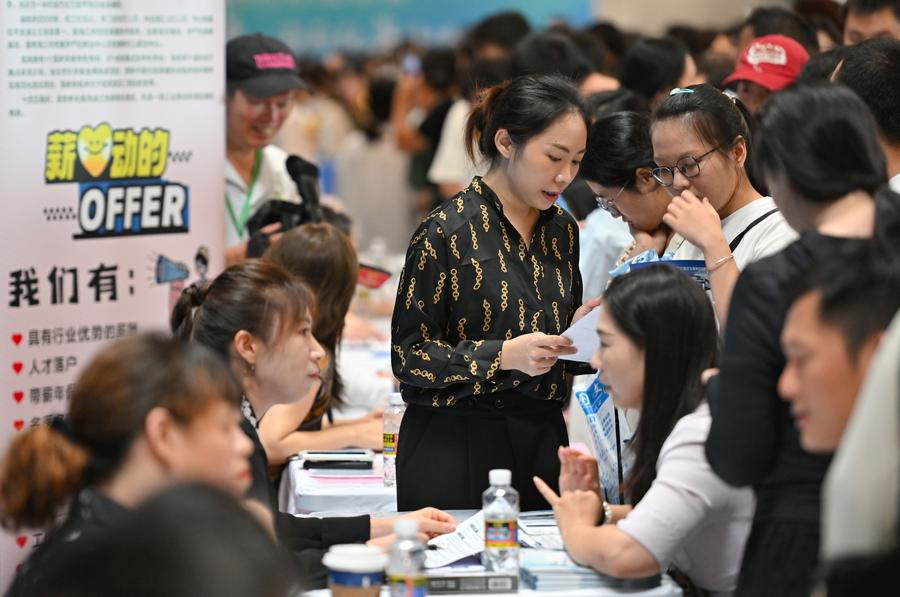
Some have drawn parallels between China’s current economic situation and Japan’s “Lost 30 Years”—which began in the 1990s. What’s your take on this?
In the [late 1980s and early] 1990s, Japan experienced the collapse of its real estate bubble and stock market, leading to three decades of stagnation. China does share some similarities. China’s real estate market is undergoing a deep adjustment and the overall market structure has changed—it is approaching saturation. An aging population also factors in, with fewer people willing to buy homes, get married or have children. Domestically, many industries are also reaching their limits, prompting businesses to seek expansion overseas, though they face obstacles abroad. Furthermore, the stock market is in a major adjustment phase, and we’ve seen two consecutive years of low inflation. These factors do indeed bear some resemblance to Japan’s situation.
However, despite the similarities, there are important differences between the two situations.
First, China remains a developing country, with a per-capita annual income of just $13,400. Given this income level, most people are still striving to improve their standard of living and build wealth, rather than settling for what they have. The motivation for growth and progress is much stronger here, which sets China apart.
Second, there is still huge potential for urbanization in China. The country has hundreds of millions of rural residents who aspire to urban lifestyles and want to enjoy the better living standards that come with it.
Third, we are benefiting from a global wave of technological and industrial revolutions, including digital technology and artificial intelligence. This is something Japan did not have at that time. As a result, the momentum for China’s economic growth remains strong.
Some argue that China’s challenges are even greater than those Japan faced, but I believe we have more opportunities and far greater potential.
What steps should be taken in the future to boost investor and consumer confidence and promote healthy economic development?
We must deepen reforms and broaden our openness. This includes advancing high-level opening up and aligning with global trade standards. Additionally, optimizing the business environment is key and we must ensure fair competition. I also believe we must stabilize China-U.S. relations and enhance economic and trade cooperation with Western countries, while avoiding the politicization of economic issues.