Combating Climate Change
 Facebook
 Twitter
 Linkedin
 Google +
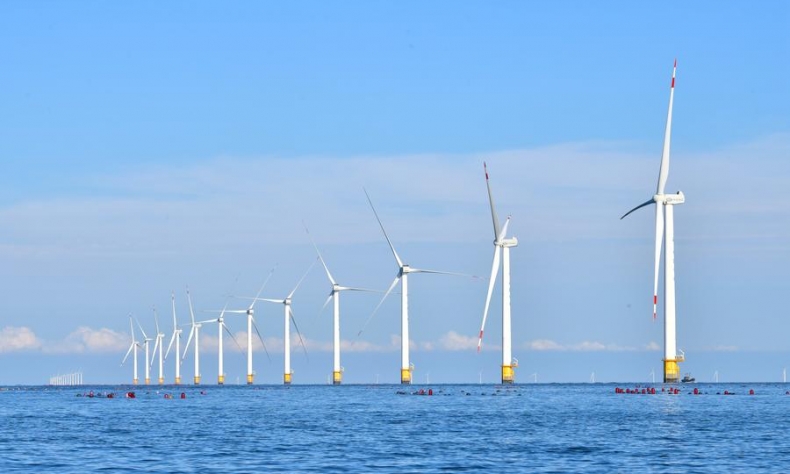
China’s firm commitment to green development will give more stability to the global response to climate change, and the innovative development of its new energy industry will provide greater impetus for sustainable development around the world.
This year marks the 30th anniversary of the United Nations Framework Convention on Climate Change (UNFCCC) and the ninth anniversary of the Paris Agreement. Prior to the 29th Conference of the Parties of the UNFCCC (COP 29), the sixth Friends of the Paris Agreement High-Level Dialogue, organized by the European Climate Foundation in Paris, France in late October, and co-hosted by the Institute of Climate Change and Sustainable Development of Tsinghua University, brought together those who had participated in or witnessed the process of reaching the Paris Agreement. They reviewed the global response to climate change in the past, the achievements made, the current situation, and the key tasks.?The conclusion at the dialogue will be presented at the COP29 conference and the UNFCCC secretariat.
I was honored to attend the dialogue with Xie Zhenhua, China’s former special envoy for climate change, and gained a deeper understanding of the work to combat climate change.?
In recent years, the earth has been warming up at an unprecedented speed due to the increase in human-induced greenhouse gas emissions. Research by the Intergovernmental Panel on Climate Change shows that human activities have caused rapid, extensive changes in the atmosphere, oceans, cryosphere and biosphere. A World Meteorological Organization report says 2023 was the hottest year on record, registering a global average temperature that was 1.45°C higher than the pre-industrial level.?
Climate change is affecting every region, posing a serious threat to human survival. A study by the World Health Organization points out that it is the greatest threat to human health. We need to reverse this situation not only to save the earth’s ecosystem but ourselves.
The Paris Agreement is the broadest international consensus on climate change and points out the direction and institutional arrangements for global efforts to address the issue. These efforts are now facing many difficulties and challenges, given the stark contrast between where we are and where we aim to be. The setbacks in global green transition, politicization of environmental and climate issues, barriers to green trade, and uncertainties in international cooperation are of particular concern.
To address climate change China has accelerated energy transition at home. At the same time, it is serving as a key stabilizing force for international endeavors for this mission. In August, the Chinese government made new strategic arrangements to promote green transition of the economy and society.
Goals and challenges
Over the past 30 years, especially the nine years since the Paris Agreement went into effect, the goals and approach of global climate governance have become increasingly clear. The UNFCCC’s ultimate objective is “to achieve, in accordance with the relevant provisions of the Convention, stabilization of greenhouse gas concentrations in the atmosphere at a level that would prevent dangerous anthropogenic interference with the climate system.”?
It also establishes the principle that the “Parties should protect the climate system for the benefit of present and future generations of humankind, on the basis of equity and in accordance with their common but differentiated responsibilities and respective capabilities.”?
The Kyoto Protocol, adopted in 1997, prescribes a mechanism for burden sharing among developed countries.?The Paris Agreement planned for actions to address climate change after 2020. It introduced the innovative practice of “nationally determined contributions,” which means participating countries will make differentiated contributions according to their respective national conditions, development stages, and capabilities, to tackle the challenges brought about by climate change. It also stipulated that the Conference of the Parties will undertake its first global stocktake in 2023 and every five years thereafter.
The first global stocktake in 2023 disclosed a huge gap between actual actions and the goals and commitments. There were shortfalls in technology, funding, and transparency, especially in the speed and scale of financing. The United Nations Environment Programme estimated that by 2030, the funding needs of developing countries for climate change adaptation will soar to US $340 billion per year, yet only less than one-tenth of the amount is available now. Many developing countries have limited access to public financial resources and are weak at raising funds on the capital market. These factors hamper their ability to implement strong mitigation and adaptation measures.
At the same time, unilateralism and geopolitical disputes have severely impacted the multilateral cooperation system for addressing climate change. To achieve the Paris Agreement goal of confining the global average temperature increase to well below 2 °C above pre-industrial levels and pursuing to limit the temperature increase to 1.5 °C above pre-industrial levels, all parties must adhere to multilateralism, continue climate governance and cooperation under the agreement’s framework, and strengthen exchange and consultation. Unilateral trade measures will slow down green transition. Also, developing countries should be funded to support stronger actions.
China’s contributions
As the world’s largest developing country, China has taken a series of measures to address climate change. In 2020, China announced that it would scale up its intended nationally determined contributions, peak CO2 emissions before 2030, and achieve carbon neutrality before 2060. For this purpose, it has stepped up the development of renewable energy to control carbon dioxide emissions.?
These efforts have produced encouraging results. By September this year, China’s installed capacity of wind and photovoltaic power totaled 1.25 billion kilowatts, fulfilling its promise to increase this capacity to 1.2 billion kilowatts by 2030 six years ahead of schedule. So far, there are over 25 million units of new-energy vehicles (NEVs) plying in China and in the first 10 months of this year, NEV sales topped 9.8 million, accounting for 38.6 percent of total new car sales during this period.
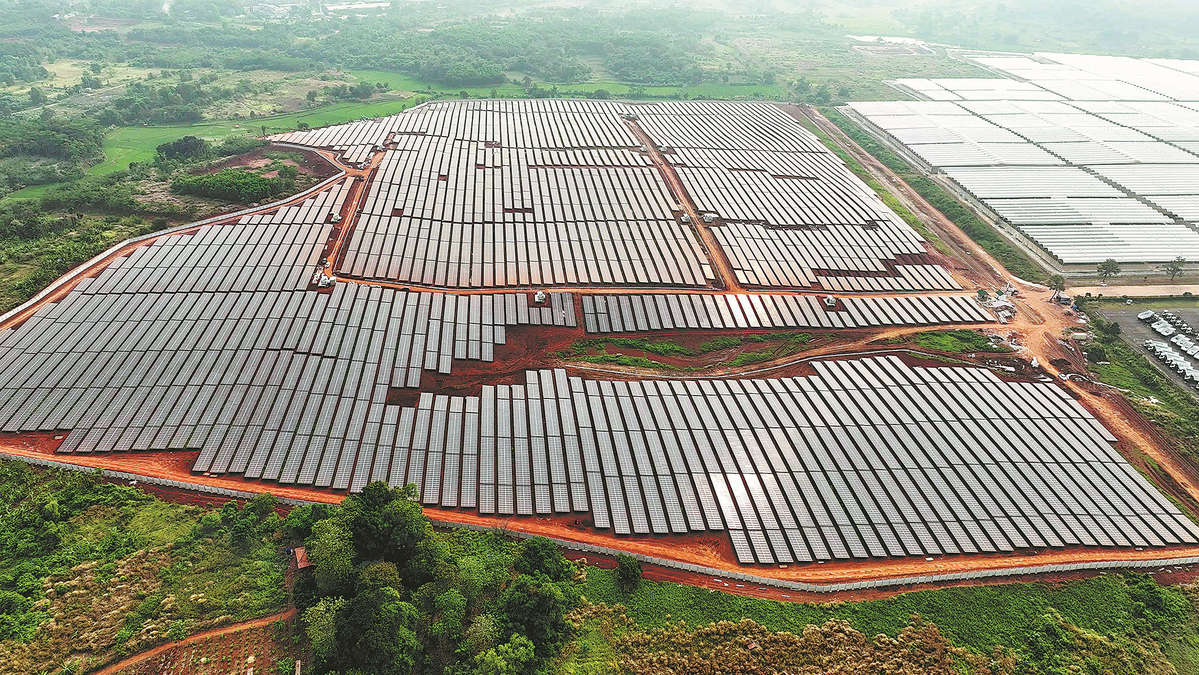
China is building up its strength in the new energy industry with technological innovations, creating complete industrial and supply chains, encouraging market competition, and tapping into its super-large market. Its new energy industry is growing fast, with a clear competitive edge in photovoltaic products, lithium batteries, and NEVs. This has significantly brought down the costs of wind power, photovoltaic power, and electric vehicles worldwide. China is exporting wind power and photovoltaic products to more than 200 countries and regions, contributing to the wider use of renewable energy and global energy transition.
The way ahead
This August, the Chinese government issued a set of guidelines on green transition in all areas of economic and social development to coordinate its efforts in carbon reduction, pollution control, green expansion and economic growth for peaking emissions and achieving carbon neutrality.?
China regards green, low-carbon transition as the fundamental approach to resolve resource constraints and enhance energy security. Energy is an important basis for economic and social development, but it is also the main source of carbon emissions, accounting for more than 80 percent of all carbon dioxide emissions on earth. To tackle this problem, quantitative goals have been set, such as increasing the share of non-fossil energy consumption to about 25 percent and lifting the installed capacity of pumped-storage hydropower projects to over 120 million kilowatts by 2030.
Energy conservation and carbon reduction is being promoted in key sectors to buttress green transition. Since 2013, China has attained an average annual economic growth of 6.1 percent with an annual 3.3 percent increase in its energy consumption. And its energy intensity has decreased by 26.1 percent, one of the steepest drops worldwide. By 2030, China aims to expand its energy conservation and environmental protection industries to RMB 15 trillion.?
Sustained and rapid growth of green and low-carbon industries is being maintained as the driver of high-quality economic development. Green development is the foundation of high-quality development, and the new quality productive force, which has become a buzzword, is a green productive force.?
Green and low-carbon industries will be developed and their share in the national economy increased. New industries, new business forms, and new business models that facilitate green, low-carbon development are being encouraged. China’s firm commitment to green development will give more stability to the global response to climate change, and the innovative development of its new energy industry will provide greater impetus for sustainable development around the world.
Lü Wenbin is head of the Energy Research Institute of National Development and Reform Commission.