Wings of Change
 Facebook
 Twitter
 Linkedin
 Google +
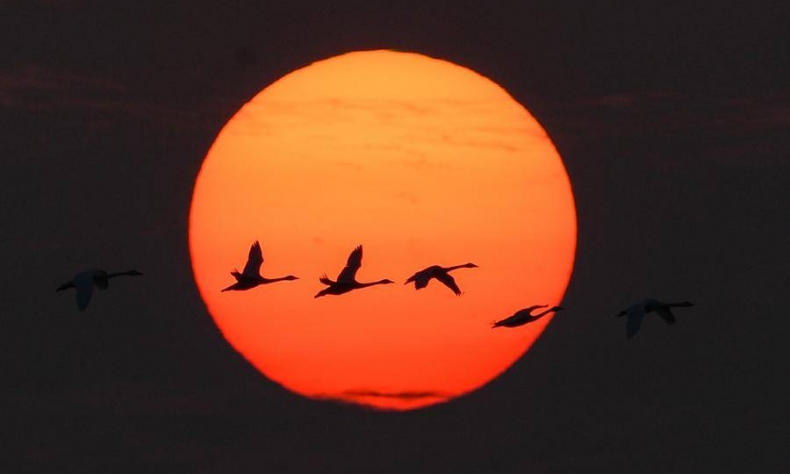
Protecting migratory birds and their habitats ensures the continued provision of key ecosystem services critical to human wellbeing and the overall resilience of these environments.
In an era where environmental conservation is increasingly urgent, the protection of migratory birds has become a big topic. These species not only indicate ecosystem health but also play vital roles in preserving biodiversity across different habitats.?Beijing Review?interviewed Jennifer George, Chief Executive of the East Asian-Australasian Flyway Partnership (EAAFP), a network dedicated to safeguarding migratory waterbirds along the East Asian-Australasian Flyway (EAAF), one of the world’s nine major migratory routes. With her extensive expertise in environmental conservation, George shared insights into the roles migratory birds play in ecosystems and the substantial impact their conservation has on biodiversity and ecosystem health. Edited excerpts of the conversation follow:
Beijing Review: Could you elaborate on the ecological roles that migratory birds play in ecosystems and how their conservation impacts biodiversity and ecosystem health?
Jennifer George: Migratory waterbirds are defined broadly as migratory birds that are ecologically dependent on wetlands to rest, feed and breed. Each year, these birds travel thousands of kilometers between their breeding and non-breeding grounds. The regular, cyclical and seasonal movement of the entire (or majority of the) population of a species from one region to another is called migration.
These birds play essential roles for maintaining biodiversity and ecosystem health, not just for birds but for all species that depend on the flyway’s habitats. Protecting migratory birds and their habitats ensures the continued provision of key ecosystem services critical to human wellbeing and the overall resilience of these environments.
Through their droppings, migratory waterbirds transfer nutrients like nitrogen and phosphorus to the ecosystems, enriching soils and waters and supporting vegetation growth. In nutrient-poor wetlands their droppings act as a natural fertilizer, boosting productivity for aquatic plants, algae and invertebrates.
These birds also contribute to biodiversity in wetlands by creating and maintaining habitats for other species. For example, by nesting and roosting, they help shape vegetation patterns, which can create microhabitats for insects and small animals, further boosting diversity.
Migratory waterbirds are sensitive to environmental changes, making them valuable indicators of ecosystem health. Shifts in their migration patterns, population size or health can signal environmental issues such as pollution, habitat loss or climate change, helping scientists monitor and address these problems.
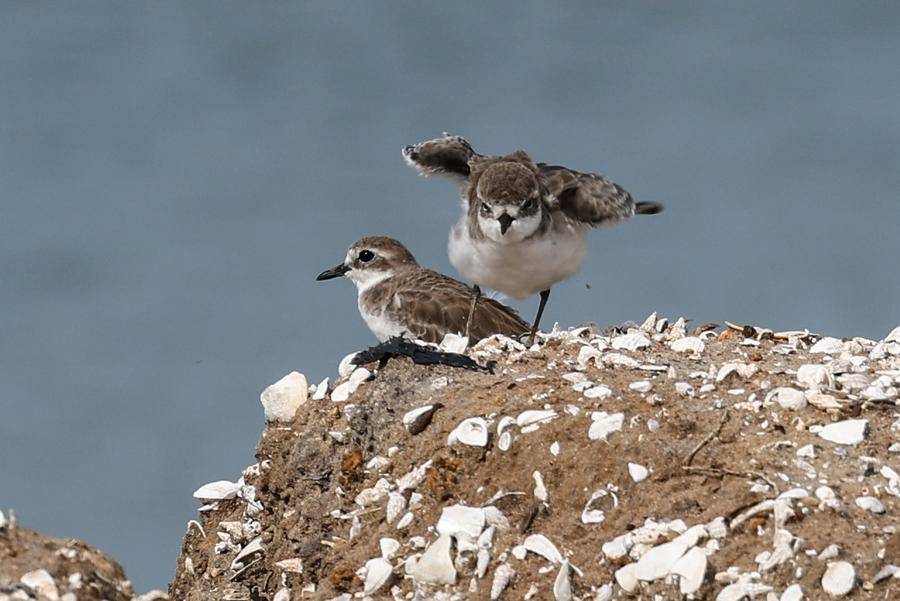
Migratory waterbirds are also linked to our culture, as reflected in literature, arts and crafts, music and dance. Flyways are living systems integrated with millennia of indigenous knowledge. From New Zealand and Australia all the way to the Arctic, indigenous peoples’ deep ecological wisdom, built on centuries of connection with migratory birds, is woven into the fabric of their cultures. To develop effective mechanisms for scale, we need to consider their insights to offer pathways to harmony with nature that transcend conventional approaches and are key to achieving sustainable, nature-positive outcomes.
What are some of the primary cross-border challenges in migratory bird conservation, and how can international cooperation address these issues?
For example, when a bar-tailed godwit or a red knot leaves the shore of New Zealand to travel to the coast of the Yellow Sea (of China), they face not only the natural challenges of weather and typhoons, but also the challenges of being hunted for food, mist nets erected to protect shrimp farms, etc., coastal development for housing and industry which has reclaimed most of the rich tidal flats which they have relied on for millennia, and invasive plants which take over their remaining habitats for resting, feeding and breeding. The numbers of these species have declined pointedly over the past decades and it is always a cause for celebration when these birds safely return to their non-breeding grounds.
A key feature of the EAAFP, launched in 2006, is its framework of working groups and task forces which gather experts and scientists and academics from countries and non-government organizations across the EAAF. This brings together updated knowledge worldwide to improve international cooperation. An example of this is the new Avian Disease Working Group that is addressing the need for habitat management to understand reporting and management of avian influenza, which is currently a growing concern globally.
Bilateral and multilateral agreements are effective in agreeing on common interests and issues. For example, a bilateral agreement signed between China and New Zealand this July focuses on sharing data on aspects of migratory waterbirds and other bilateral agreements exist within the EAAFP framework. The Australian Government has bilateral migratory bird agreements with Japan (the JAMBA), China (the CAMBA) and the Republic of Korea (the ROKAMBA). Each agreement provides an important mechanism for pursuing conservation outcomes for migratory birds, including migratory waterbirds.
What existing international policy frameworks or agreements are most effective in promoting migratory bird conservation, and how does the EAAFP contribute to these?
The Convention on the Conservation of Migratory Species of Wild Animals (CMS), the Convention on Biological Diversity and the Ramsar Convention on Wetlands (the Ramsar Convention) are three of the main policy frameworks that are effective in promoting migratory bird conservation. All three conventions are partners of the EAAFP and the latter in turn is a regional initiative of the Ramsar Convention. The EAAFP contributes to the CMS through joint working groups on issues related to migratory waterbirds, for example, illegal wild bird capture and the impact of green energy projects relating to the migration and survival of migratory waterbird species. These working groups include both partner countries and non-government parties to find solutions.

The EAAFP provides an essential platform for cooperation, particularly among countries that are not signatories to the CMS, enabling collective efforts to support the conservation of these migratory species.
The secretariat of the Ramsar Convention has been an EAAF partner since 2006. The Ramsar Convention has assisted the EAAFP with the development and maintenance of the Flyway Site Network and strengthened our Communication, Education, Participation and Awareness program, Small Grants program and capacity building.
What role does China play in the conservation of migratory birds?
China is taking up a considerable role in addressing many issues that have caused the decline of migratory waterbird populations over the past 25 years.
For instance, China has designated 20 Flyway Network Sites in the EAAF. Additionally, China hosted the 10th EAAFP Meeting of Partners in Hainan [Province]in December 2018. The inscription of new World Heritage Sites in 2024 celebrates and protects important migratory bird areas while limiting development.
Furthermore, China has enacted legislation to combat the illegal hunting of migratory and other birds. The country also provides leadership in monitoring bird populations, which helps gather data for scientists and researchers across the Flyway. Moreover, Beijing Forestry University (BFU) offers important support for the EAAFP’s work by generously hosting the EAAFP Science Unit.
Lastly, China has established bilateral agreements regarding the sharing of data on migratory birds, such as the Arrangement on Cooperation to Promote the Exchange of Bird Banding Data for Migratory Shorebirds and Seabirds, as well as the CAMBA.
The Global Ecological Governance (Nansen) Conference in Beijing this October witnessed the official establishment of the Flyway University Alliance. What is the significance of this alliance? How can it, along with the Global Scientific Action Plan for Migratory Bird Flyway Conservation launched at the conference, transform the current situation and address both present and future challenges?
The EAAFP connects 22 countries that are within our Flyway. With 17 universities attending and more interested in this innovation, these countries will be connected at an academic level around a common cause to improve our biodiversity and the people who rely on that biodiversity. Having this flyway-wide innovation with a particular focus on issues central to global issues of biodiversity loss and climate change should inspire action.
The mission of the Flyway University Alliance (initiated by BFU) is to catalyze and facilitate engagement between universities and research institutes from flyway countries. This engagement aims to enable national and international efforts to invest in, support, and promote early career researchers and other young people, thereby strengthening knowledge and conservation action along the flyway.