Fighting Climate Change Requires a Shared Long-Term Vision and Concerted Actions
 Facebook
 Twitter
 Linkedin
 Google +

The principle of common but differentiated responsibilities is the cornerstone for strengthening global climate governance.
In November, Wang Yafei, a resident of Handan in Hebei Province, purchased three new household appliances: a French door refrigerator, a 75-inch television and a washer-dryer combo. Thanks to a government-backed trade-in program for consumer goods, he received a substantial discount when exchanging his old appliances, which he had used for about a decade, for the latest, most energy-efficient models.
“I had planned to upgrade my home, and fortunately, the trade-in campaign helped speed up the process,” Wang told Beijing Review. “The new appliances not only reduce my electricity bills but are also environmentally friendly. Even though they cost more than less efficient models, I still bought them.”
According to the action plan for promoting the trade-in programs, released earlier this year by the State Council, the country’s highest state administrative organ, efforts will be made to promote equipment upgrades to encourage energy conservation and emission reduction, safe production, digital transformation and intelligent upgrading, which are conducive to further expanding effective investment in high-end, green and intelligent industries.
As of early November, the trade-in programs had drawn the participation of over 30 million consumers and brought more than 400 billion yuan ($55 billion) in sales, according to the country’s Ministry of Commerce.
While boosting domestic demand and supporting continuous economic growth, more importantly, these programs also contribute to the country’s broader goals of reducing carbon emissions and enhancing overall environmental quality.
Actions that work
China, as a developing country, has been fulfilling its commitment to a green transition.
In 2020, President Xi Jinping announced at the General Debate of the 75th Session of the United Nations General Assembly that China aims to peak its carbon dioxide emissions before 2030 and achieve carbon neutrality before 2060. This means China will accomplish the largest reduction in carbon emission intensity globally and achieve the transition from peak carbon emissions to carbon neutrality in the shortest time of any nation.
To achieve these goals, China has established a “1+N” policy framework for carbon peaking and neutrality, which includes two overarching documents providing top-level design, 12 implementation plans targeting specific sectors and industries, and supporting plans covering sectors including science, technology and finance.
The Working Guidance for Carbon Dioxide Peaking and Carbon Neutrality in Full and Faithful Implementation of the New Development Philosophy, one of the two overarching documents released in 2021, sets specific targets in light of China’s current situation and stage of development.
For example, by 2025, the country’s carbon dioxide emissions per unit of GDP will be lowered by 18 percent from the 2020 level, and by 2030 will have dropped by more than 65 percent compared with the 2005 level; by 2025, China’s energy consumption per unit of GDP will be lowered by 13.5 percent from the 2020 level, the forest coverage rate will have reached 24.1 percent, and the forest stock volume will have risen to 18 billion cubic meters; by 2030, China’s total installed capacity of wind power and solar power will reach over 1,200 gigawatts, the forest coverage rate will have reached about 25 percent, and the forest stock volume will have reached 19 billion cubic meters.
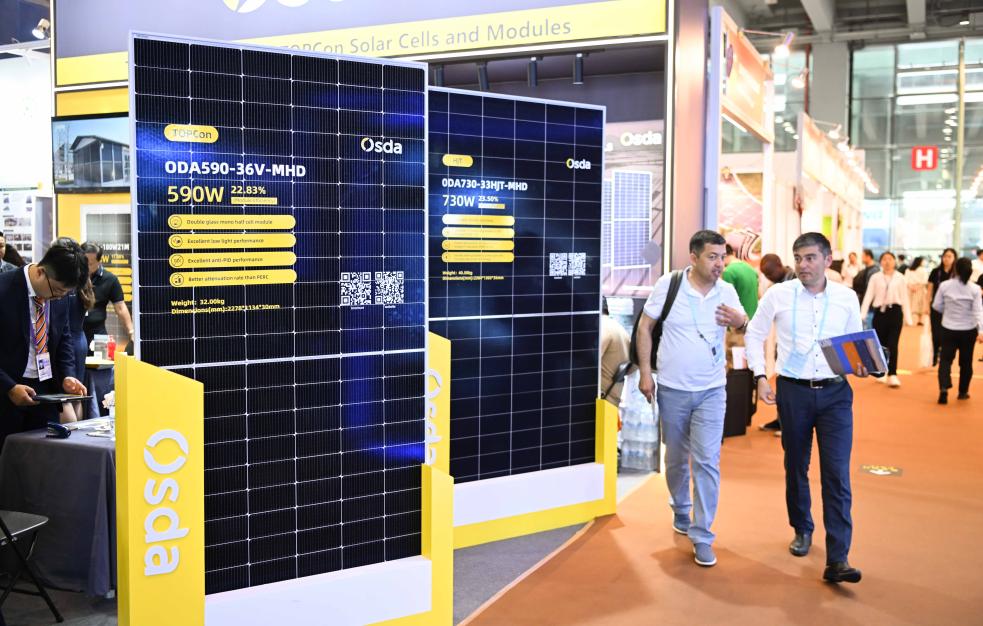
To reach low-carbon goals, all economic and social sectors are undergoing green transition. According to a set of guidelines released by the Communist Party of China (CPC) Central Committee and the State Council in late July, by 2030, the country will achieve remarkable results in the green transition in all areas of economic and social development; and by 2035, China will have largely achieved the goal of establishing a green, low-carbon, and circular development economic system and the goal of creating a Beautiful China. By 2030, the scale of the energy conservation and environmental protection industry in the country will reach about 15 trillion yuan ($2 trillion).
China’s carbon dioxide emissions per unit of GDP have logged a sustained decline. The industrial structure has also been upgraded. While improving energy efficiency and reducing carbon emissions from existing projects, China has set strict energy and environmental standards for new projects.
China has boosted the development of green energy. The report on China’s policies and actions for addressing climate change, released this November, showed that as of the end of 2023, the proportion of non-fossil energy in China’s total energy consumption had increased to 17.9 percent, while the proportion of coal consumption had decreased from 67.4 percent in 2013 to 55.3 percent.
China is vigorously advancing electrification in the transportation sector, and high-speed railways have become a major mode of transportation for the public, reducing greenhouse gas emissions. Electric vehicles are rapidly gaining popularity, helping to cut emissions and reduce pollution. In 2023, the number of new-energy vehicles (NEVs) in use in the country reached 20.41 million, accounting for 6.1 percent of all vehicles in use, this year’s report on China’s policies and actions for addressing climate change revealed. NEVs refer to vehicles completely or mainly driven by new energy sources, including battery electric vehicles, plug-in hybrid vehicles, and fuel-cell vehicles.
China’s carbon market mechanism has been further strengthened. It has been piloting carbon emission trading in multiple regions since 2011 as part of efforts to explore market-based mechanisms to control greenhouse gas emissions. A national carbon emission trading market was officially launched in 2021, with more than 2,000 participating companies in the power generation sector.
The current carbon trading system sets emission limits for coal-fired power plants. After each compliance period, plants can sell any unused carbon allowances or, if they exceed their limit, buy allowances to meet the benchmark. As of late June, the cumulative trading volume of the carbon market had reached 465 million tons, with a transaction value of approximately 27 billion yuan ($3.7 billion).
In early September, a draft plan was unveiled to expand its national carbon trading market by including three major carbon-emitting industries, namely cement, electrolytic aluminum and steel. About 1,500 companies are expected to join.
Shi Yichen, Assistant Dean of the International Institute of Green Finance at the Central University of Finance and Economics, believes the current carbon market still faces several issues such as a limited number of entities included. The draft plan is expected to increase market activity, further helping lower the overall carbon reduction costs for society and promoting the transformation and upgrading of related industries.

Social participation
Wang, a father of two, believes raising awareness is important for fighting climate change. He often emphasizes the need for families to understand the impact of their daily choices on the environment. For him, teaching his children about sustainable practices—such as recycling, conserving energy, and choosing sustainable products—has become a priority.
“My children often come home with handcrafts they made at school themed on environmental protection, for example, using recycled materials to create sculptures or designing posters. These projects reflect the important lessons they’ve learned about caring for our planet,” Wang said. “Children are the future. Their understanding and actions today will shape the world they inherit tomorrow.”
He Guojun, a professor of economics, management and strategy at the University of Hong Kong Business School, emphasized that as ordinary people, each of our small acts of kindness and minor actions can be helpful in addressing climate change.
In collaboration with Alibaba’s food-delivery platform Ele.me, He and his research team analyzed detailed customer-level data and found that the green nudges—changing the default to “no cutlery” and rewarding consumers with “green points”—increased the share of no-cutlery orders by 648?percent.
He said this nearly cost-free initiative has the potential to lead to over 20 percent of takeaway orders not requiring disposable cutlery each year, and if this small change is implemented nationwide, it could result in a reduction of 22 billion sets of disposable utensils annually.
In recent years, ESG—Environment, Society, and Governance—has become increasingly important in China, He added. Companies can no longer focus solely on the value of the products they create and their profits; they must also consider their environmental impact, internal governance and broader social issues.
Several companies and civic organizations have created digital brochures to help the public address climate change and protect the environment. These resources provide valuable information on sustainable practices, tips for reducing carbon footprints and ways to engage in local environmental initiatives. By making this information easily accessible, these organizations aim to empower individuals and communities to take meaningful action in the fight against climate change.
International cooperation
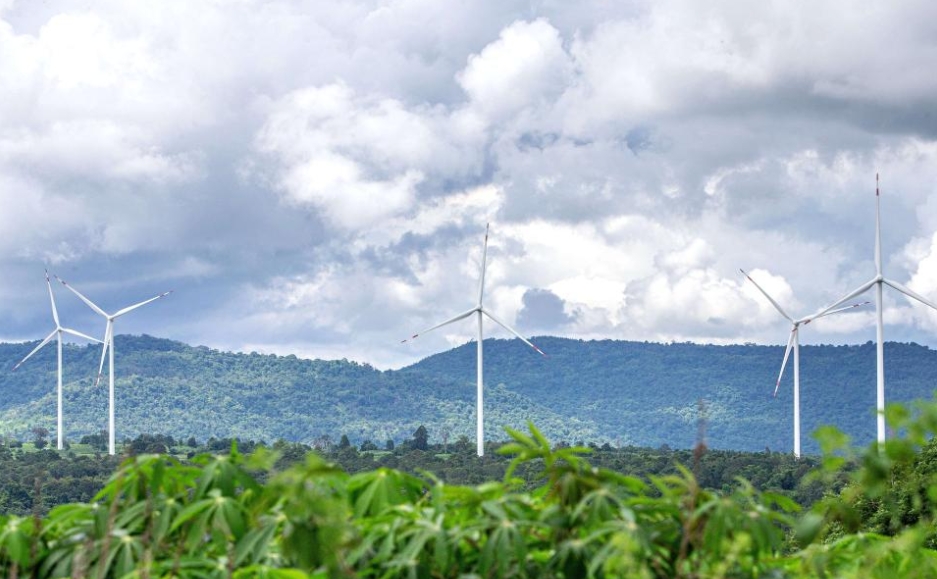
While speeding up its transition toward green and low-carbon growth, China has also played an active role in global climate change mitigation. For instance, China’s wind power and photovoltaic product exports helped other countries reduce their carbon dioxide emissions by about 810 million tons in 2023, according to the white paper in August.
China is deeply engaged in South-South cooperation on climate change, helping developing countries enhance their capacity to respond to climate change. The country has signed 53 memorandums of understanding on South-South climate cooperation with 42 of these developing countries. The cooperation includes building low-carbon demonstration zones and organizing exchange seminars, according to the Ministry of Ecology and Environment (MEE).
“China is acting on a broad front, which is an important and interesting experience,” Boris Titov, Chair of the Russia-China Friendship Committee for Peace and Development, said in a recent interview with Xinhua News Agency.
Titov cited the rise of electric vehicles in China’s global market as an example, saying it has helped reduce carbon dioxide emissions and air pollution, aligning with the country’s broader ecological civilization goals.
“The complete transformation of growth models is the fundamental solution to climate change,” Chinese Vice Premier Ding Xuexiang said in his speech on November 13 at the World Leaders Climate Action Summit, held during the ongoing 29th Session of the Conference of the Parties to the United Nations Framework Convention on Climate Change (UNFCCC), or COP29.
Ding added China’s high-quality production capacity, as exemplified by its manufacturing of electric vehicles, lithium-ion batteries and photovoltaic products, provides a significant boost for the green development of the world. “The international community should work together to accelerate energy transition in an equitable, orderly and just manner, maintain stability within new energy industrial and supply chains, facilitate the accessibility and innovation of green products and technologies,” he said.
COP29 kicked off in Azerbaijan’s capital city of Baku on November 11. The conference, scheduled to run until November 22, focuses on such topics including the global carbon trading market, as well as global energy transition from fossil fuels.
COP, or Conference of the Parties, refers to a series of formal meetings where governments assess global efforts to advance the Paris Agreement and UN Framework Convention on Climate Change, with the aim of limiting global warming to 1.5 degrees Celsius.
This year’s climate conference is aimed at formulating a new climate change funding goal to replace the existing collective target of developed countries providing $100 billion annually in support of developing countries.
Funds and technology are critical to improving the capacity to tackle climate change, Ding said. Since 2016, China has provided and mobilized more than 177 billion yuan ($24 billion) of project funds in support of other developing countries’ climate response.
“We call on developed countries to increase financial support and technology transfer to developing countries, and expect more ambitious funding targets to be set at COP29, so that confidence and guarantees can be provided for the next stage of global climate response,” Ding added.
“The principle of common but differentiated responsibilities is the cornerstone for strengthening global climate governance,” Ding said. “Developed countries need to increase climate ambition and action, take the lead in fulfilling emission reduction obligations, and move up the timeline for carbon neutrality. Developing countries also need to do our best within our capabilities.”