China Breaking Through Chip Blockades
 Facebook
 Twitter
 Linkedin
 Google +
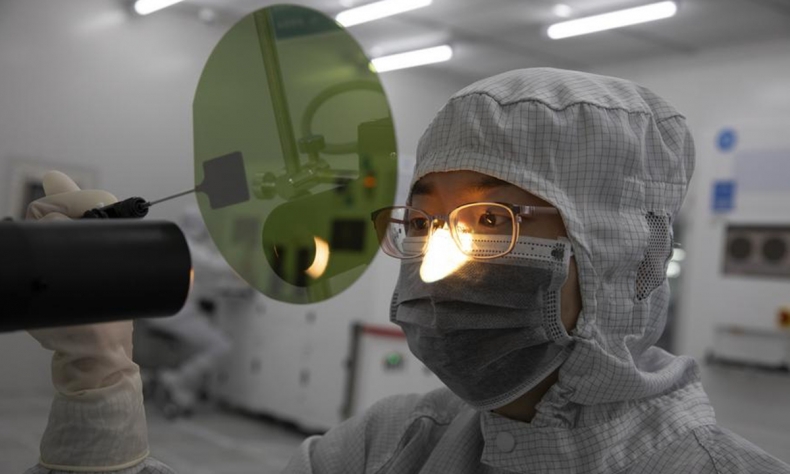
As has often happened in history, the sanctions and restrictions have stimulated new development. This has been the case with the production of the latest semiconductors.
On September 10, it became publicly known that Shanghai Micro Electronics Equipment (SMEE), one of China’s leading lithography machine makers, had applied in March 2023 to the National Intellectual Property Administration of China for a patent for “extreme ultraviolet (EUV) radiation generators and lithography equipment.”
EUV lithography uses light with a wavelength of just 13.5 nanometers (nm) to etch silicon semiconductor wafers. The wavelength is almost the same as that of X-rays and nearly 14 times shorter than that of the widely used deep ultraviolet lithography (DUV), which uses light with a wavelength of 193 nm.
China’s ability to produce EUV equipment can be considered revolutionary for its development of semiconductors. EUV lithography systems are critical for printing the complex patterns on silicon wafers necessary to produce the most sophisticated chips. The Dutch semiconductor equipment manufacturer ASML currently holds a near-monopoly on EUV machines capable of making chips smaller than 7 nm in size. In 2023, 42 percent of ASML’s $24.2-billion total sales came from EUV machine exports.
Escalating restrictions
ASML and Japanese companies Nikon and Canon control about 99 percent of the Chinese lithography machine market. However, the critical importance of EUV machines in producing high-end chips has led Western countries to impose major restrictions on their exports.
Since 2019, ASML has been banned from exporting its cutting-edge equipment to China, including EUV machines. The U.S. has further pressured ASML to stop serving customers in the Chinese mainland, its second largest market after China’s Taiwan region. According to its 2023 annual report, the company was only able to fulfill 50 percent of that year’s orders from China.
Recently, the U.S. has forced the Netherlands to tighten its export restrictions even further. Since September 6, ASML has been required to apply for a license to supply spare parts and software updates to keep its lithography systems running in China. In addition, in 2022 SMEE was added to the U.S. Commerce Department’s blacklist of entities deemed to be acting contrary to U.S. national security or foreign policy interests.
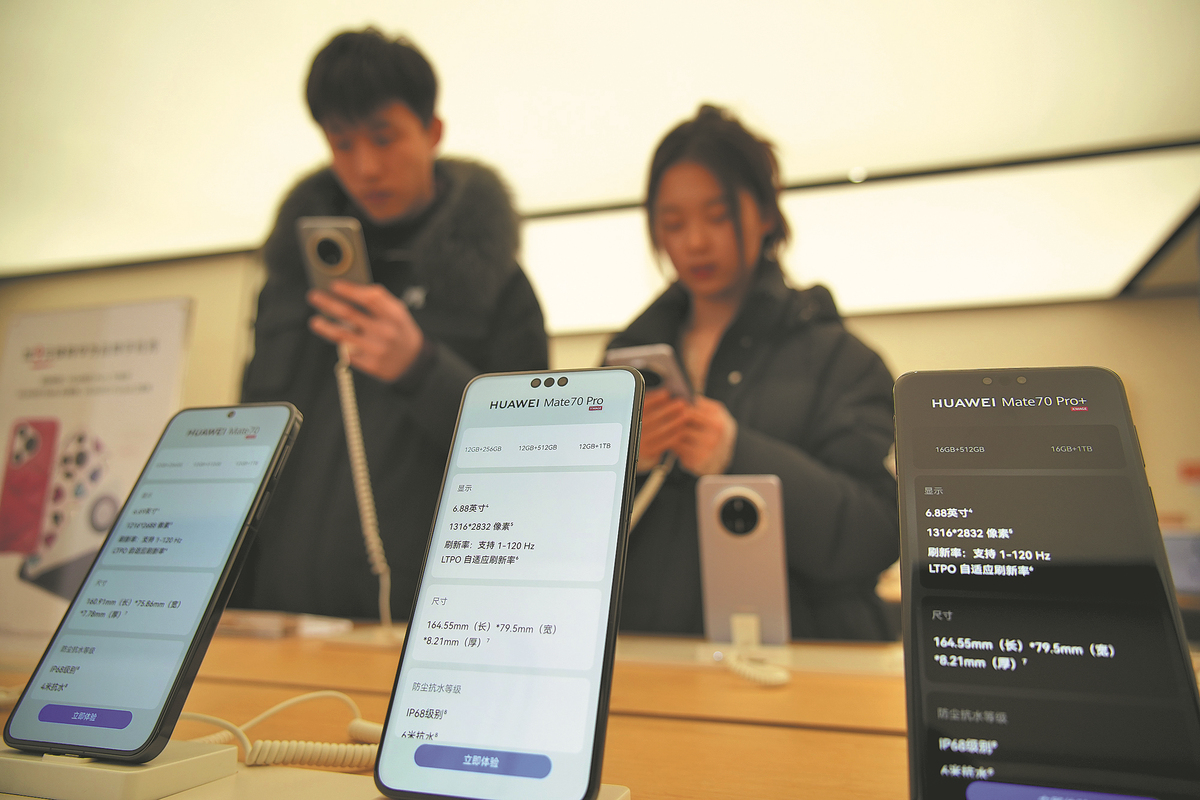
The United States’ extensive sanctions war against China began in 2019, when it imposed export bans on Chinese telecommunications equipment manufacturer Huawei. Noting the limited impact of such efforts, Washington recently decided that it would take “extraterritorial measures” if its allies and partners did not join in.
U.S. President Joe Biden’s administration has made semiconductors a key battleground in the technology battle with Beijing. Its efforts have been focused on two areas: $52 billion in incentives under the CHIPS Act to build domestic manufacturing and research and development capabilities, and export control policies. As stated in the legislation,?these controls will significantly affect “the?flow of high-end semiconductors and semiconductor-manufacturing equipment to Beijing.”
The U.S. is currently engaged in intensive negotiations with its allies to establish additional export controls. These measures would impose similar restrictions on the export of semiconductors and related equipment as those in the U.S. In a recent interview, U.S. Commerce Secretary Gina Raimondo said restrictions are in place to maintain the United States’ technological lead.
Rise of homegrown tech
However, long before these discriminatory measures were introduced and anticipating their inevitability, China has taken steps to develop its domestic semiconductor industry. It established the China Integrated Circuit Investment Fund, known as the Big Fund. In 2014 and 2019, the fund raised 139 billion yuan ($19 billion) and 200 billion yuan ($27 billion), respectively. This year, China initiated its most significant round of funding, raising 344 billion yuan ($48 billion). The funds were raised through contributions from the Ministry of Finance, local governments, state-owned enterprises, and, for the first time, state-owned banks. Given the potential of an expanded industry, the third fund prioritizes support for chip equipment makers, whereas the previous two funding rounds focused mainly on chip manufacturing.
Where does China’s semiconductor industry stand in its quest to catch up to and surpass global leaders? According to a recent analysis of current semiconductor technology by Japanese engineering company TechanaLye, the Chinese mainland is quickly catching up. It is only about three years behind the industry leader, Taiwan Semiconductor Manufacturing Co. (TSMC).
TechanaLye compared two types of processors developed by Huawei subsidiary HiSilicon for use in Huawei phones. With a chip size of 5 nm, one type was manufactured in 2021 by TSMC, and the other, with a chip size of 7 nm, was manufactured this year by Chinese chipmaker Semiconductor Manufacturing International Corp. (SMIC). Typically, smaller dimensions indicate higher performance. However, the active area of SMIC’s 7-nm chip is 118.4 square mm, while TSMC’s 5-nm chip is only slightly smaller at 107.8 square mm. That is, both chips have similar areas and performance levels.
Based solely on the performance of the chips, SMIC’s capabilities are rapidly approaching leadership. HiSilicon’s design quality has also improved, as evidenced by its ability to produce chips with performance comparable to TSMC’s 5-nm products. The study concludes that U.S. regulations have only slightly delayed Chinese innovation but spurred China’s semiconductor industry to ramp up domestic production. It also demonstrates the ineffectiveness of U.S. efforts to limit Beijing’s progress in developing advanced chips. As has often happened in history, the sanctions and restrictions have stimulated new development. This has been the case with the production of the latest semiconductors.
Beijing has prioritized developing advanced homegrown semiconductor manufacturing technologies while acquiring advanced equipment from abroad to expand its mass production capabilities. Chinese mainland companies made 34.4 percent of global chip-making equipment purchases in 2023, roughly double the amount imported by the Republic of Korea and China’s Taiwan combined. The total value of these purchases is expected to exceed $50 billion this year.
The strategy of utilizing global expertise and technology to develop homegrown industries has led to the country’s unprecedented growth over the past half-century. Such a strategy will undoubtedly lead the country to success in the semiconductor?industry.
The author is former prime minister of Kyrgyzstan, professor at the Belt and Road School of Beijing Normal University and author of the book Central Asia’s Economic Rebirth in the Shadow of the New Great Game (Routledge, London, 2023).