US Must Break Zero-Sum Cycle or Risk Catastrophe
 Facebook
 Twitter
 Linkedin
 Google +
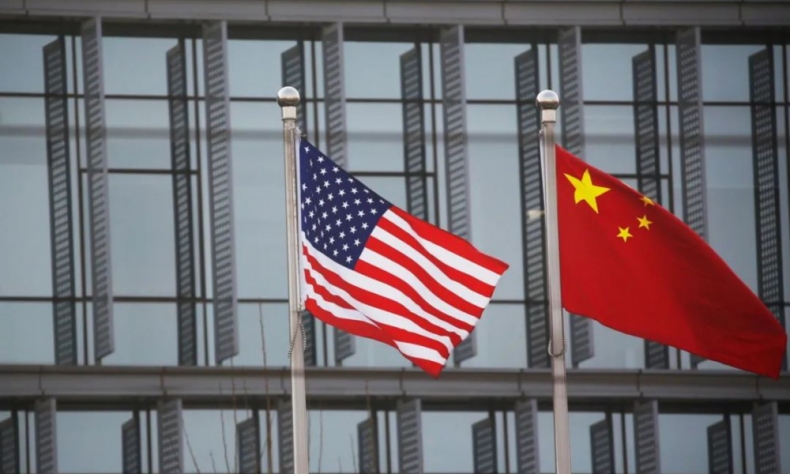
Simply put, the world would be a better place if the U.S. can be persuaded to work with China and stop targeting it as a future item on its menu.
Washington’s insistence on a zero-sum approach threatens to derail China-U.S. relations, but a cooperative, sustainable future is still within reach.
Looking from the past
In seeking to understand the current tensions between China and the United States, it’s easy to fall back on familiar narratives and theories. We might be tempted from the start to favor the ahistorical determinism of Graham Allison’s “Thucydides Trap” or John Mearsheimer’s “offensive realism” and normalize competition between China and the U.S., even to the point of war. Indeed, with Donald Trump’s return to the White House and early signs of America retooling and ramping up its anti-China strategy, China has responded, “If war is what the U.S. wants, be it a tariff war, a trade war or any other type of war, we’re ready to fight until the end.” It might seem that the Peloponnesian War, which Thucydides explained in detail, prefigured a potential conflict in the South China Sea or another arena as China-U.S. relations struggle amid significant changes and challenges in this new era. Nevertheless, China-U.S. relations could have a different future.
When we speak of “China” today, we should recall the word’s origins. Before the 2nd century CE, Romans knew of the “land of Qin” (Sinae) through various sources, including Sanskrit (Cina) and Persian (Cin) references. By then, the Qin Dynasty, from which the term was derived, had already been succeeded by the Han Dynasty more than four centuries earlier. During Marcus Aurelius’ time, Romans admired Chinese silks, although they were unclear about their origins. Go-betweens on the Silk Road often obscured direct contact between the two civilizations, which helped them maintain their livelihoods.
Thus, we might suggest that if we follow the perspectives of ancient Rome or American theorists like Allison and Mearsheimer, who draw their insights from an unyielding view of human history, we could be inclined to see contemporary China-U.S. relations as held hostage by deep-seated misunderstandings and an inherent propensity for conflict.
While today’s conflict might seem new, it is already nearly two centuries old from a long-term perspective. For instance, we could point to the British instigating the Opium Wars. Or we might point to the U.S. provoking the Spanish-American War and taking the Philippines after Japan seized Taiwan following the Sino-Japanese War, which in turn emboldened Japan to be even more aggressive on the Chinese mainland.

To say that “modern China” was born in the crucible of great power competition is to acknowledge that this competition has not diminished significantly, even when China viewed “peace and development as the trend of the times.” While China-U.S. relations were largely positive for over three decades, they were not without periodic challenges, nor did they ever escape the broader historical context of the so-called “great power competition” and hegemony-seeking behaviors. These tensions have worsened since the first Trump administration, as China feels increasing pressure from the U.S., which has been experiencing imperial exhaustion but still seeking to impose its will on others.
On the other hand, the outside world has known “China” for more than 2,000 years, while the Chinese have had a self-awareness that extends more than twice as long, constituting the world’s oldest continuous civilization. If this historical perspective informs us today, then Trump’s tariffs appear trivial in the grand scheme, akin to the cries of an infant still learning to crawl. As Chinese former Premier Zhou Enlai reportedly said in response to Henry Kissinger’s query about his assessment of the French Revolution, “It’s too soon to tell.” In essence, when one’s sense of time spans millennia, China’s enduring nature becomes clear. Moreover, China currently stands on a much stronger footing than before, approaching parity with the U.S. in many key areas of development while surpassing it in others. China remains capable of further growth and development without needing to dismantle others to sustain a rapidly rising position of a major country. Moreover, its growth and modernization are bringing benefit, hope and inspiration to an increasing number of nations.
But it’s also the case that our new era is one in which the old Western ways of thinking are no longer compatible. We face shared existential crises linked to climate change and live in an age of rapidly advancing digital singularities, both of which highlight an inescapable global interconnectivity that cannot be reversed, even by so-called tech blockades and decoupling. In short, we must learn to live together and create a shared future for humanity, aligning with Chinese wisdom, accumulated and refined over a long period, or we might surrender to fantasies of off-world oligarchic bunkers or evangelical dreams of the apocalypse, possibly within a short time frame.
Looking from the future
French philosopher Louis Althusser once wrote, “The future lasts forever,” partly in jest. He made this comment while confined to an asylum after being convicted of murdering his wife following a psychotic break while giving her a massage. It might seem unusual to reference this tragedy or Althusser’s turn of phrase, but it came to mind as Republican lawmakers chanted “USA” during Trump’s recent MAGA-oriented speech to Congress. This occurred after the U.S. again abandoned the Paris Agreement, the World Health Organization, and foreign aid commitments. Meanwhile, Trump’s rushed “reforms” aim to dismantle an alleged “deep state,” risking further erosion of governance capacity and potential constitutional crises as U.S. courts began weighing in on dozens of lawsuits against the administration.

As Althusser knew, the future lasts forever, but not everyone will share it. People pass away. Nations rise and fall. Civilizations disappear, leaving behind only faint hints of their existence. Even the greatest empires crumble into ruin. I write these words sitting on the low wall alongside Rome’s Pantheon. Even an ancient civilization like China cannot take its continued existence for granted. Nor can the U.S. That is one reason why China works hard to ensure its rejuvenation and build forward with other nations in mutually beneficial ways, including emphasizing green innovation and development.
If we consider how future generations might view current China-U.S. relations, we must first acknowledge that such generations might not exist, especially if the relations continue to deteriorate. Some contemporary theorists suggest that we are on the cusp of a “post-human future,” though few agree on what this means precisely. Does it imply human extinction due to climate change, a new public health crisis, or an existential conflict between major countries or between people and AI? Alternatively, could it mean that the modern concept of “human,” largely a product of 18th-century European thought, will eventually become obsolete and give way to a more sustainable concept of being? It’s not our purpose here to answer such questions, but we should acknowledge these potential fates and temper the hubris associated with assuming a future shall arrive at all.
What will we see if we earn such a future and can look back on the present decades or centuries from now? Might we view the so-called “American pivot” as a pivotal moment — one where a zero-sum approach to trade and foreign policy left its proponents at odds with everyone, including itself — while those who sought cooperation over competition, peace and development over war and destruction, ultimately found sustainable solutions that ensured a future? If that proves true, future observers may look back on today’s struggles dialectically, seeing them as the inevitable conflict between those who wish to remain stuck in time, even at the end of time, versus those who want to move forward.
Perhaps they will regard this era as the “new Spring and Autumn” and the next as the “new Warring States,” but on a global scale. Maybe they’ll note that humanity still had much to learn before it reached maturity and learned to cherish instead of perish. That said, we must also heed the wise words of the Western Marxist Walter Benjamin, who warned in his “Theses on History” of the dangers of projecting our current ways of thinking by prophesying the future. Whether we think from the past or the future, we must do better than we have and strive for more than we can even imagine now. Simply put, the world would be a better place if the U.S. can be persuaded to work with China and stop targeting it as a future item on its menu.
Josef Gregory Mahoney is a professor of politics and international relations and deputy dean of the Institute of Singularity Studies at East China Normal University (Shanghai). He is also a senior research fellow with the Institute for the Development of Socialism with Chinese Characteristics and a concurrent professor of Marxism at Southeast University (Nanjing) and the Hainan CGE Peace Development Foundation (Sanya).