Beating the Butterfly Defect
 Facebook
 Twitter
 Linkedin
 Google +
The only way our world can be managed more effectively is through understanding that freedom comes with responsibility and that a success for one is a success for all.
Having served as an economic advisor to late South African President Nelson Mandela and then as vice president of the World Bank, Ian Goldin, a professor of globalization and development at Oxford University, has long engaged in the global battles of fighting inequality, social division and other risks facing humanity. During an interview at the Boao Forum for Asia 2025 Annual Conference, Beijing Review reporter Peng Jiawei spoke with Goldin on the dark sides of globalization, as well as China and Asia’s shifting roles in the global economic landscape. Edited excerpts from the interview follow:
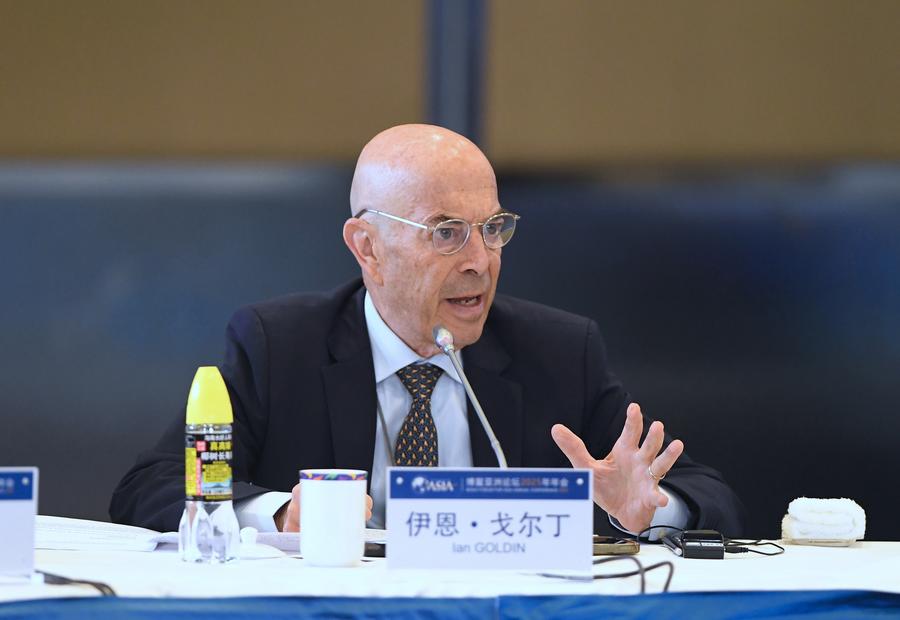 Ian Goldin
Beijing Review: You first came to China in the 1980s, an era in which the country’s economy was just beginning to take off and actively integrate itself into the global market. How has China’s role within the global economic landscape evolved over the past 40 years and where do you think the country is headed in the future?
Ian Goldin:?When I first visited China in the 1980s, many regions within the country were still grappling with extreme poverty. Four?decades later, the substantial reduction of poverty in the country is nothing short of?remarkable.
Given its relatively limited natural?resources in comparison to its colossal population, the Chinese Government has long recognized the importance of cooperation in driving sustainable development.
While committed to sustaining the UN-led system, the country has also helped establish numerous new multilateral institutions and frameworks. These include the Beijing-based Asia Infrastructure Investment Bank, the Boao Forum for Asia (a platform for promoting regional cooperation and dialogue—Ed.) and the Belt and Road Initiative (an initiative that aims to boost connectivity along and beyond the ancient Silk Road routes—Ed.).
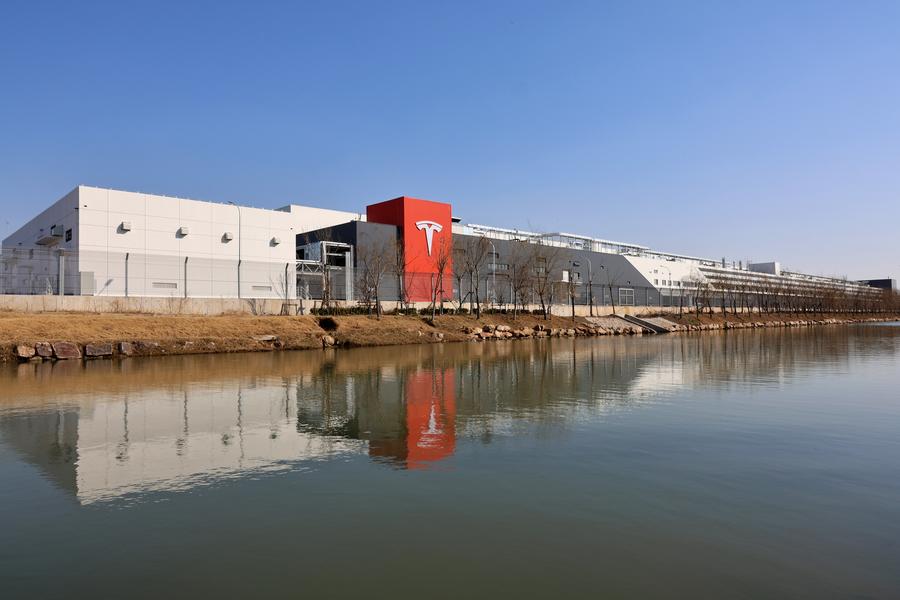
One thing we should note is that China will no longer serve as the world’s sole manufacturing superpower as it once did, as production has been either shifting to countries with lower-cost labor or being replaced by robots.
This shift should not be a cause for concern but rather viewed as an indicator of progress, as it reflects the country’s rise along the global value chain toward a strategic focus on advanced manufacturing.
Nor should this shift of global manufacturing be interpreted as the result of U.S. attempts to decouple from China. The notion that the U.S. could slow China’s economic growth is extremely misguided and counterproductive.
It is misguided because it is premised on the false belief that the world is a zero-sum game—where if China wins, the U.S. must lose. But that is not how the global economy works.
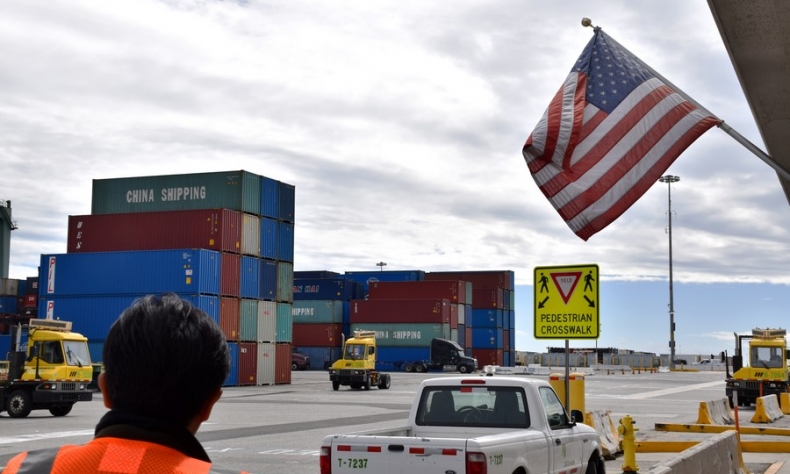
Since the 1990s, the U.S. has thrived in part because of China, whose low-cost products have kept inflation down, while China-U.S. investment flows have generated massive profits and created?countless jobs in the U.S.
What’s more, China cannot be held back because its economy has already been deeply integrated with the rest of the world. In fact, efforts to contain China are only accelerating its development—as we have seen with DeepSeek. The Chinese AI model has successfully overcome U.S. curbs.
The same pattern will likely unfold elsewhere. While the U.S. economy may be more disconnected from the global supply chain, economies in other parts of the world may become more integrated. And my hope is that this process will accelerate many aspects of globalization—not just the increased flow of investment, trade and people, but also cooperation on a deeper level.
With regional conflicts and geopolitical tensions on the rise and the U.S. attempting to withdraw from multiple multilateral organizations, many people say that our world is “de-globalizing.” What’s your take on this view??
I created the concept of the butterfly defect to capture the dark underbelly of globalization. It comes from the idea of the butterfly effect, by which the flap of a butterfly’s wings in the Amazon can set in motion a chain of events that ultimately lead to a tornado in Texas.
Through globalization, we have established a complex and extremely unstable system, one in which micro-actions in one place can spread systematic risks due to increased connectivity. We saw this with the financial crisis in 2008 and the COVID-19 pandemic in 2019.
The biggest problem of globalization is the failure of our institutions and our management of the global system to evolve at the same speed as the system itself. Now the process of integration seems to be going backward, and our multilateral system is currently under threat.
The U.S. has pulled out of the World Health Organization (WHO). For many years, it has been blocking the appointment of new judges to the World Trade Organization (WTO)’s Appellate Body (a standing body of seven persons that settle disputes brought by WTO members—Ed.). It is also planning to upend its engagement in climate actions by withdrawing from the Paris Agreement (a pact reached by nearly 200 nations in 2015 to?address climate change and its negative impacts—Ed.).
The country has suspended virtually all foreign aid, which means that many people around the world could die subsequently from malnutrition, or from not getting HIV and AIDS medications.
Hopes are high that China can fill some of the gaps that have opened in the multilateral system.
In the past, China has played a constructive role in helping manage a series of global risks. The 2008 financial crisis, which started in the U.S., was a classic example of the butterfly defect. China very rapidly responded by launching a huge stimulus package, which not only helped lift itself but also the entire world out of the crisis. The same goes for the pandemic, during which China managed to save millions of lives by providing vaccines to many countries. And I think we will see this pattern once again take place on the climate front.
But the scale of our current crisis far exceeds China’s capacity to manage alone. We will not solve our problems by expecting all countries to agree, but what we can do is to build willing coalitions of countries who believe our world needs to be more effectively managed.
We must not let the U.S. withdrawal from WHO hinder our management of health risks around the world, nor allow the subversion of the WTO to spark tariff wars among countries who do not wish to be involved.
The challenges we are facing are greater than ever before, and therefore the need for cooperation is more pressing than ever before. That, however, does not mean that we should cling to traditional institutional frameworks. We need to recalibrate our system to reflect new alliances and shifting interests, and Asia has an absolutely central role to play in this readjustment.
In your view, what untapped potential does Asia hold that could be further leveraged to drive more effective global?governance??
The center of the global economy is moving to Asia, which accounts for more than 50 percent of the value of global trade. The?region’s economy is growing at approximately 5 percent a year, whereas growth in both Europe and the U.S. hovers at around 1.5 percent.
The 21st century will be the Asian Century. It is where the future is emerging, not only in terms of market opportunities but also in terms of global crisis management.
The economies of Asia are among the world’s greatest beneficiaries of globalization. While China remains its greatest success story, nations like India, Indonesia and other burgeoning economies across the region have also achieved tremendous growth through globalization. The region as a whole shows how embracing openness, fostering integration and knowledge-sharing among its members and learning from the rest of the world can drive common progress.
However, the pandemic and the 1997 Asian financial crisis also exposed the region’s extreme vulnerability. The rise of Asia as a global economic powerhouse is a relatively recent phenomenon, and most part of the region still belongs to the Global South, where poverty remains a pervasive reality.
Yet Asia is also a region where nations such as China have successfully lifted hundreds of millions of people out of poverty. We have every reason to believe that similar feats can be achieved elsewhere. Numerous challenges remain—from reducing malaria infections and mitigating other global health risks to improving our educational systems, among many others. And the example of how Asia has come together to address shared challenges offers many valuable lessons.
No country is an island; the risks faced by one nation ultimately affect all of humanity. What this means is that we need to be more aware of the influence our actions may exert on other parts of the global community in an increasingly connected world. And the only way our world can be managed more effectively is through understanding that freedom comes with responsibility and that a success for one is a success for all.