America Blames China to Hide Its Own Failures
 Facebook
 Twitter
 Linkedin
 Google +
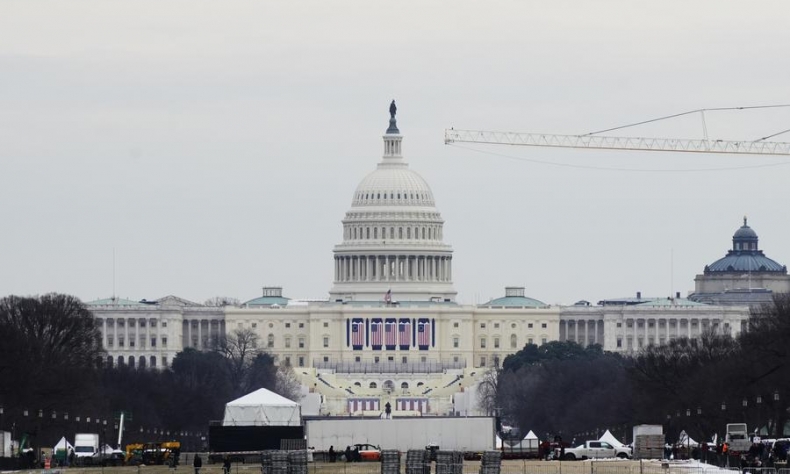
American Sinophobia isn’t just about China — it’s a deep-rooted addiction to scapegoating foreigners and America’s own minorities for its domestic problems. Until policymakers earnestly confront domestic challenges, U.S. foreign policy will continue to rely on scapegoating external ‘adversaries.’
Editor’s Note: What are the implications of Donald Trump’s second term in office for China-U.S. relations? Will the status quo prevail, or should we expect significant changes? In this series titled “Rethinking Sino-U.S. Relations Under Trump 2.0,” leading scholars and experts share their perspectives on how the two major countries will approach trade, technology and security over the next four years.
The Trump presidency is often seen as a radical departure from traditional U.S. foreign policy, yet one striking continuity persists: the deeply entrenched Sinophobic character of American diplomacy. While this tendency existed before, the first Trump administration intensified its confrontational tone, shaping a broader bipartisan consensus that continued into the Biden era. This trajectory suggests that the roots of America’s aggressive posture toward China extend beyond the foreign policy choices of individual administrations and are deeply embedded in the nation’s economic and cultural dynamics.
Long before Trump took office, U.S. political elites viewed China’s economic success as a strategic threat. The Obama administration’s “pivot to Asia” marked the beginning of this shift, balancing engagement with containment strategies. Trump, however, abandoned diplomatic hedging in favor of an outright zero-sum approach. His 2017 National Security Strategy reframed U.S. global priorities, shifting focus from counterterrorism to “strategic competition” with so-called “revisionist powers.” His administration not only increased military deployments in East Asia but also imposed economic restrictions — a trend Biden escalated further with tariffs, sanctions and security pacts such as AUKUS. In what some describe as the Trump 2.0 era, this Sinophobic stance appears poised to take an even more aggressive turn.
At first glance, this level of antagonism seems irrational. Unlike the U.S., China’s global approach has centered on economic development and globalization rather than military containment or coercion. Aside from a few territorial disputes — common among many countries and never escalating into active conflicts — Beijing has not engaged in strategic encirclement or pursued systemic regime-change interventions. Why, then, does the U.S. persist in portraying China as a systemic threat?
The answer lies beyond traditional international relations theories and requires an examination of the economic and cultural underpinnings of American society. The U.S. has a long history of using “scapegoating” as a mechanism for social and political control. Sociological research highlights that dominant groups frequently project their own anxieties and frustrations onto marginalized groups in the country or foreign nations. Historically, America has repeatedly identified internal and external “others” as existential threats — whether through racial stereotypes, ideological purges or manufactured crises.
This scapegoating mechanism has been a recurring feature of American political culture, manifesting in various forms across different historical junctures. The U.S. has targeted specific groups during times of crisis. Examples include the deportation and internment of Mexican, Japanese, German and Italian Americans during the World Wars, the Red Scare, McCarthyism, Black discrimination and the COINTELPRO operations from 1956 to 1971. In each instance, a crisis served as a pretext for targeting a specific group at home or another country. The pattern remains consistent: Moments of economic or social turmoil prompt the search for an enemy to deflect attention from systemic failures within the U.S. itself.
This pattern is evident in contemporary U.S. foreign policy. The root causes of 9/11 lay in U.S. support for Islamist extremism and military interventions during and after the Cold War, while the Great Recession reflected neoliberal policy failures. Similarly, Europe’s refugee crisis mainly stemmed from Western military interventions for regime change in countries such as Libya and Syria, not to mention the cumulative legacy of U.S. interventions and narco-capitalism in Latin America. In each case, these crises resulted from U.S. policies rather than external enemies. While 9/11 and the refugee crisis fueled Islamophobia to legitimize military interventionism, the Great Recession and COVID-19 shifted the blame onto China, reinforcing an “accusatory culture” in U.S. foreign policy.
Similarly, the opioid crisis — one of the most pressing public health issues in the U.S. — has been framed as a Chinese conspiracy. This is despite evidence that corporate malfeasance within the U.S. pharmaceutical industry is the real culprit. While organized crime operatives from Mexico play a key role in fentanyl trafficking, the root causes of this phenomenon once again lie in U.S. policies. Mexico has faced a surge in crime and migration problems, exacerbated by U.S. policies. These challenges have been particularly compounded by NAFTA-led free trade policies, which have devastated the Mexican economy, and by the Merida Initiative, a U.S.-led military aid package that has inadvertently worsened drug trafficking and gang violence.
At the domestic level, the opioid crisis has been driven by the massive expansion of the legal opioid market in the U.S. since the 1990s, with pharmaceutical monopolies actively engaging in lobbying activities. Additionally, a combination of several other factors have contributed to the increasing and uncontrolled use of these substances: failures of the U.S. healthcare system under free market capitalism, worsening socioeconomic inequalities due to neoliberal policies, an ultra-capitalist culture of consumerism, and the individualist culture of self-help in health care. This pattern of conveniently shifting blame onto China, regardless of the underlying structural causes, has become a cornerstone of U.S. political rhetoric, fueling a broader climate of antagonism that legitimizes the U.S. foreign policy agenda.
Beyond the immediate political benefits of scapegoating China, economic and strategic incentives reinforce this trend. The military-industrial complex, for example, has a vested interest in maintaining an atmosphere of hostility toward China to justify massive defense spending. The emergence of AUKUS, the reinforcement of military bases in the Pacific, and continued sales of weapons to Taiwan are all driven by defense industry lobbying, ensuring that the specter of a “Chinese threat” remains a central pillar of U.S. strategic discourse.
Moreover, the technology and trade war against China serves the economic interests of the U.S. elite. The U.S. aims to maintain technological supremacy in the global market by restricting Chinese firms such as Huawei. The recent CHIPS Act and the “Chip 4 Alliance” indicate that Washington’s strategic concerns are as much about maintaining corporate dominance as they are about geopolitical maneuvering. This economic dimension of Sinophobia extends to U.S. efforts to decouple global supply chains, restricting Chinese access to cutting-edge technologies while simultaneously blaming Beijing for alleged unfair trade practices.

The American foreign policy establishment’s “accusatory culture” distorts reality in ways that reinforce domestic political cohesion at the cost of global stability. By framing China as an existential enemy, political elites consolidate a social base for right-wing nationalism while diverting attention from the failures of military and neoliberal economic policies. This strategy serves to sustain the current oligarchic order, delaying necessary reforms and escalating global tensions.
The irony is that much of the instability attributed to China is just a consequence of U.S. policy, as observed in the opioid case. Consider the so-called “China threat” in global trade: Washington frequently accuses Beijing of economic coercion, yet it is the U.S. that has weaponized trade through sanctions and embargoes. Similarly, China is often blamed for influencing developing nations, despite the fact that regime-change operations and economic imperialism have long characterized American foreign policy.
If U.S.-China relations are ever to be recalibrated toward a more constructive framework, American policymakers must first confront the cultural pathologies that shape their toxic worldview. A genuine reassessment of U.S. economic and political structures is required — one that acknowledges that the real threats to American prosperity lie not in Beijing, but in the unsustainable inequalities and dysfunctions of the American system itself.
A key step in this direction would be for American political elites to recognize the limitations of their Sinophobic narratives. While competition is inevitable in a multipolar world, it does not necessitate hostility. The lessons of history suggest that cashing in on great-power rivalry often ends in self-defeating conflict. The U.S. risks repeating this pattern unless it embraces a more rational, pragmatic and less accusatory approach to foreign policy.
In essence, American Sinophobia is not simply a product of geopolitical rivalry — it is a deeply ingrained cultural phenomenon, rooted in a long history of scapegoating and deflecting blame for short-term political and economic gains. Unless this historical pattern is broken, the U.S. will continue manufacturing threats rather than addressing its own systemic problems. The true challenge for U.S. policymakers, then, is not how to “contain” China, but how to really confront their own failure to build a sustainable and just economic order at home.
Efe Can Gürcan is an adjunct professor at Shanghai University and a visiting senior fellow at the London School of Economics and Political Science.