Seeking Balance Amid Calls for De-Escalation
 Facebook
 Twitter
 Linkedin
 Google +
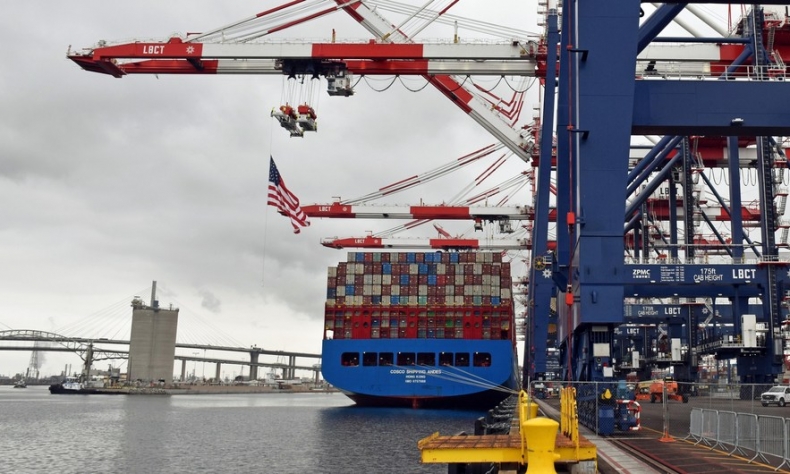
In an era of great economic upheavals, we need a framework that promotes dialogue instead of confrontation, and talks instead of tariffs.
In an interview with Beijing Review, Einar Tangen, a senior fellow at the Taihe Institute, a Beijing-based think tank, and a seasoned independent economic commentator, shared his views on what the recent tariff pause between China and U.S. reveals about both sides’ trade strategies, why U.S. tariffs fail to fix trade gaps and whether the?90-day reprieve can lead to lasting solutions. Edited?excerpts of their conversation follow:
Beijing Review: During their recent high-level meeting on economic and trade affairs in Geneva, Switzerland, China and the U.S. agreed to de-escalate trade tensions by drastically rolling back tariffs on each other’s goods for an initial 90-day period. What is your take on this move??
Einar Tangen:?President Donald Trump’s administration tried a very big bluff. Just think of international trade as a game of poker where all the players’ cards are visible. What countries import, export and consume is meticulously tracked and widely known.
Trump tried to convince the world he was holding a royal flush—the biggest hand in poker. But the rest of the players could see his cards and knew it wasn’t true. Still, the sheer weight of America’s political, economic and military power make others hesitant, and many nations weren’t sure how to respond.
Meanwhile, China stepped up and called the U.S. bluff by saying that what the Trump administration has proposed simply doesn’t add up.
If the goal is to reindustrialize America, then it means rebuilding infrastructure that already exists elsewhere, which will inevitably lead to overcapacity in the system. The U.S. is, in essence, stabbing itself while attempting to hurt others.
What China attempts to do is to bring the Trump administration back to reality—and that is exactly what we’ve seen unfold in these talks.
The question now comes to: How do you bring the U.S. back down to earth? No one wants the U.S. to play the military card. But neither can anyone afford to see it fail, as a collapse of the U.S. economy would be catastrophic. Trade routes would be disrupted, and the United States’ colossal demand—still a major engine of global growth—would dwindle, which will affect the entire globe.
China, in many ways, has acted as the adult in the room by saying: “We didn’t start this, but we have to figure out a way of containing the fallout—for our own sake, and for the stability of the global?economy.”
The country has consistently maintained that it is willing to talk but will not be talked down to, that negotiations must be conducted with mutual respect, and that real progress must be the goal.
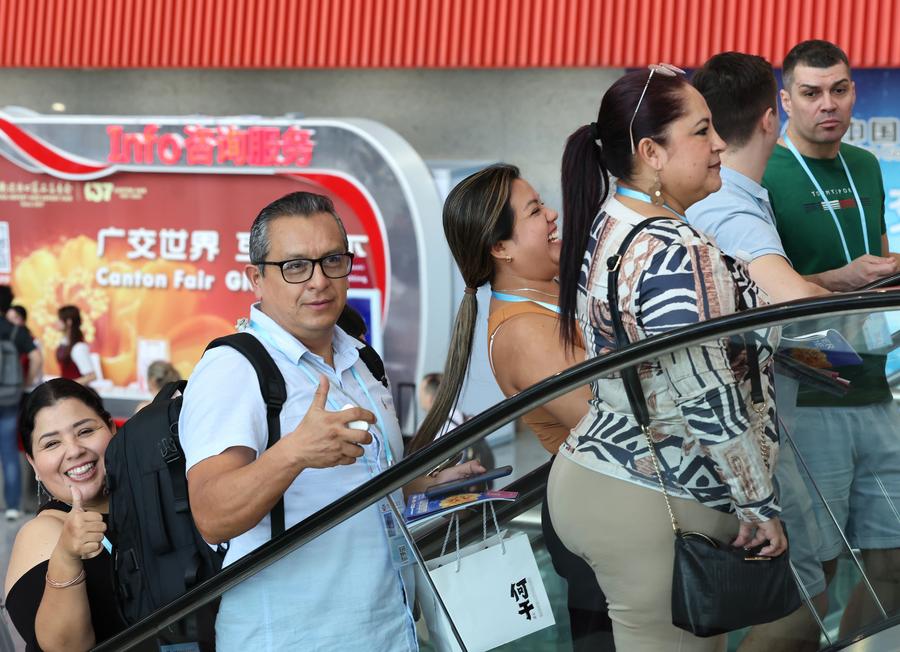
What we are seeing are two fundamentally different visions of how trade should work. One is extractive. The U.S. favored tariffs, bilateral trade deals and asynchronous negotiations, where it uses its might to force its will upon others.
China, by contrast, has promoted a more collaborative approach. That model is reflected in initiatives like the Belt and Road Initiative (a China-proposed initiative to boost connectivity along and beyond the ancient Silk Road routes—Ed.), the Regional Comprehensive Economic Partnership (the world’s largest free trade agreement covering the 10 Southeast Asian nations, China, Japan, the Republic of Korea, Australia and New Zealand—Ed.) and its stated interest in formally joining the Comprehensive and Progressive Agreement for Trans-Pacific Partnership (a free trade agreement consisting of 11 Asia-Pacific economies and the UK—Ed.).
One thing worth noting is that the talks were held in Geneva, where the World Trade Organization (WTO) is headquartered, a body China supports as essential to the multilateral trading system. At the heart of that system is the need for a fair mechanism for settling disputes—something the U.S. has continuously undermined by blocking the appointment of judges to the WTO’s Appellate Body (the global trading system’s final tribunal of appeal—Ed.).
A location like this clearly shows China’s support for the multilateral trading order. In an era of great economic upheavals, we need a framework that promotes dialogue instead of confrontation, and talks instead of tariffs.
The U.S. Government pointed to its trade deficit with China as a key justification for imposing what it called “reciprocal tariffs.” But that raises a critical question: Are tariffs really an effective tool for addressing trade imbalances?
The short answer is no. To understand why, we need to look at why the trade deficit exists in the first place.
The U.S. has an ongoing trade gap because it consumes more than it produces. A major factor behind that imbalance is the strength of the U.S. dollar. A strong dollar makes American goods more expensive to produce at home and less competitive in markets overseas.
A fact that the U.S. Government doesn’t want to admit is the steady erosion of the American middle class. In 1971, 61 percent of Americans were considered middle class. By 2024, that number had dropped to just 40 percent. That is a one third decline—and it has serious consequences.
Democracy functions best when most people feel invested in the future, when they have a stake in the system and something to lose, when they are willing to put aside their immediate needs in order to build a better future for their children and grandchildren.
But when people are just trying to survive—when their backs are against the wall and their jobs hang in the balance—they don’t have the luxury of investing in a better future. And for many Americans today, that’s the reality.

The central problem here is a refusal to reflect. The narrative often pushed is that China somehow “stole” American jobs, as if the latter crept in overnight and gathered up all the jobs—a tale that doesn’t even make sense. At their core, America’s problems stem from the shortcomings of its own system.
And until we recognize that, I’m afraid there isn’t much progress to be made. China may try to play the adult in the room, but it is dealing with a spoiled child that does not want to reflect on its own actions.
Looking ahead, what do you expect to see during the 90-day tariff reprieve and beyond??
During the China-U.S. trade talks, the entire world was waiting to see how China would respond, and what the outcome would be. Now, I can say with confidence that there is a shared sense of relief. It wasn’t just the market sector that breathed a sigh of relief; it was the international community as a whole. There is a sense that there finally is a starting point from which meaningful negotiations can take shape.
What I expect is a push for a universal, across-the-board deal. If the U.S. wants to impose a 10-percent tariff, fine; that cost will ultimately be passed on to American consumers, and that’s their choice.
But a uniform 10 percent is something other countries can work with. The key is uniformity; it spares businesses from the chaos of constantly adapting to shifting rules and wasting resources just to navigate an unpredictable political landscape.
In the meantime, China is likely to push for a Phase Two agreement. Under the Phase One agreement, which took effect in 2020, China agreed to expand purchases of certain U.S. goods and services, primarily energy and agricultural products. That deal showed some initial progress, but ultimately faltered due to the COVID-19 pandemic and actions by the Trump administration. Now, signs point to a renewed effort.
In return, the U.S. should refrain from continuing its economic bullying. The country has to start to realize that it is not the ruler of the world, but a member of an economically, politically and culturally interconnected community.
My hope for the U.S. is that it will abandon all of the previous nonsense and take a new path. Instead of trying to reindustrialize the country, it could embrace digital development, expand access to quality education and build a system that supports the most vulnerable.
There’s an old saying that a society isn’t judged by how it treats the powerful, but by how it treats the powerless. In the U.S., we know the words—we quote them often. The real challenge now is to start living by them.