Creating Digital Connections
 Facebook
 Twitter
 Linkedin
 Google +
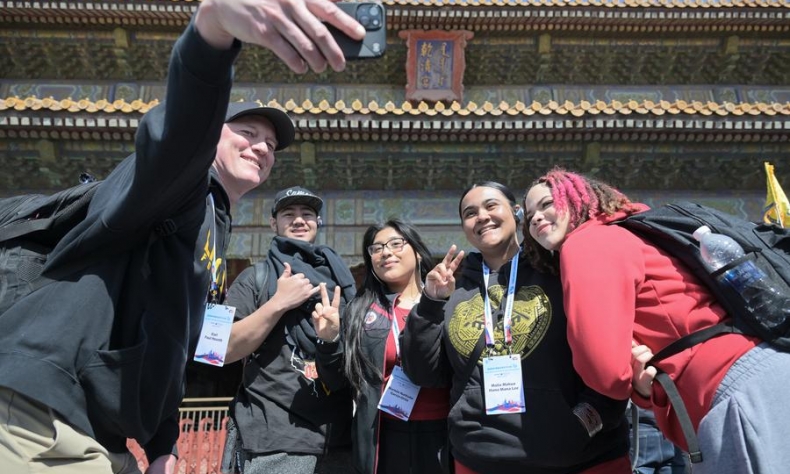
When young Americans and Chinese meet, not as representatives of competing nations but as fellow humans sharing meals, games and memes, they create the kind of trust that no policy paper can replicate.
At a time when China-U.S. relations are facing challenges at the trade level, a quiet yet important development is unfolding among the general public, one that speaks to the enduring desire for mutual understanding and people-to-people exchange.
In January, following discussions within the U.S. Government about a potential ban on Chinese-owned popular short video app TikTok, millions of American users made a noteworthy decision. Instead of disengaging from Chinese digital culture, many turned to Xiaohongshu (RedNote), a popular Chinese lifestyle and e-commerce platform. Within days, the app experienced an unprecedented surge in American downloads, with over 700,000 new users joining and RedNote briefly becoming the most downloaded app in the U.S. App Store. Many of these users began learning basic Chinese expressions to better interact with netizens across the Pacific, demonstrating a sincere interest in cross-cultural dialogue.
This spontaneous digital movement highlighted the strong foundation of friendship that can exist between the peoples of China and the U.S., independent of official discourse. It reflects the growing role of youth and digital platforms in building bridges, deepening mutual understanding and contributing positively to the broader China-U.S. relationship.
Digital bridge-building
The demographic driving this digital bridge-building is particularly noteworthy: predominantly young Americans and Chinese users who grew up in the Internet age. These digital natives approach cross-cultural interaction with curiosity rather than suspicion, viewing cultural differences as opportunities for learning rather than sources of conflict.
American users arriving on RedNote demonstrated remarkable adaptability and enthusiasm for Chinese digital culture. They quickly adopted platform-specific vocabulary, participated in trending topics and created original content using Chinese online slang. The phenomenon of “paying the cat tax,” where users share pet photos as a form of introduction, became a universal language of sorts, with American users eagerly participating in this uniquely Chinese social media behavior pattern.
Similarly, the trend of duizhang, which means comparing daily expenses and lifestyle choices, sparked meaningful conversations about economic realities, social values and life priorities in both countries. These exchanges revealed the genuine curiosity, humor and warmth that characterize human connection. Chinese users welcomed their American counterparts with sincerity and generosity, helping them navigate language barriers and cultural nuances. American users, in turn, showed genuine interest in understanding Chinese perspectives on everything from food culture to social media etiquette.
Notably, language-learning platforms like Duolingo reported on January 16 a 216-percent increase in U.S. users learning Chinese during this period, indicating a proactive effort on their part to bridge communication gaps.
Authentic stories
Perhaps the most striking aspect of this cross-platform migration is how it has shifted focus from macro-political narratives to micro-personal stories. Traditional international communication often emphasizes policy positions, economic statistics and diplomatic achievements. While these elements remain important, the RedNote phenomenon reveals the power of everyday narratives in building genuine understanding.
American users on RedNote gravitated toward content about daily life in China: food preparation tutorials, travel vlogs showcasing Chinese landscapes, technology reviews and lifestyle content. These seemingly mundane topics proved far more engaging than abstract policy discussions or economic analyses. A Chinese user’s video tour of a traditional market or explanation of regional cuisine variations often generated more meaningful cross-cultural dialogue than formal presentations about China’s economic development to the general American youth.
This preference for personal narratives aligns with broader trends in global communication, where audiences increasingly seek authentic, relatable content over institutional messaging.
Chinese users reciprocated this interest, asking American users about their daily routines, educational experiences and cultural practices. These exchanges created a rich tapestry of mutual discovery, with users from both countries expressing surprise at similarities in their concerns, aspirations and daily challenges. Young professionals in Beijing and New York City, for instance, found common ground in discussions about work-life balance, housing costs and career development, universal concerns that transcend national boundaries.
The platform’s algorithm facilitated these connections by promoting content that generated positive engagement across cultural lines. Cooking videos, travel content and educational materials consistently performed well, suggesting that algorithmic amplification and human interest align when it comes to cross-cultural content.
Discovering the real China
Young Americans are showing a growing interest in China, reflected in both their online engagement and real-world experiences. As digital interactions across platforms have intensified, a broader trend has emerged: More Americans are traveling to China in search of authentic insights into contemporary Chinese life—and sharing those experiences online. These firsthand encounters, both physical and virtual, bypass traditional media filters, offering unvarnished perspectives that challenge prevailing geopolitical narratives.
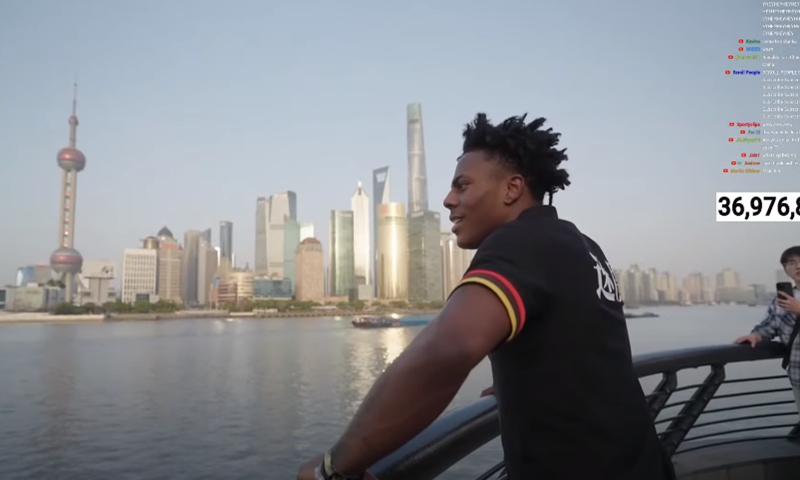
A defining moment in this shift came when popular American YouTuber IShowSpeed livestreamed his journey through China. Over six hours, his global audience witnessed a country marked by hospitable citizens, clean urban environments and seamless digital connectivity. His trip sparked viral acclaim, with viewers remarking that “1.6 billion U.S. dollars in anti-China propaganda was defeated by a single livestream.”
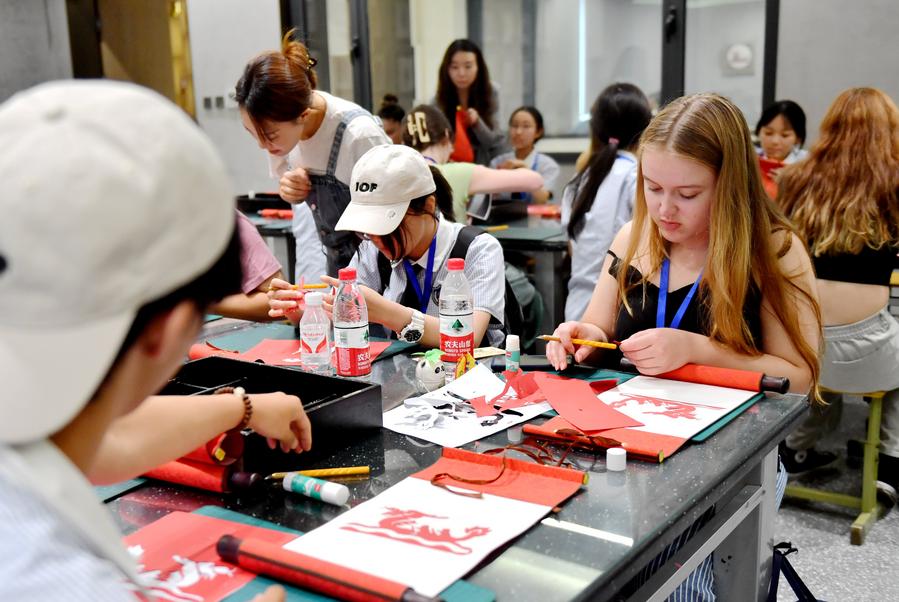
This online enthusiasm has begun to snowball into real-world exchanges. Young Americans, motivated by curiosity and positive digital impressions, are increasingly participating in cultural immersion programs in China. For instance, the 2025 American Youth Pickleball Cultural Exchange China Tour program, running from April 10 to 20, brought middle school students, teachers and parents to Beijing, Shanghai and Shenzhen, where they played sports, visited schools, museums and tech companies, and held roundtable discussions with their Chinese peers. These encounters extended the digital dialogue into tangible, shared experiences.
Chinese Ambassador to the U.S. Xie Feng underscored this cultural momentum on social media platform X by reposting a message from Jeffrey Keith Sullivan, Director of the Department of Athletics for Montgomery County Public Schools in the state of Maryland. In his post, Xie emphasized how “sports connect the youth of China and the U.S., building bridges for the future.” These initiatives exemplify a new kind of diplomacy, informal, people-driven and rooted in shared interests like sports, education and lifestyle.
The evolution from platform migration to physical exchange suggests a profound shift in how cross-cultural understanding is forged. A 2023 Pew Research Center poll found that negative perceptions of China among Americans aged 18-29 were 11 percent lower than the national average. Similarly, a 2023 report by The Economist revealed that Americans under 45 were half as likely as those aged 45 and older to view China as a rival. These generational patterns signal a possible reimagining of China-U.S. relations, one grounded in mutual experience rather than inherited ideology.
The willingness of American youth to visit China, communicate in Chinese language and share their journeys on platforms like RedNote reflects a rejection of entrenched biases and a move toward relational diplomacy. (Relational diplomacy is a foreign policy approach that prioritizes building trust-based relationship between nations rather than relying solely on formal treaties—Ed.).
As these exchanges multiply, their cumulative effect could prove more influential than formal initiatives. When young Americans and Chinese meet, not as representatives of competing nations but as fellow humans sharing meals, games and memes, they create the kind of trust that no policy paper can replicate.
In an interconnected world, the digital bridges built today—through social platforms, livestreams, language learning and cultural exchanges—may form the bedrock of tomorrow’s bilateral relations. These everyday interactions are not only redefining public perception; they are laying the groundwork for a more stable, respectful and empathetic future between the world’s two largest economies.
The authors are research associates at the Academy of?Contemporary China and World Studies.