How China’s Modern Corporate System Fuels Sustainable Growth
 Facebook
 Twitter
 Linkedin
 Google +
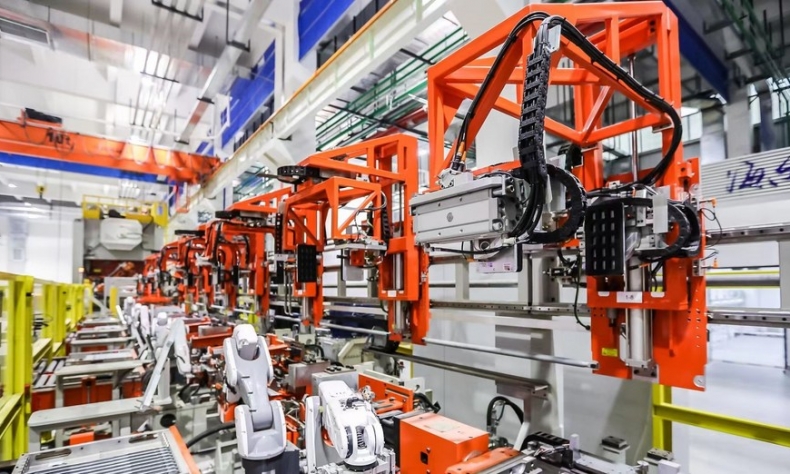
By offering a top-level design for the modern corporate system, it provides a strategic framework to help companies strengthen their internal governance structures. This, in turn, enhances governance efficiency and enables businesses to transform institutional strengths into competitive, innovative and developmental advantages.
In Yonglian Village, located in Zhangjiagang City, Jiangsu Province, traditional rural elements like winding waterways, stone bridges and houses featuring grey brick walls, white fa?ades and dark-tiled rooftops come together in perfect harmony. But beyond the scenic charm lies a modernized township. High-rise apartment complexes, parks, libraries and bustling commercial streets are all part of daily life there, offering amenities on par with any city.
“We’ve got everything the city has, and things the city can’t offer. We have blue skies, clear water, fresh air and even income distribution,” local villagers will often say.
Pride runs deep in Yonglian. Today, each resident receives an average dividend of 17,000 yuan ($2,369) annually from the village collective.
So what’s the secret behind Yonglian’s success? A key part of the answer lies with Everrising Holdings—ranked 71st among China’s top 500 private enterprises in 2024.
Yonglian is the birthplace of Everrising. The story goes back to 1984, when this small fishing village along the Yangtze River opened a steel mill with just 300,000 yuan ($136,000) of self-raised capital. Through decades of ups and downs, that modest venture grew into a diversified industrial group with annual revenues exceeding 100 billion yuan ($14 billion). In the process, Yonglian earned its reputation as China’s No.1 steel-making village.
After two rounds of ownership reform over the previous years, the village collective now holds 25 percent of Everrising. The shares generate over 100 million yuan ($14 million) in dividends for the villagers every year.
Everrising is committed to corporate social responsibility (CSR). For over four decades, the company has built a long-term framework to ensure it gives back to the community of its origin. Beyond its efforts in rural revitalization, Everrising has extended its social commitment to remote regions in other parts of the country, including Yunnan Province, Guizhou Province and Xinjiang Uygur Autonomous Region, by creating job opportunities and supporting local economies.
China’s rural revitalization, a strategy introduced at the 19th Communist Party of China (CPC) National Congress in 2017, aims to promote the economic prosperity and overall development of rural areas. It builds on the success of the nationwide poverty alleviation campaign that had eradicated absolute poverty as of late 2020.
Everrising’s CSR initiatives align with the government’s goals for improving corporate governance. On May 27, Chinese authorities issued a guideline on improving the modern corporate system with Chinese characteristics. Among its 19 targeted measures, one focuses specifically on strengthening CSR. It calls for integrating the concept of social responsibility into all aspects of business operations, encouraging businesses to contribute to green development, rural revitalization, social welfare and cultural preservation.
The measures also cover a broad range of areas, including improving corporate ownership structures, strengthening corporate governance, leveraging capital markets to promote better governance and fostering innovative organizational models for enterprises.
Experts said the most distinctive feature of this policy document is its emphasis on institutional innovation. By offering a top-level design for the modern corporate system, it provides a strategic framework to help companies strengthen their internal governance structures. This, in turn, enhances governance efficiency and enables businesses to transform institutional strengths into competitive, innovative and developmental advantages.
Chinese characteristics
In 1993, China first introduced the concept of establishing a modern corporate system tailored to the needs of a market economy. At the time, and for many years thereafter, the country’s efforts to build and improve the system focused mainly on clarifying property rights, separating government functions from business operations, improving corporate governance and promoting sound management practices.
“These efforts were primarily focused on state-owned enterprises (SOEs), forming a cornerstone of China’s broader SOE reform agenda,” Xiang Anbo, a researcher specializing in corporate management at the Development Research Center of the State Council, told Beijing Review. “The reforms spurred deeper transformation and innovation within the state sector and set a precedent that influenced the development of enterprises across all ownership types.”
As China steps into a new era, upgraded national strategies, intensifying global competition and profound impacts from technological revolutions and industrial transformations have placed new demands on the modernization of its corporate system. Ultimately, this means advancing a distinctly Chinese approach to corporate governance, Xiang said.
He explained that the latest push emphasizes Chinese characteristics. These characteristics are reflected in strengthening the leadership of the CPC within enterprises, prioritizing people-centered development, improving mechanisms that encourage innovation, and building comprehensive systems for CSR and corporate culture.
In the case of Everrising, rather than handing immediate cash payouts to villagers during restructuring, the village collective retains a 25-percent stake in the company, a decision that has since benefited not just one generation, but their descendants as well. This people-centered solution is a testament to the distinctive features of China’s corporate system.
A shot in the arm
For private enterprises in particular, the guideline underscores the importance of establishing more efficient governance structures and more effective operational mechanisms, Dong Yu, Executive Vice President of the China Institute for Development Planning at Tsinghua University, said.
According to data from the State Administration for Market Regulation, as of late March, China had over 57 million registered private enterprises, accounting for 92.3 percent of all businesses nationwide. Given their sheer number and diversity, it is essential to help entrepreneurs embrace the modern corporate system with Chinese characteristics.
Xiang said large private companies need to establish strong governance institutions, refine internal mechanisms and improve overall governance efficiency according to their operational needs, while micro, small and medium-sized firms can focus on enhancing management capabilities.
At the same time, promoting innovation through effective incentives is essential, Xiang added.
The guideline provides a clear roadmap for fostering innovation within enterprises. Specific measures include encouraging companies to establish or jointly build new types of research and development institutions, smoothing channels for the movement of professionals between enterprises, universities and research institutes, and promoting the sharing of innovation resources—particularly by urging large enterprises to open their research and development capabilities to smaller firms.
Experts said these measures will help address long-standing challenges, such as fragmented efforts and limited innovation resources within individual enterprises.
Xiang added that equally important is the need to reinforce risk prevention and control and make strategic use of the policy support tools available.
The guideline provides a systematic framework of institutional support for the high-quality development of private enterprises, Yu Jiajun, Vice President of Everrising, told Beijing Review. “In particular, the emphasis on improving service and support systems for private businesses has further strengthened confidence within the sector.”
The new guideline, together with the private sector promotion law, which took effect on May 20, create a strong policy synergy aimed at fostering a fairer and more competitive environment for private enterprises, Yu said.
Empowered by supportive policies, Everrising is accelerating its push to build a modern governance system that improves operational efficiency and risk resilience and strengthening internal incentive mechanisms to unlock innovation potential, Yu said. “We will remain committed to our industrial roots while actively investing in emerging industries to enhance overall competitiveness and long-term growth, moving toward the goal of becoming a world-class and globally competitive enterprise.”
In the context of China’s new development strategy, expanding into global markets has become a growing trend for private enterprises. This requires businesses to align with international rules and standards. “Many of the policies outlined in the guideline are in line with global corporate governance practices,” Dong said.
Strengthening internal management in accordance with these requirements not only helps private companies expand their presence overseas but also lays the foundation for building globally competitive enterprises, he said.