Smart Businesses Know China Is the Future
 Facebook
 Twitter
 Linkedin
 Google +
China is not just part of that future—it is central to that future. And smart global businesses are already there.
In an era where geopolitical tension dominates headlines and economic narratives often pit nations against one another, an undeniable truth persists beneath the noise: For forward-looking, profit-driven global businesses, China remains an indispensable partner and an essential market. While politicians in Washington and elsewhere frame engagement with China as a liability, the world’s most successful companies continue to double down—not retreat—from their presence in China. Why? Because smart businesses know that China is not just part of the future—it is the future.
Nowhere is this clearer than in the wave of high-profile, high-value investments that have poured into China in 2025. From the automotive and energy sectors to pharmaceuticals and green technology, multinational companies are not only maintaining their operations in China—they are expanding them in bold, strategic ways. These are not casual business moves, nor are they speculative gambles. They are calculated; data-driven, long-term commitments grounded in commercial logic and future-facing strategy. They represent confidence—not in a political system—but in a market, a supply chain, a workforce and a vision of sustainable growth.
Doubling down
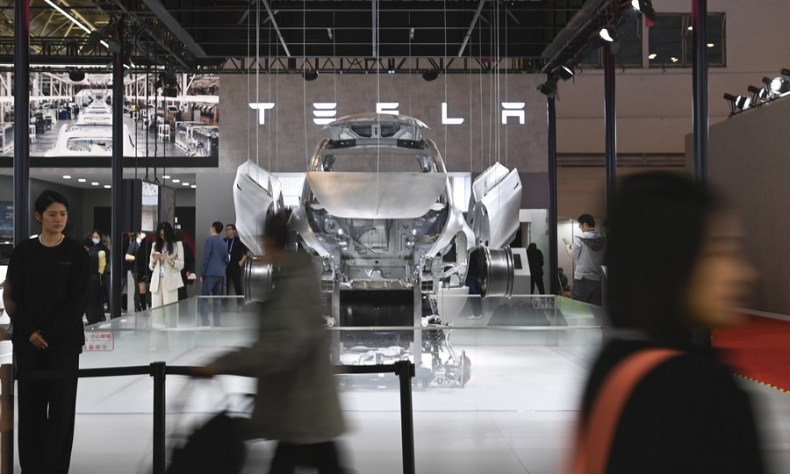
Few companies embody innovation and ambition like U.S. electric vehicle (EV) manufacturer Tesla. While U.S. lawmakers debate “decoupling,” Tesla is doing the opposite—entrenching itself further in China’s industrial and energy ecosystem. In early 2025, Tesla began operating its new battery Megafactory in Shanghai, its second such factory and set to produce up to 10,000 grid-scale Megapack Battery Units, large-scale, industrial-grade energy storage systems designed by Tesla, annually. These batteries, essential for stabilizing renewable energy output, will serve both domestic and international markets, underscoring China’s growing role not just in EV manufacturing, but also in energy storage solutions.
Tesla’s decision to launch a grid-scale battery project in China isn’t a side initiative—it’s a half-billion-dollar commitment to the world’s energy future. In June, Tesla signed a 4-billion-yuan ($557-million) agreement with Shanghai to build China’s largest municipal energy storage facility. At the same time, the company’s new $200-million battery plant near its Shanghai Gigafactory began local production, strengthening supply chain resilience and further reducing manufacturing costs.
None of these investments were made lightly. Each represents a deliberate, long-term bet on China’s innovation ecosystem and clean energy market. They are strategic deployments of capital by one of the most scrutinized companies in the world—precisely because Tesla sees China as essential to its future.
Toyota’s 2025 activity in China, then, speaks volumes about how top automakers are adapting to global trends. In July, Toyota announced a $139-million joint venture in Chengdu, capital of Sichuan Province in southwest China, with Shudao Investment Group to build hydrogen fuel-cell systems—positioning itself at the forefront of the next-generation mobility revolution. Hydrogen may still be nascent in other markets, but Toyota understands that China is investing heavily in hydrogen infrastructure—and Toyota plans to be part of it from day one.
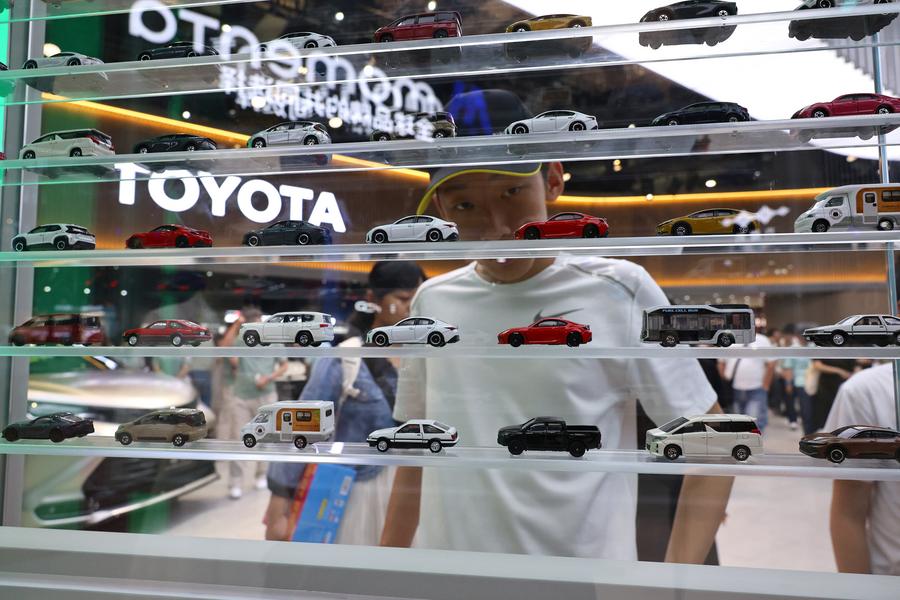
But perhaps most notable is Toyota’s move toward full ownership and localized innovation. In February, Toyota committed nearly $2 billion to building its first wholly owned Lexus EV and battery plant in Shanghai’s Jinshan District. Construction began in June, with the goal of producing 100,000 EVs per year by 2027.
This isn’t just another production line, it’s a milestone. Toyota is no longer relying solely on joint ventures to serve the Chinese market. It’s integrating itself directly and deeply into China’s industrial fabric. Furthermore, Toyota has begun using Chinese-made EV motors—sourced from Japanese multinational Nidec Corp., specializing in electric motors, drives and related components—for its bZ3X EV, improving cost competitiveness and boosting sales.
In a landmark move, Toyota transferred new product research and development (R&D) authority from Japan to China for the first time in June—acknowledging that innovation for the world’s largest auto market must be led in China, for China. These are not superficial tweaks to a global strategy. They are fundamental restructuring decisions made with full awareness of global market trends, local consumer expectations and the scale of China’s future.
Scaling hi-tech energy?production
While automakers push forward on green mobility, global energy players are pursuing large-scale industrial investments. In Huizhou, Guangdong Province, U.S. oil and gas corporation ExxonMobil is preparing to launch one of the largest petrochemical complexes ever built by a foreign firm in China. With test operations underway in 2025, the $10-billion Huizhou project will produce high-performance chemicals used in clean packaging, automotive parts and advanced electronics.
This massive steam cracker complex is not only a first for ExxonMobil in China—it is one of the most advanced of its kind in the world. Its construction is no short-term maneuver. It reflects a strategic shift toward aligning long-term production capacity with China’s enormous and growing demand for specialty chemicals.
Rather than backing away from China, ExxonMobil is investing at scale—because the math makes sense. China’s industrial demand, infrastructure and supply chain integration offer a competitive advantage that no other market can match. That is the logic behind a $10-billion project. No company allocates capital of that magnitude on a hunch. It is a statement of confidence in China’s long-term trajectory.
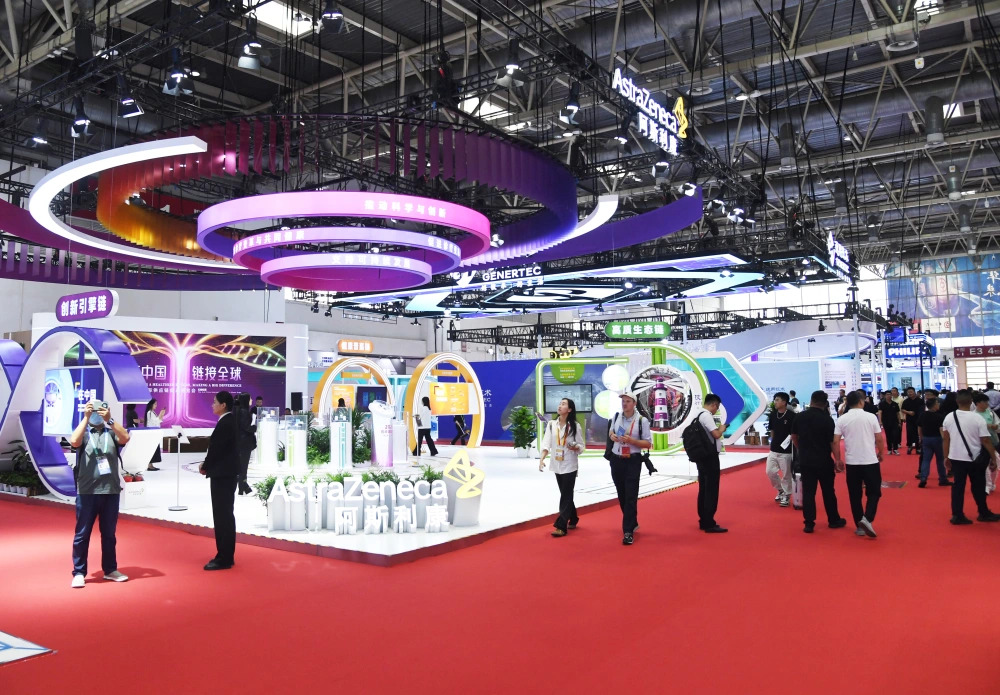
This year has also seen strategic entries into China from companies in sectors far beyond energy and autos. AstraZeneca, the global biopharmaceutical giant, announced a $2.5-billion investment to expand its R&D and manufacturing base in Beijing. This includes AI-powered research labs and partnerships with Chinese biotech companies. The goal? To develop next-generation therapies in oncology, respiratory disease and rare disorders for both Chinese and global patients.
Likewise, India’s Sona Comstar entered China through a $20-million joint venture to produce driveline systems and EV components. As a rising global supplier of precision auto parts, its move into China signals a commitment to be part of the most dynamic EV supply chain in the world.
These are not testing-the-waters ventures. They are long-term, strategic commitments to innovation and competitiveness. In biotech and EV technology alike, these companies are betting not just on China’s market—but on its ability to lead in R&D, engineering and scale.
Strategic, not sentimental
What unites all these ventures—Tesla, Toyota, ExxonMobil, AstraZeneca and Sona Comstar—is a sober, strategic mindset. These companies aren’t investing in China because of politics or sentiment. They are investing because China delivers unmatched scale, speed, supply chain integration and consumer demand. Each of these companies has made detailed, data-driven decisions to allocate substantial capital into China—because it is simply good business.
And these moves are not about the next quarter—they are about the next decade. The size of these investments, the nature of the sectors involved and the localization of R&D and production all signal an unmistakable truth: These companies are planning to be in China for the long haul. And they intend to grow there.
While some policymakers and pundits continue to push for economic decoupling and punitive restrictions, the business community knows better. The idea that the global economy can “de-risk” or “disengage” from China is a fantasy. For companies competing in EVs, chemicals, healthcare or energy—China is where the future is being built.
These investments should not be viewed with suspicion. They should be seen as proof of global confidence in China’s long-term economic potential. Rather than chastising companies for building bridges, governments should support policies that foster mutual benefit, innovation and collaboration.
The most successful companies in the world are not gambling on China. They are calculating the future and committing to it. Because smart businesses know what too many ideologues have forgotten: Engagement is not weakness. It is strength. It is strategy. And it is how the future is made.
China is not just part of that future—it is central to that future. And smart global businesses are already there.
The author is president of non-profit organization AmericaChina, a fellow of the Foreign Policy Association, and senior advisor to the China-United States Exchange Foundation.