A Society in Motion
 Facebook
 Twitter
 Linkedin
 Google +
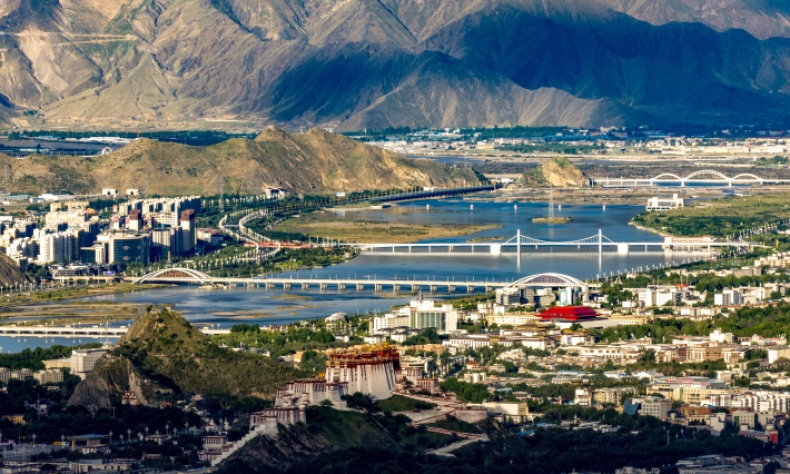
Walking through villages now lit by electricity, schools where students of all backgrounds are taught side by side and cities linked by modern rail and road, it becomes clear that Xizang is not a relic of history but a society in motion.
It has been more than a year since my visit to Xizang Autonomous Region, yet the multitude of impressions from that journey remain vivid in my mind. This year, as we celebrate the 60th anniversary of the autonomous region, those memories return with renewed force.
Chinese President Xi Jinping himself traveled to the regional capital of Lhasa on August 20-21 to take part in the anniversary celebrations, underscoring the region’s importance within the broader story of China’s development. In his remarks during the visit, Xi emphasized how stability, development and unity among all ethnic groups are central to Xizang’s future, framing the plateau region not as a remote frontier but as an integral part of China’s modernization.
Hearing his words, I could not help but think back to my own journey, where the evidence of rapid progress stood in stark contrast to the static, almost museum-like image of Xizang so often portrayed in Western narratives.
Everywhere I went, signs of development were unmistakable: electrification reaching remote villages, modern roads and tunnels cutting through the mountains and afforestation projects gradually reshaping the plateau. In education, too, the balance between tradition and progress was evident. At Lhasa No.8 Middle School, students learned both standard Chinese and the Tibetan language, practiced calligraphy, painting and herbal medicine, while also studying robotics and AI. The Potala Palace (a UNESCO World Heritage site with a history of more than 1,300 years—Ed.), towering above Lhasa with its brilliant white walls and saffron-red accents, conveyed the gravity of Xizang’s past. Inside, among golden statues, manuscripts and the scent of burning yak oil, the calm reverence of pilgrims lent the place a gentle and composed atmosphere—something I found especially welcome in a setting that might otherwise have felt somewhat overwhelming.
A history of hardship
Known both as the Roof of the World and the Water Tower of Asia, the Qinghai-Xizang Plateau is a place of extremes: Soaring over 4,000 meters on average, its thin air, harsh cold and arid climate long made intensive agriculture impossible, limiting communities to subsistence herding and small-scale farming. Among the resources that sustained life here, none were more vital than the yak—the No.1 source of milk, meat, wool, transport and even butter for the monastery lamps—and highland barley, the resilient grain that became the staple of the Tibetan diet in the form of tsampa. Together, they not only supported survival but also became woven into the culture and spirituality of the plateau.
Yet from this same land spring some of Asia’s greatest rivers, lifelines that sustain over a billion people downstream, underscoring Xizang’s role not only as a geographic frontier but as a cradle of life across the continent.
In the modern era, Xizang’s fate has been fraught with hardships. For example, at the dawn of the 20th century came a challenge from much farther afield. Enter the British: rulers of India and masters of an empire stretching across the seas, who now pressed northward into Xizang. They cast the region as an ultimate fortress of obscurantism crushing a miserable people—a charge not without truth, given the harsh rule of the aristocratic and monastic elites. Yet Britain’s goal was never to uplift Xizang’s people but to advance its own imperial interests, prying open trade routes and creating a buffer to shield and secure India, the crown jewel of its empire.
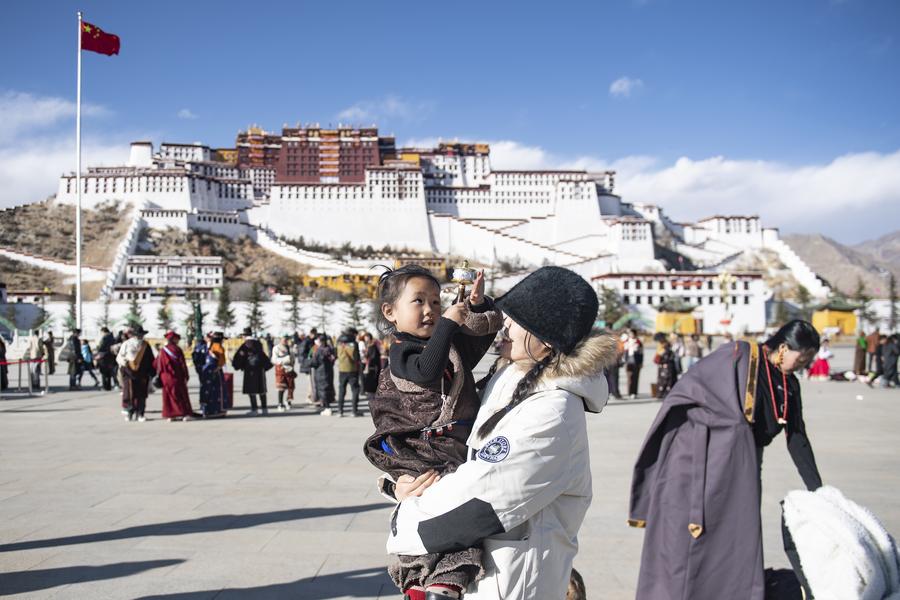
In retrospect, Western interventions in Xizang served primarily geostrategic ends, leaving behind little more than unrest and abandonment once strategic priorities shifted. In the mid-20th century, some 95 percent of the population was still illiterate, and life expectancy barely rose above 30 years—a stark reminder of the deep inequalities entrenched under aristocratic and monastic rule.
Xizang’s peaceful liberation in 1951 broke with centuries of feudal oppression and tied its future to the broader course of national modernization. The irony is that those who most loudly championed Xizang’s freedom so often treated it as a pawn, while the real transformation of Xizang’s society—however complex—unfolded through China’s own efforts.
Peace-based?development
In Xizang’s history, events such as the marriage between Tibetan King Songtsen Gampo and Princess Wencheng of the Tang Dynasty (618-907) and careful governance by the Qing Dynasty (1644-1911) wove Xizang more deeply into the fabric of Chinese civilization and brought stability, while Western interventions, like British incursions or Cold War intrigue, left deep scars. Too often, this long history is reduced to extremes: either a timeless realm of spirituality or a perpetual victim of outside rule. In reality, its past defies such simplifications. Understanding it matters, not least because many of today’s debates over sovereignty, culture and identity draw on memories—often selective ones—of what Xizang once was and what it endured.
And yet, the weight of history should not obscure the transformations of the present. The hardships of feudal serfdom, the upheavals of invasion and rebellion, even the struggles of the last century—all form the backdrop to a very different reality today, where development, education and infrastructure are no longer distant ideals but lived?realities for Xizang’s millions of residents.
Centuries of encounters—with neighboring countries, colonial intrusions and covert Cold War campaigns—have all left their traces. But not one defines Xizang today as much as the resilience of its people and the rapid changes of recent decades. Walking through villages now lit by electricity, schools where students of all backgrounds are taught side by side and cities linked by modern rail and road, it becomes clear that Xizang is not a relic of history but a society in motion.
Today, that motion is being carried forward within a larger vision. Under the leadership of the Chinese Government, development in Xizang and Xinjiang Uygur Autonomous Region is increasingly tied to the China-proposed Belt and Road Initiative (BRI)—a global framework for connectivity now in its second decade. The BRI extends across Eurasia, Africa and beyond, but China’s western regions play a crucial role as bridges to Central and South Asia. Major projects, such as the planned hydropower project on the lower reaches of the Yarlung Zangbo River, highlight both the opportunities and the challenges of this integration. Once a source of tension with India, such undertakings are being discussed in the context of cooperation, reflecting a cautious but hopeful trend toward stability and partnership between the world’s two most populous nations.
China and India are home to more than a third of humanity. A shared commitment to progress would not only ease historical tensions along their frontier but also set an example for the world, proving that peace through development is more than an ideal: It is a practical path toward a more stable and prosperous future for all nations.
The author is a board member of the Belt and Road Institute in Sweden.