The Weaponization of Infrastructure
 Facebook
 Twitter
 Linkedin
 Google +
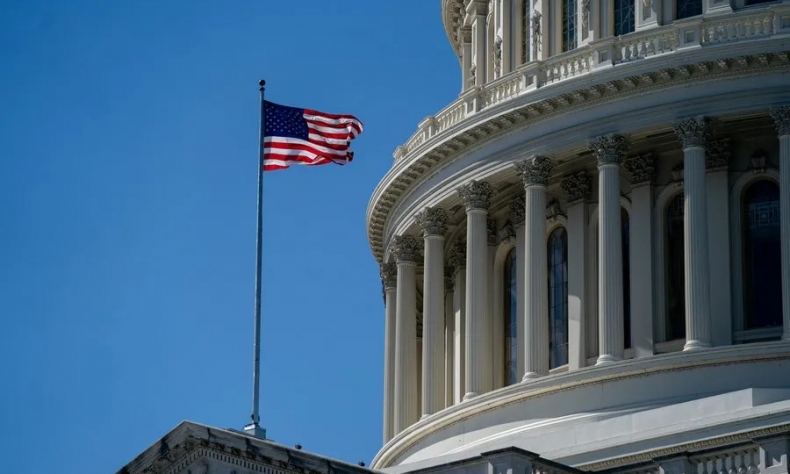
More likely, we’re heading toward a fragmented world: one centered on the U.S. that excludes Chinese participation in ‘trusted networks,’ and another more inclusive system embracing developing countries.
When the U.S. Federal Communications Commission voted on August 7 to approve new submarine cable regulations, the world witnessed a dangerous turning point: Critical infrastructure is being transformed from a global public good into a geopolitical weapon. The new regulations, which ban companies linked to China, Russia and other “foreign adversaries” from submarine cable projects connecting to the U.S., are not merely an update to technical regulatory policy—they’re Washington’s latest move in a systematic effort to reshape the global maritime order.
The new approach is breaking a tacit understanding that has held for decades: Maritime infrastructure should serve humanity’s need for connection, not become a tool of great power competition.
From connection to division
Submarine cables carry 99 percent of the world’s intercontinental Internet traffic, forming the most crucial “nervous system” of the modern world. For decades, regardless of shifting political winds, these fiber-optic lines, lying deep beneath the ocean have quietly fulfilled their mission of connecting the world. Banking transactions, video calls, cloud computing—every aspect of modern life depends on this network.
But America’s new rules have changed the game. By establishing a “presumption of denial,” automatically barring these companies from connecting with the U.S. unless they can prove they pose no security threat, Washington is effectively telling the world: Connection comes with conditions, cooperation is revocable.
What’s more troubling is that this logic is spreading throughout the maritime industry. America’s Section 301 investigation into China’s shipbuilding sector proposed hefty fees on Chinese-built vessels, essentially proposing a political restructuring of global shipping networks. Such a significant portion of ships entering U.S. ports in 2024 involved Chinese manufacturing or operators that if this approach becomes the norm, it will fundamentally reshape global maritime patterns.
Here lies a fundamental contradiction: America wants to maintain its dominance in global maritime systems while simultaneously excluding the most competitive players.
Take shipbuilding. With America’s own shipbuilding capacity representing just 0.13 percent of the global market, attempting to redistribute market share through policy rather than competition often results in higher costs rather than enhanced competitiveness. The global submarine cable market is similarly concentrated, with just four companies—America’s SubCom, France’s Alcatel Submarine Networks, Japan’s NEC, and China’s HMN Technologies—controlling 98 percent of the market. Artificially excluding one major player will likely lead to supply shortages and price increases.
The deeper issue is that the actual effectiveness of this approach remains questionable. Shutting out competitors doesn’t automatically boost one’s own technological capabilities—America’s shipbuilding decline over recent decades is a case in point. Meanwhile, artificially reducing supplier choices typically drives up costs, with the entire industry and consumers ultimately footing the bill.
When America asks other countries to choose between “security” and “efficiency,” it’s creating a false binary. The real challenge isn’t selecting which supplier to trust, but establishing transparent standards and effective oversight to ensure all participants meet security requirements.

Ironically, American pressure hasn’t weakened Chinese maritime industry competitiveness as expected. In 2024, despite the shadow of the 301 investigation, China’s shipbuilding sector still achieved record-breaking new orders of 113.05 million deadweight tons. This resilience stems partly from technological accumulation—such as HMN Technologies’ release of the world’s first 32-fiber pair submarine communication repeater—and partly from market reality: Global trade and digitalization won’t halt for Washington’s policy preferences.
But this resilience doesn’t mean the world can ignore America’s policy impact. More likely, we’re heading toward a fragmented world: one centered on the U.S. that excludes Chinese participation in “trusted networks,” and another more inclusive system embracing developing countries.
This fragmentation is already happening. In regions unable to afford high connection costs, Chinese company participation often determines project viability. In other areas, American influence may compel local actors to choose more expensive but “politically correct” solutions.
A choice between two futures
Who will ultimately bear the cost of weaponizing infrastructure? The answer will likely be those countries and regions most in need of connection.
When submarine cable construction costs rise due to restricted supplier choices, the first casualties are often projects with limited funding capacity. When shipbuilding becomes dominated by political considerations, rising global trade costs ultimately pass to consumers. When technical standards fragment along geopolitical lines, reduced interoperability will impact the entire digital economy’s?efficiency.
In this sense, America’s policy choices aren’t just reshaping maritime industry patterns—they’re redefining globalization’s boundaries. They pose a fundamental question: In an era of intensifying great power competition, can we maintain truly globalized infrastructure networks?
Today’s maritime infrastructure disputes actually represent two radically different worldviews.
One holds that in an age of geopolitical competition, security must trump efficiency, and control must override openness. Supporters would argue that critical infrastructure is too important to entrust to potential adversaries.
The other maintains that genuine security comes from interdependence and cooperation, while artificial technological fragmentation only makes everyone less secure. This camp would point out that global challenges require global solutions—isolation and exclusion solve no real problems.
The contest between these worldviews will determine the direction of global maritime infrastructure development for decades to come. Are we moving toward a more open, interconnected maritime world, or a divided, antagonistic maritime system?
The answer depends not only on choices made in Washington and Beijing, but on the international community’s collective wisdom. In an increasingly interconnected world, weaponizing infrastructure may be a cost none of us can afford.
After all, the ocean belongs to no single nation, and connecting the world shouldn’t become the privilege of a few.
The author is an associate professor at Shanghai Jiao Tong?University’s China Strategy Institute of Ocean Engineering.