Global Governance at a Turning Point
 Facebook
 Twitter
 Linkedin
 Google +
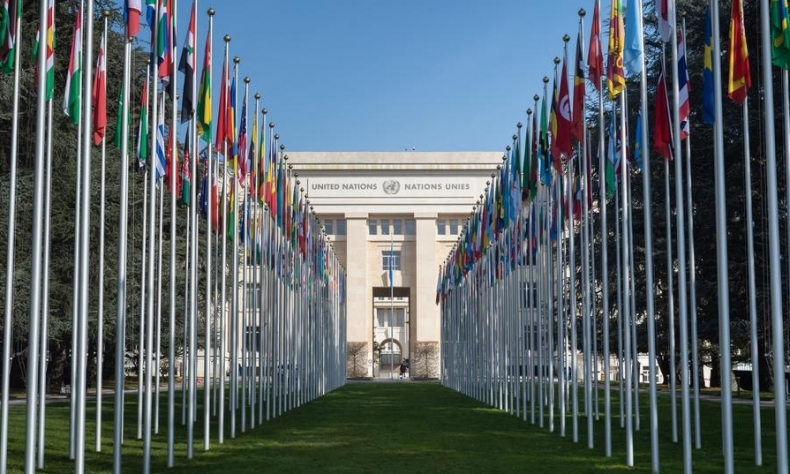
The GGI, the broader Global South mobilization, and the example of Central Asia’s diplomatic model all point toward a re-anchoring of global governance around equality, cooperation, and action.
As the United Nations (UN) marked its 80th anniversary on October 24, the international system it helped establish in 1945 finds itself at a profound inflexion point. When the UN Charter first affirmed the organization’s purpose “to maintain international peace and security,” “to reaffirm faith in fundamental human rights,” “to promote social progress and better standards of life,” and to “ensure justice and respect for the obligations arising from treaties and other sources of international law,” it did so in a radically different world—one defined by the aftermath of a global war and the promise of collective security. Today, the UN counts 193 members, compared with 51 at its founding and its mission has expanded to include development, humanitarian response and sustainability goals.
Yet the 1945-built architecture of global governance is increasingly misaligned with the realities of 2025—structural, geopolitical, and technological stress points are emerging across the system, and the eighty-year milestone offers not merely an opportunity for commemoration but also a moment for?decision.
The UN’s legacy remains considerable: peace-keeping missions, humanitarian response, a global development agenda under the Sustainable Development Goals and the “norm-platform” that multilateral diplomacy provides. But the system is also under strain, as it reflects the post-war order rather than today’s multipolar reality.
This mismatch has been exposed in the ongoing paralysis over crises from Ukraine to Gaza. Meanwhile, the broader system faces legitimacy challenges: Many states in the Global South question a Western-centric order in which they feel under-represented, and emergent technological risks, such as AI and cyber-governance, are rapidly outpacing existing institutional frameworks. In short, the world has changed faster than the institutions that govern it.
In this context, the UN’s 80th anniversary coincides with a growing push for reform—and even, for some, transformation. At the recent summit of the Shanghai Cooperation Organization (SCO), held in Tianjin Municipality from August 31 to September 1, President Xi Jinping unveiled the Global Governance Initiative (GGI), which aims to reshape the global architecture.
The GGI is based on five guiding principles: sovereign equality, adherence to international rule of law, commitment to multilateralism, the people-centered approach and a focus on tangible action. President Xi stressed that “global governance has come to a new crossroads” and emphasized the UN’s irreplaceable role while rejecting “double standards” imposed by a small number of countries.
Crucially, Russian President Vladimir Putin declared Russia’s support for China’s initiative, stating that Russia had “carefully listened” to the proposals and welcomed discussion to establish “a more effective and functional system of global governance.” The significance is clear: Two of the UN Security Council permanent members have publicly aligned behind the same reform vision, which may signal a shift in the balance of governance norms.
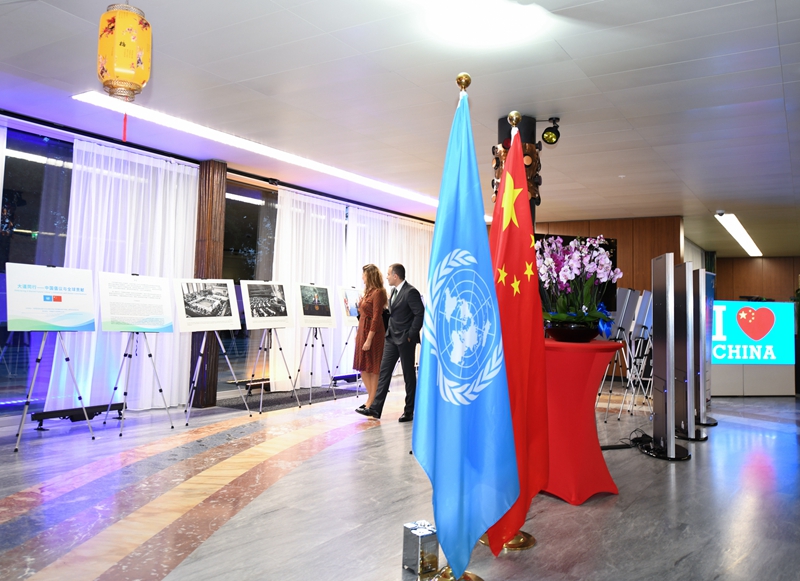
The GGI has found resonance across the Global South, where states have long advocated for equitable representation, sovereignty and an agenda of development and dignity. China’s framing of the initiative as supporting the UN’s centrality, giving developing countries a greater voice and narrowing the North-South divide has been well received in many capitals. While the concrete uptake of the initiative remains nascent, the normative appeal is evident: The demand for fairness, equality and accountability in global governance aligns with long-standing Global South aspirations.
In this evolving landscape, the Central Asian states play a distinctive role as actors in a “multi-vector” foreign policy landscape: engaging with all major powers while aligning with none, and maintaining the remarkable posture of having no enemies anywhere in the world. These five countries—Kazakhstan, Kyrgyzstan, Tajikistan, Turkmenistan and Uzbekistan—have built multiple “5 + 1” summit formats, including Central Asia plus China, Central Asia plus Russia, Central Asia plus the EU, Central Asia plus the U.S., Central Asia plus Japan, and Central Asia plus the Gulf Cooperation Council, that illustrate a flexible engagement model beyond ideological blocs. Their example suggests how an inclusive, non-zero-sum network of relationships might underpin a future governance architecture.
This interplay of initiatives points to three reform pathways. First, representation: expanding institutional voice to more countries. Second, agility: embracing flexible governance networks, regional-global linkages and thematic platforms rather than rigid hierarchies. Third, outcome-orientation: shifting from abstract declarations to measurable improvements in development, security and people’s lives.
Yet risks abound. Reform rhetoric, however potent, may mask the pursuit of alternative spheres of influence. A China-led global governance initiative, even if formally inclusive, may be interpreted as substituting one dominance for another unless its mechanisms ensure broad participation. Institutional inertia, vested interests and geopolitical rivalry remain barriers. Moreover, normative alignment must be matched by resources, enforcement and accountability mechanisms—aspirations without delivery risk cynicism.
As the UN marks its 80th year, global governance stands at a turning point. The GGI, the broader Global South mobilization, and the example of Central Asia’s diplomatic model all point toward a re-anchoring of global governance around equality, cooperation, and action. Whether this becomes an era of adaptation or transformation depends on whether the multilateral community treats this anniversary as more than symbolic. The challenge is not whether the UN survives, but whether it thrives in a world that looks very different from the one in 1945. The coming months and years will show whether the 80th birthday is merely a commemoration—or the opening of a new chapter in global governance.
The author is former prime minister of Kyrgyzstan, a?distinguished professor of the Belt and Road School under Beijing Normal University and the author of Central Asia’s Economic Rebirth in the Shadow of the New Great Game.