The Great Mineral Game
 Facebook
 Twitter
 Linkedin
 Google +
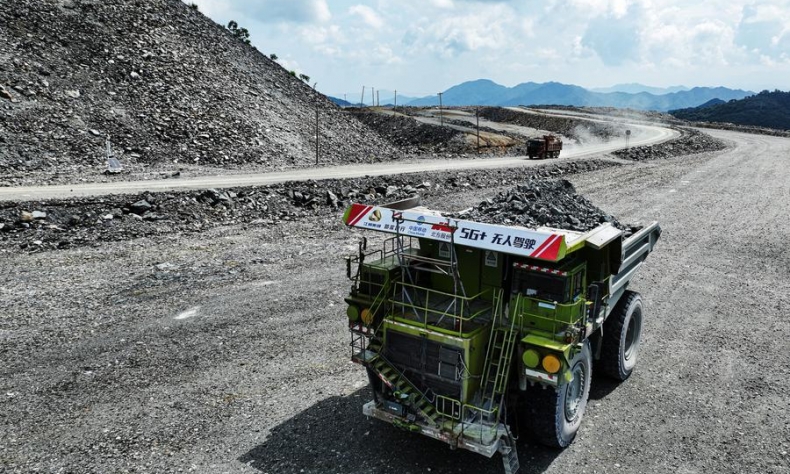
The scramble for critical minerals is fast becoming one of the defining geopolitical dramas of our era.
Forget about oil. The new currency of power is lithium and cobalt for the batteries that power vehicles and smart devices, and rare earth elements for fighter jets and smartphones. The U.S. has launched a comprehensive strategy to secure these resources, changing the role of the earth beneath our feet in the growing great-power rivalry. Securing these resources is no longer a purely economic issue; it is a high-stakes contest that is redefining alliances, fueling resource nationalism, and laying the foundations for prolonged strategic competition with China.
From ‘America First’ to?‘Allies Included’
The American awakening on critical minerals began in earnest under the first Donald Trump administration (2017-21). The guiding principle was “America First.” For Trump, dependence on foreign suppliers—especially China—for essential minerals represented an unacceptable strategic vulnerability. His response was straightforward: unleash domestic mining by rolling back environmental regulation and pushing aggressively for “energy independence.” Rare earths quickly emerged as a focal point, given China’s commanding share of global production and processing. The objective was clear: extract more at home, and rely less on competitors.
This “America First” mindset also extended to the neighborhood. In the renegotiated North American Free Trade Agreement, now the U.S.-Mexico-Canada Agreement, new rules encouraged carmakers to source inputs such as copper and lithium from within North America. It was a classic Trump maneuver: hard-nosed, unilateral and tightly focused on domestic economic gains and political messaging.
When Joe Biden entered the White House in 2021, the tone changed, but the underlying melody of strategic competition remained. Critical minerals were seamlessly woven into the climate agenda, with the administration invoking the Cold War-era Defense Production Act to boost the production and processing of minerals essential for electric vehicle batteries and clean-energy technologies.
The most significant shift was from “going it alone” to “going with friends.” Biden is, by instinct, a coalition-builder. His administration helped launch the Mineral Security Partnership (MSP), an informal grouping of key allies including Australia, Canada and several EU member states, designed to cultivate “China-light” or even “China-free” supply chains. The central goal has thus evolved: from simple self-sufficiency to leading a coalition that sets global standards and controls the strategic valves of supply.
The global ripple?effect: between chaos and control?America’s assertive push in the minerals domain has already sent powerful shockwaves across the world, empowering resource-rich states and disrupting markets in multiple ways.
First, the era of a largely liberalized and depoliticized global minerals market is eroding. Through massive subsidies, strategic stockpiles and direct public investment, Washington is openly “picking winners” and reshaping market incentives. This has triggered a domino effect, with capitals from Ottawa to Canberra unveiling their own critical minerals strategies. The result has been substantial price volatility: Lithium prices, for example, surged amid speculative enthusiasm and new investment, only to collapse by around three quarters within a year—a textbook boom-and-bust cycle driven by policy, finance and geopolitics rather than purely by fundamentals.
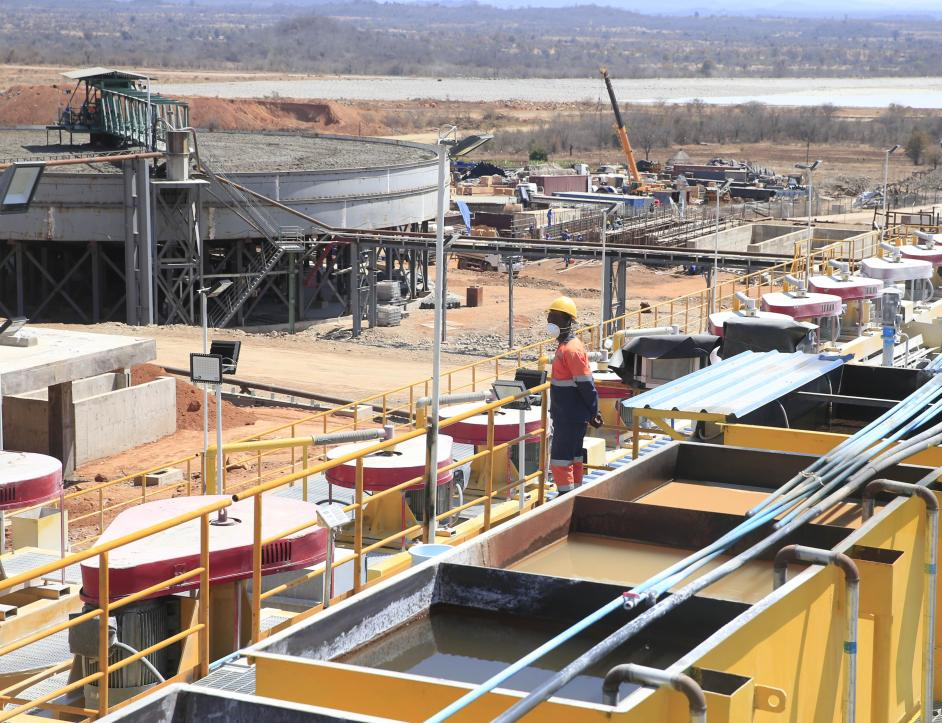
Second, resource nationalism is clearly on the rise. Countries endowed with critical minerals are beginning to flex their muscles. Indonesia banned nickel ore exports in order to compel investors to build smelters and processing facilities on its soil. Zimbabwe and Malaysia have followed with restrictions on raw lithium and rare earth exports, seeking to internalize more of the value chain. Across Latin America, governments are renegotiating contracts, raising royalties and tightening regulatory control. Insofar as such policies dilute China’s dominance in mid-stream processing, Washington often applauds them—until they begin to constrain the operations or profitability of U.S. and allied companies.
Third—and most central to the U.S. strategy—is the deliberate squeeze on China’s overseas mineral footprint. Under clear American pressure, Canada has ordered several Chinese companies to divest from Canadian lithium miners on contested “national security” grounds. In the Democratic Republic of the Congo, which has more than half of the world’s cobalt reserves, U.S. officials have arrived with offers of “responsible mining” partnerships—effectively seeking to scrutinize, reshape and, where possible, dilute the existing Chinese-led supply chains. The underlying message is unmistakable: Wherever China digs, America will attempt to contest and complicate its presence.
Trump 2.0: toward an even harder line?
With Trump having returned to the Oval Office on January 20, this strategic mineral competition is likely to become even more volatile. A sharp policy pivot is entirely plausible.
The green-energy agenda will probably be downgraded in favor of traditional hydrocarbon interests. Subsidies for electric vehicles and renewables may be curtailed or redesigned, as Trump doubles down on turning the U.S. into an energy export powerhouse in oil and gas. This is not only about rewarding his political base; it is also a calculated way of slowing the pace of green transition at home, thus buying time for the domestic mining sector to expand without facing overwhelming demand pressures and environmental constraints.
On the home front, a new mining surge is likely. Trump has already signaled an intention to overturn long-standing bans or restrictions, such as those affecting projects in Minnesota. Under the banner of “national security” and “strategic autonomy,” his administration can be expected to launch a sweeping rollback of environmental safeguards that stand in the way of large-scale mining.
Internationally, the relatively nuanced “de-risking” narrative vis-à-vis China may harden into a more uncompromising push for decoupling. Whereas Biden tried to build clubs, Trump is more inclined to brandish sticks. He is likely to pressure allies with tariffs, secondary sanctions and the threat of reduced security commitments if they do not align with Washington’s preferences on critical minerals and hi-tech supply chains. His explicitly transactional approach was on display when he suggested that Ukraine could “pay” for U.S. support using its rare earth deposits. Such a “resources-for-aid” template, if normalized, would further politicize global resource flows and risk turning critical minerals into explicit bargaining chips in U.S. foreign policy.
China’s counter-play:?strategic endurance and?adaptation
Faced with this multi-pronged American offensive, China is far from passive. Its response displays a combination of strategic patience, structural adjustment and diplomatic innovation.
The first pillar is domestic fortification. Chinese policymakers understand that the most reliable shield against external shocks is a resilient home front. Beijing is investing heavily in prospecting for new domestic deposits and, more importantly, in upgrading mining and processing technologies. Particular emphasis is placed on “urban mining”—the recovery of critical minerals from discarded batteries, electronic waste and other end-of-life products. By building a more circular and technologically sophisticated resource system, China aims to gradually blunt the impact of any future external supply disruptions.
The second pillar is smarter overseas engagement. Chinese firms are prioritizing integrated projects that include local processing plants and smelters in partner countries such as Indonesia and Zimbabwe. This “in-country value-addition” strategy is strategically astute: It shares more of the economic benefits, creates local employment, circumvents export bans on unprocessed ore and, at the same time, helps rebut narratives that accuse China of “resource plundering.”
The third pillar is diplomatic repositioning. Through the Belt and Road Initiative, the BRICS cooperation mechanism and the Shanghai Cooperation Organization, Beijing is deepening ties with resource-rich countries in Africa, Latin America and Central Asia. It has become a reliable partner of Global South countries in contrast to Washington’s exclusive, conditional and sometimes coercive “clique politics.”
That said, maintaining communication channels with the U.S. and Europe remains essential. China still holds a commanding lead in the processing of many critical minerals, an advantage that cannot be erased overnight by American policy. At the same time, cross-border challenges such as climate change and ecological degradation demand at least a minimal level of coordination. The international community has a shared interest in ensuring that the great mineral game does not escalate into open confrontation or fragment the global economy into rigid, rival blocs.
The bottom line
The scramble for critical minerals is fast becoming one of the defining geopolitical dramas of our era. It illustrates how the material demands of a technology-intensive, low-carbon future are rewriting the rules of international power. The U.S. strategy has evolved—from Trump’s “America First” unilateralism, to Biden’s alliance-driven industrial policy, and now potentially to a more abrasive Trump 2.0—but its core objective is consistent: to erode China’s dominance and secure the mineral lifelines of the 21st century under U.S.-led rules.
China, for its part, is “digging in”—both literally and figuratively. It is fortifying domestic capabilities, upgrading its global resource partnerships and appealing to a broader coalition of developing countries. This is not a transient trade quarrel. It is a long-term, structural competition that will shape the contours of global economic governance and environmental transition for decades to come. The great mineral game is underway, and whether states like it or not, they are being drawn into its orbit and compelled to rethink their place in the emerging resource order.
The author is a research fellow at the Institute of State Governance (ISG), Huazhong University of Science and Technology.