Breaking the Zero-Sum Game: Macron in China and Europe’s Bid for Renewal
 Facebook
 Twitter
 Linkedin
 Google +
Europe and China reject decoupling as an economic or civilizational project. They oppose the nihilistic notion that interdependence is a vulnerability rather than an asset.
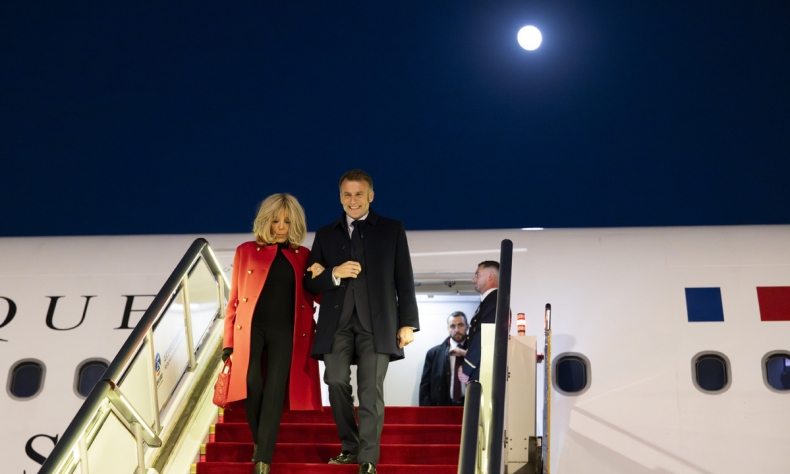
French President Emmanuel Macron is in China for his fourth State visit, at a moment of profound global turbulence. Globalization is fragmenting, supply chains are being weaponized, and unilateral impulses are re-emerging with disconcerting force. Major international summits?—?from COP30 to the G20?—?expose weakening institutional capacity, while the United States under Donald Trump is visibly disengaging from multilateral logic, diminishing its investment in collective solutions and accelerating a wider crisis of global governance.
In this unsettled environment, cooperation between Europe and China?—?rather than purely France and China?—?takes on renewed significance. As the world’s largest integrated market and the largest emerging economy, Europe and China possess both the material weight and the normative responsibility to shape a more balanced, predictable, rules-based?and inclusive international order.
Macron’s visit is therefore more than an effort to manage bilateral relationship, including?frictions. It is a test of whether two civilizational entities?—?Europe, with its pluralistic humanism, and China, with its historical focus on harmony, universal order, and collective responsibility?—?can translate long-standing affinities into strategic cooperation. The cultural affinities between the two sides, rooted in intellectual exchange, artistic dialogue, and mutual curiosity, have long given their relationship a dimension that exceeds diplomatic pragmatism. Both share a universalist instinct: the belief that civilization entails obligations beyond borders, that global order should rest on reason rather than force, and that great powers must justify their position through contribution, not domination. These affinities matter because they provide the cultural grammar for political alignment: they condition how each actor imagines responsibility, power, and the international system.
This cultural foundation gives political expression to deeper strategic affinities. Both Europe and China reject the dogma of bloc politics; both are uneasy with hegemonic designs that demand alignment on ideological rather than pragmatic grounds; both believe that a stable century must be multipolar?—?not because multipolarity is fashionable, but because only a diversified distribution of power can sustain cooperation in a world defined by interdependence. Their commitment to multipolarity is inseparable from their demand for renewed multilateralism.
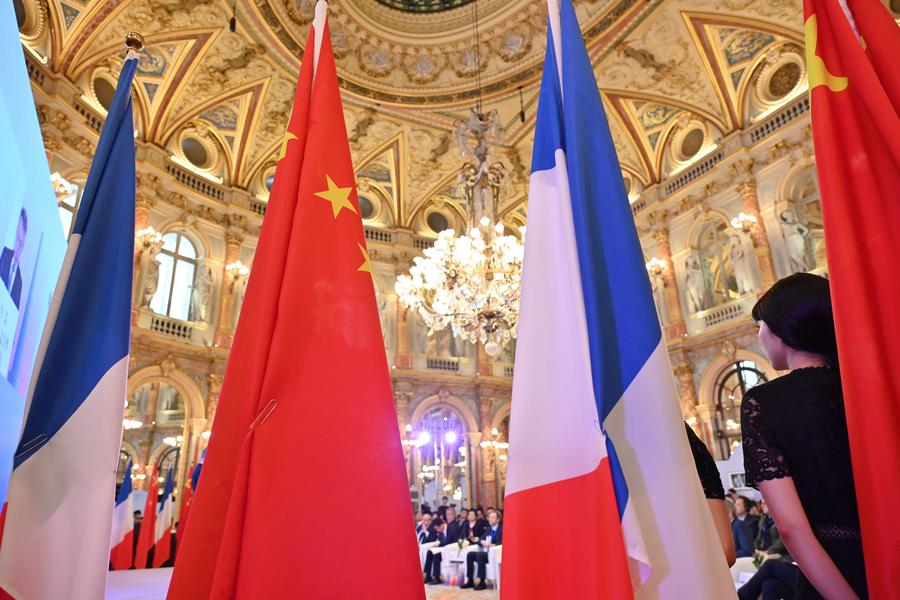
The world does not need fragmentation but renovation: a multilateral system that reflects 21st-century realities, incorporates the voice of the Global South, and restores trust in the possibility of collective action. In this sense, the Europe-China relationship is not just transactional; it is structural. It expresses a shared refusal of zero-sum logic, and a shared conviction that global governance must be modernized rather than abandoned.
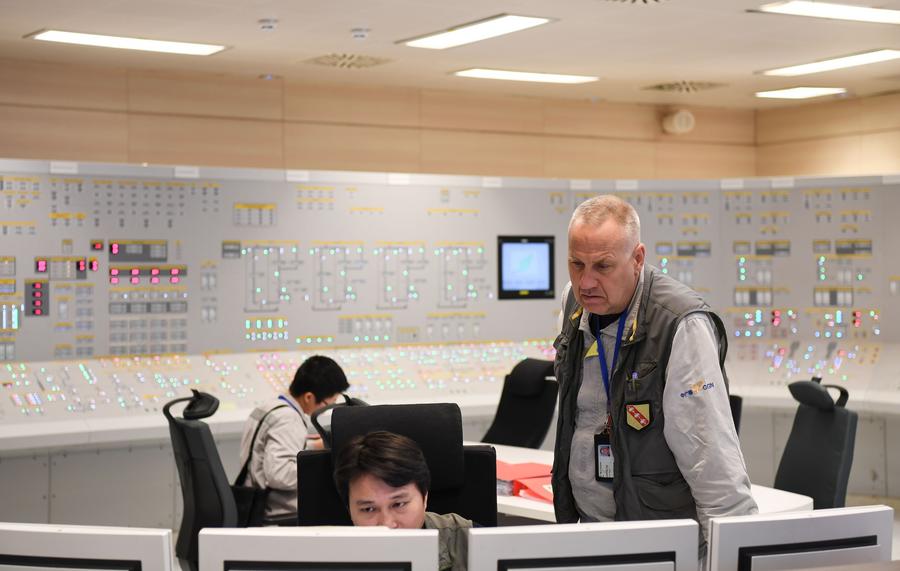
Over six decades, Sino-French cooperation has embodied elements of this vision, but its effectiveness now depends on moving beyond a purely national framing. Since diplomatic relations were established in 1964, cooperation has flourished across culture, space exploration, nuclear energy, agriculture, and science. These sectors, anchored in a large trade relationship, have generated mutual benefits?and accumulated institutional capital. But they also reveal the limits of bilateralism. The scale and complexity of contemporary challenges, from climate transformation to technological governance, require the participation not just of France, but of the European Union as a collective actor capable of combining industrial capacity, regulatory authority, and normative influence. If the relationship becomes European, it can be systemic and anticipatory.
The green transition is the most urgent and promising arena for structured cooperation. China’s unprecedented deployment of renewable technologies, combined with Europe’s regulatory leadership and engineering expertise, creates a natural complementarity. Joint work on renewables, hydrogen, sustainable mobility, and circular economy systems could accelerate global transitions while showing that environmental transformation is compatible with economic competitiveness. This cooperation reflects the universalist commitments both sides articulate: the recognition that climate responsibility transcends geopolitics, and that the credibility of climate governance depends on concrete, scalable solutions rather than diplomatic symbolism. In a world where climate negotiations are increasingly adversarial, Europe and China have the capacity to demonstrate that sustainability and sovereignty need not be antagonistic.
Artificial intelligence constitutes another decisive frontier. Both Europe and China possess strong research ecosystems, advanced industrial actors, and complex debates on ethics, dignity, and risk. As AI risks becoming the structural fault line of a new technological Cold War, Europe and China are almost uniquely positioned to articulate a middle path. Instead of allowing high technology to devolve into a race for dominance, they can promote an ecosystem grounded in innovation, safety, fairness, and inclusive governance. Their cooperation would signal that technological power need not be synonymous with geopolitical intimidation, but can be aligned with universal human interests. In a domain where norms will shape destiny, Europe and China have the responsibility to shape rules rather than accept those imposed by competition.
The broadening of cooperation into these strategic domains underscores a deeper convergence. Europe and China reject decoupling as an economic or civilizational project. They oppose the nihilistic notion that interdependence is a vulnerability rather than an asset. They understand that economic fragmentation will not stabilize the world, but will intensify competition, distrust, and insecurity. Their decision to remain open, to negotiate rather than isolate, reflects a realism grounded in interdependence rather than ideology.
The timing of Macron’s visit is therefore crucial. China seeks stable, high-quality external partnerships to support modernization and deeper opening, while Europe is translating the vocabulary of “strategic autonomy” into policy amid economic turbulence and geopolitical uncertainty. Both actors need predictability in global affairs at a moment when volatility is becoming structural. Although Europe and China differ in their assessment of Russia-Ukraine?conflict, they converge on a fundamental imperative: diplomacy, de-escalation, and the normalization of international relations. Cooperation between them thus aligns not only with national interests but with universal interests.
This universalist dimension matters. The multilateral system is strained by geopolitical segmentation, geoeconomic fragmentation,?insufficient climate finance, fragile food and energy security, and widening inequality between a vulnerable Global South and a secure Global North. Multilateral institutions are not failing because multilateralism is obsolete, but because their architecture has not adapted to the distribution of power and urgency of contemporary challenges. Europe and China, influential yet non-hegemonic actors, can help modernize this architecture?—?not to impose a new order, but to restore the possibility of shared governance.
Macron’s visit occurs at a moment when the world is searching for stability, when unilateralism is sowing uncertainty, and when a narrative of rivalry is crowding out the possibility of cooperation. Against this backdrop, the symbolism of this visit will resonate beyond Paris and Beijing because it represents a choice: to engage rather than retreat, to articulate universalism rather than nationalism, to build order rather than endure disorder. Europe and China will not always agree, but their shared aspiration?—?a multipolar, inclusive, dialogical world?—?remains intellectually coherent and strategically necessary.
The article reflects the author’s opinions, and not necessarily the views of China Focus.