Can “American Greatness” Be Restored by Alienating Allies and Confronting China?
 Facebook
 Twitter
 Linkedin
 Google +
The 2025 U.S. National Security Strategy, with its isolationist and confrontational approach towards allies and China, is a desperate fiction that undermines genuine American prosperity and security.
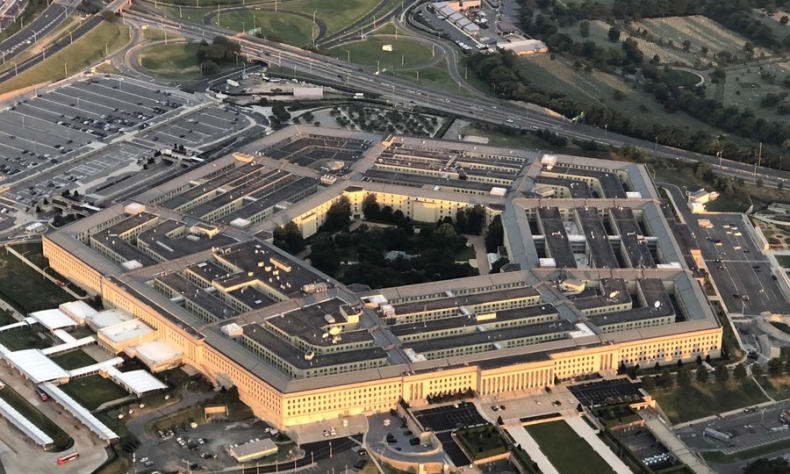
An initial reading of the 2025 National Security Strategy (NSS) document issued by the U.S. Department of War raises the question:?“What on earth are they smoking over there at the Pentagon?” Starting from the first sentence:?“To ensure that America remains the world’s strongest, richest, most powerful, and most successful country for decades to come, our country needs a coherent, focused strategy for how we interact with the world.”
The premise of the statement is of course the first thing that raises some doubt about the substance of the document. The question is whether any of this is true at the present moment.?“Rich” and?“powerful” in financial terms perhaps, but what about the health of the physical economy, which has suffered increasing stagnation over the last decades, when the?“almighty dollar” allowed us to buy cheaply what we previously produced. And the?“success” has left American households?“another day older, and deeper in debt” as the famous song by Merle Travis says.?
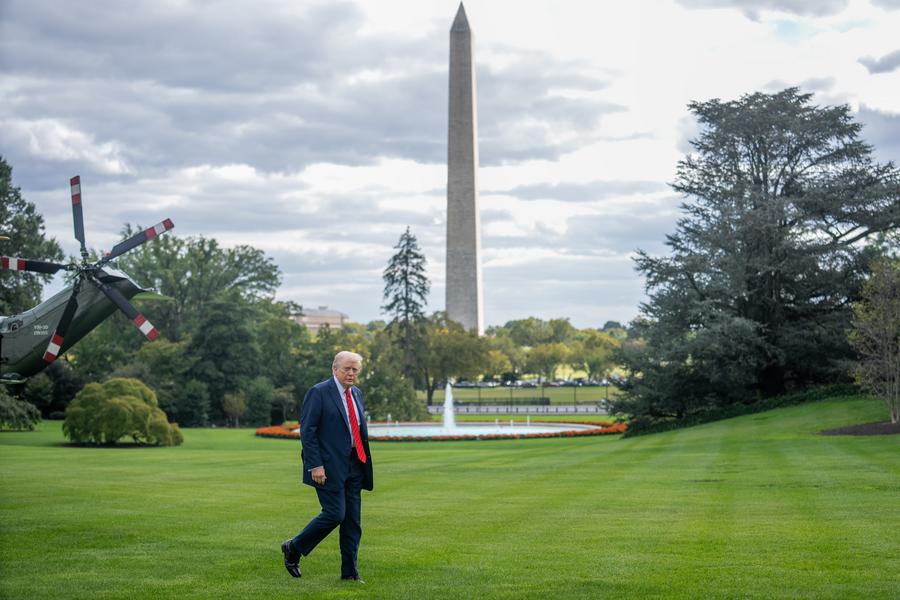
President Trump, who won the hearts of most Americans twice in national elections talks a good game, but the results on the field have been very sparse, as witnessed by his fading popularity. And unfortunately, the worse the situation becomes, the more upbeat he speaks about the?“new golden age” of America. In a sense, the NSS is really a desperate attempt to save face in a situation in which the country has lost its rudder.
The document has caused a furor?in Europe, even though the European section is entitled?“Promoting European Greatness.” It essentially declares what has been the Trump policy of withdrawing the U.S. from the conflict in Ukraine, the country that has received NATO’s support, and reestablishing U.S. ties with the Russian Federation. The best solution for Europe and the world would be for the European countries to scrap NATO entirely, and attempt to create a security architecture in Europe which is consistent with the security needs of all the European countries, including Russia.?
But the NSS goes further in other regions. It declares a new Trump Corollary to the Monroe Doctrine. It hearkens back to the Roosevelt Corollary, which essentially transformed a doctrine which John Quincy Adams had written to counter the rapacity of the colonial powers in the Western Hemisphere, into an imperial mandate for America in the region. The Trump Corollary is in the spirit of its Roosevelt predecessor, rather than the spirit of Monroe and Adams.
This is undoubtedly aimed at the major Chinese infrastructure investment, which has gone into Ibero-America over the last few years, and an attempt to put up a?“No Entrance” sign for such investment. The threat to the countries is also being underlined by the ongoing plans to use military might to oust Venezuelan President Maduro and arbitrarily bombing?“suspect” boats, allegedly carrying drugs from Venezuela to the United States. Mexico, the closest neighbor of the U.S., has acceded to this pressure by imposing 30 percent tariffs on Chinese goods, bowing to the?“tariff war” policy of the United States. It is a question, however, of whether these nations will bend the knee to American dictates this time around as there is no commitment – or even capability – for the U.S. to replace China in the realm of infrastructure building.
In the document’s section on Asia Pacific, we clearly see the schizophrenic policy of the Trump administration in the region. On the one hand, Trump has departed from his disastrous?“tariff wall” toward China since the American consumer –?and voter?– has clearly been paying the price for these tariffs. At the same time, the Department of War is gearing up to?“deter aggression in the First Island Chain,” a chain which includes the island of Taiwan, which, by international agreement, remains a part of China. The statement implies that the U.S. would intervene militarily were China to take military action against Taiwan.?
But the distance between Taiwan and the mainland U.S. is over 6,000 miles. Can the U.S. conduct any type of war with that length in the line of supply and communications? Highly unlikely, which is why the document also stresses, in this instance, the need to use its allies. And who are the allies in the region? Perhaps Australia, South Korea, but, above all, Japan. There is a problem here, however, and that is World War II in the Pacific, where the atrocities of the Japanese Army even went beyond what the Nazis did in Europe. The memory of that period remains strong, as we have seen in this 80th?anniversary year of the victory in the World Anti-Fascist War. It is also a question whether South Korea, a direct victim of Japanese oppression, would go along with such a strategy.
The Trump administration will be going into the mid-term elections in less than a year, and if it cannot come up with a policy that will clearly show the American people that life for them will be better and not worse under a Trump administration, he has to do something to show that he is serious in restoring something of America’s lost prowess in the economic arena. This will require a reversal of some of his policies, including the draconian tariffs, and establishing a better relationship with the People’s Republic of China in a variety of areas: in education, where Chinese students have enhanced the quality of education in America; in trade, where Chinese goods have become the mainstay of the American consumer, and where an easing of the sale of high-tech goods that China would like to purchase, would ameliorate the U.S. trade deficit to that country; and, yes, in science and technology, where China is making great headway in fusion energy, in quantum communications, and in robotics. China’s programs are, for the most part, open to foreign cooperation, including in space. Why not drop the prejudice against such an important nation, which still views the U.S. as a potential partner rather than a rival? Then maybe the dreams of?“American greatness” can again become a reality, rather than a fanciful fiction.