Are Modi and Trump on Same Page over Indo-Pacific Strategy?
 Facebook
 Twitter
 Linkedin
 Google +
The intention of Pompeo’s visit to Southeast Asia was to promote an Indo-Pacific strategy and accelerate its launch. However, as the key country in the Indo-Pacific region, does India move to the same beat as the United States on this strategy?
U.S. Secretary of State Mike Pompeo visited Malaysia, Singapore and Indonesia from August 2 to 6. Before his visit, Pompeo delivered a speech on the U.S. Indo-Pacific strategy at the Indo-Pacific Business Forum hosted by the U.S. Chamber of Commerce on July 30, announcing a $113 million investment plan for the region.
The intention of Pompeo’s visit to Southeast Asia was to promote an Indo-Pacific strategy and accelerate its launch. However, as the key country in the Indo-Pacific region, does India move to the same beat as the United States on this strategy?
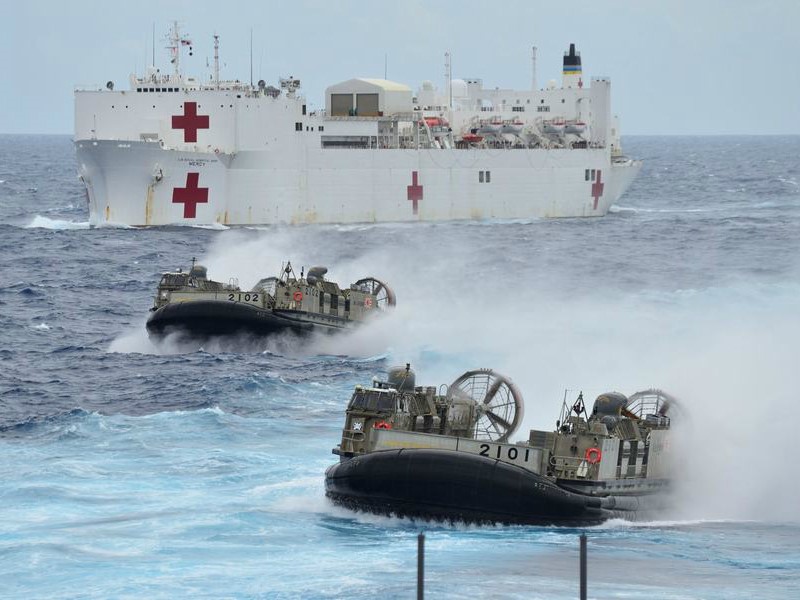
Δ?The Malabar exercise is a joint naval exercise conducted by the United States, India and Japan. The Malabar exercise is regarded as an embodiment of the American Indo-Pacific strategy with strong purpose. The picture shows the Malabar exercise in 2018.
India Dilutes Indo-Pacific Strategy
The United States, Japan, India and Australia relaunched a quadrilateral security dialogue in November 2017, which was regarded as a crucial step in U.S. President Donald Trump’s Indo-Pacific strategy.
Even though India is keen on initiating an “Asian NATO,” its stance seems distinct from the other three countries. India even proposed an inclusive Indo-Pacific framework that does not only include the United States, Japan, India and Australia.
Similarly,in order to highlight the peaceful intent of India’s Indo-Pacific strategy, Indian Prime Minister Narendra Modi specifically gave a comprehensive and systematic explanation of India’s Indo-Pacific strategy in his keynote speech at the Singapore Shangri-La Dialogue held on June 1, 2018.
In his speech, Modi emphasized that the Indo-Pacific region is a natural region.“India does not see the Indo-Pacific region as a strategy or as a club with limited members, nor as a grouping that seeks to dominate the region. And by no means do we consider it directed against any country,” he said.
U.S. Indo-Pacific Strategy: A Step India Cannot Afford
India is pleased to see the United States counterbalance the rise of China and strengthen its security commitment to the Indo-Pacific region. But the United States should not expect India to be its cat’s pawn in its strategy.
For India, taking all immediate neighbors and extended neighbors into account, the biggest geopolitical change has come from the rapid growth of China, which has led India to worry about the possibility of China’s dominance in Asia. China’s GDP is five times that of India, while its GDP per capita is 4.6 times more. Indian observers used to compare Bombay to Shanghai, but now more and more Indians have realized that it is impossible to catch up with China in the short run, either in national power or in international influence. Hence, both former U.S. President Barack Obama’s Asian Pacific Rebalancing strategy and Trump’s Indo-Pacific strategy are all welcomed by India.
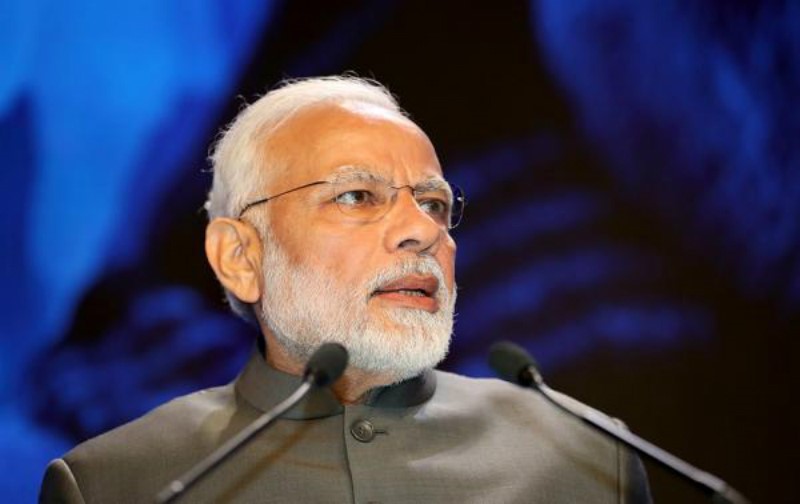
Δ?On the evening of June 1, 2018, Indian Prime Minister Narendra Modi delivered a keynote speech at the opening ceremony of the 17th Shangri-la Dialogue, clearly advocating ” the establishment of a free, open and inclusive indo-pacific region”.(Photo /? VCG)
The expanding strategic influence of China in South Asia and in the Indian Ocean has intensified India’s anxiety around its dominant position in the region. China is now the largest trading partner of India, Pakistan, Bangladesh and the Maldives, and the second largest trading partner of Nepal and Sri Lanka. China’s maritime influence in the Indian Ocean is expanding too. Chinese participation in ?ports construction in the Indian Ocean, especially the support base built in Djibouti, have all worried India. Seeking help from the United States to restrict China’s development has become a part of India’s strategy.
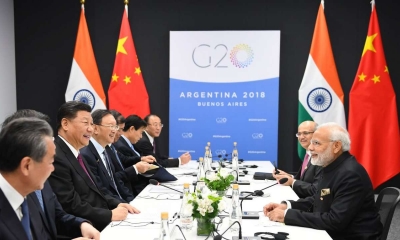
However, India does not expect to be the vanguard in an overall strategy, after all it is an invariable fact that China is India’s neighbor. Hence it is imperative that India keep its alliance with the United States while sustaining a stable relationship with China. Therefore, during the meeting between Chinese President Xi Jinping and Modi and in Wuhan, China this April, the two reached a strategic consensus, where India clarified that it will keep pursuing strategic autonomy, and independent and peaceful diplomacy. This indicates that India has indirectly promised that it will not seek to participate or take part in any alliance that aims to contain China.
Moreover, Trump’s policies toward India have “hurt” Modi’s government. During Obama’s tenure, the U.S.-India relationship attained a series of breakthroughs. After Trump took office, former Secretary of State Rex Tillerson indicated that the U.S.-India relationship would reach a new peak. However, all of Trump’s offers have only been lip service; the only thing the United States is concerned about is cooperation on security defense. In addition, U.S. economic pressure on India has not been lifted. This includes slapping tariffs on Indian steel and aluminum products and refusing to exempt India from importing Iranian oil. Thus, the second 2+2 dialogue between Indian and U.S. foreign & defense ministers has been canceled twice. The image of an “unreliable” United States has been deepening in India’s mind.
The Unites States’ Indo-Pacific strategy is a step that India cannot afford to take. The definition of the Indo-Pacific region for Modi starts from the Africa littoral regions to the Americas littoral regions,while the U.S. version starts from the west Pacific to the Indian Ocean. The United States changed the name of its U.S. Pacific Command to the U.S. Indo-Pacific Command for this reason.
In its Indian Maritime Security Strategy-2015, India divided sea areas into two spheres based on maritime interests. They are the Primary Areas, including India’s coastal areas and maritime zones, the Arabian Sea, the Bay of Bengal, the Andaman Sea, the Persian Gulf, the Gulf of Oman, the Gulf of Aden, the Red Sea, the South-West Indian Ocean and the East Coast of the Africa littoral regions and the Secondary Areas,including the South-East Indian Ocean, the South and East China Seas, the Western Pacific Ocean and the Southern Indian Ocean Region. The core strategic regions of the U.S. Indo-Pacific strategy all fall in India’s sub-primary areas. Given India’s maritime power, its focus is still on the primary areas, hence it will not take any risks to gain interests in sub-primary areas for the United States. Therefore, actions such as patrolling the South China Sea will naturally get no response from India. In addition, Indian and U.S. pursuits in the Indo-Pacific region are also contradictory. India gloats over the United States patrolling the South China Sea and advocating the freedom of navigation operation (FONOP). However, India’s propositions toward its territorial waters are quite similar to China’s, hence if the United States were to implement the FONOP in India’s territorial waters, what will India do? Thus, India should be wary of the U.S. Indo-Pacific strategy too.
?
By: Lin Minwang, researcher of Institute of International Studies, Fudan University, contract research fellow of Institute of South and Southeast Asian Studies, Yunnan Academy of Social Sciences
Editor:Yanan
Intern Editor: Yang Ruoxi
Opinion articles reflect the views of their authors, not necessarily those of China Focus