U.S. Should Stop Suppressing China and Intervening in China’s Unification
 Facebook
 Twitter
 Linkedin
 Google +
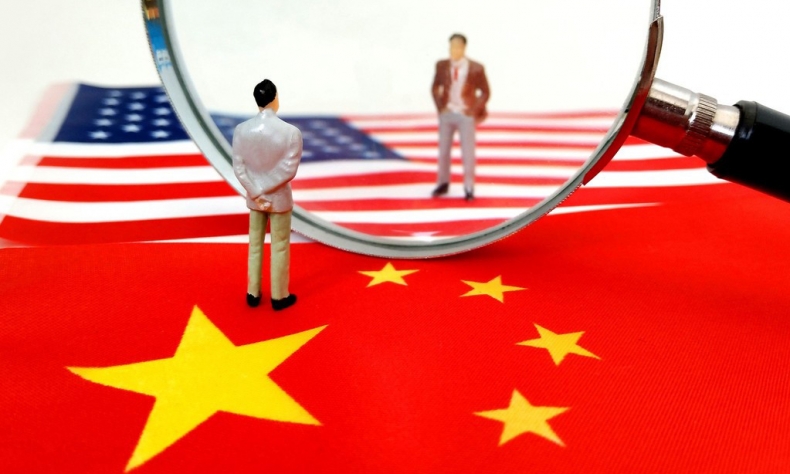
The United States cannot openly support “Taiwan independence”, but it manages to obstruct China’s reunification through the use of Taiwan’s separatist forces. This is also known as playing the “Taiwan card”.
The U.S. State Department said on September 7 that it is recalling its top diplomats from the Dominican Republic, El Salvador and Panama. This follows each of these countries’ decision to establish diplomatic ties with China.
The U.S. should adopt a correct view of other countries’ establishment of diplomatic ties with China, cautiously and properly handle Taiwan-related issues, and refrain from further saying or doing anything irresponsible for the sake of its own image and Cross-Strait peace and stability, Geng Shuang, a spokesperson of Chinese Foreign Ministry said on a regular press conference on Monday.
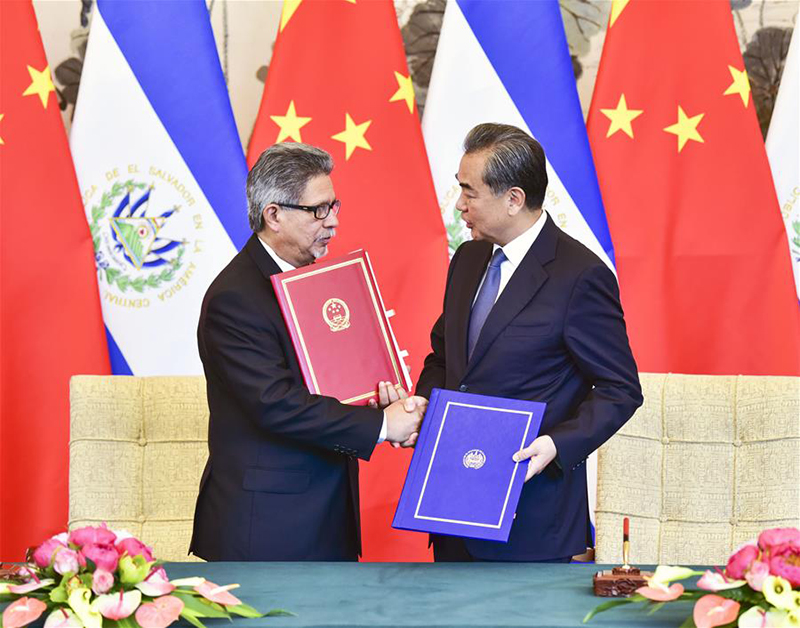
Δ?Chinese State Councilor and Foreign Minister Wang Yi (R) and Salvadorean Foreign Minister Carlos Castaneda sign a joint communique in Beijing, capital of China, August 21, 2018.[Photo/Xinhua]
Not long ago, the U.S. Pentagon announced the “Military and Security Developments Involving the People’s Republic of China 2018″, and once again harped on China’s military growth, claiming that PLA bombers were built for strikes against the United States. The report claimed that the PLA has grown powerful enough to accomplish various amphibious operations and has obtained the ability to launch a full-scale invasion of Taiwan and finally completely unify China. According to the report, as long as the Chinese military develops, it is certain to be a threat to others. If the PLA is deployed in a specific area, it means that the PLA is set to fight and attack the Taiwanese army. Obviously, this logic originates from “China threat theory” and is a product of the Cold War mentality. The United States merely focuses on Mainland China’s opposition against Taiwanese independence, but fails to see this anti-independence policy’s benefit to Taiwan.
In fact, the Taiwan Straits does not have much to do with the United States. The Taiwan Strait is no more than an ordinary international waterway that the United States needs just as much as other parties. However, the United States has not only treated it as the frontier preventing the expansion of China’s mainland, but also often regards it as a bargaining chip or even a weapon in negotiation with China. China will never give up its sovereignty and territorial integrity because of America’s presence and intervention. This is one of the reasons why the Taiwan Straits has often been in a chaos and the two sides of the Taiwan Straits have rarely gained opportunities for peaceful development.
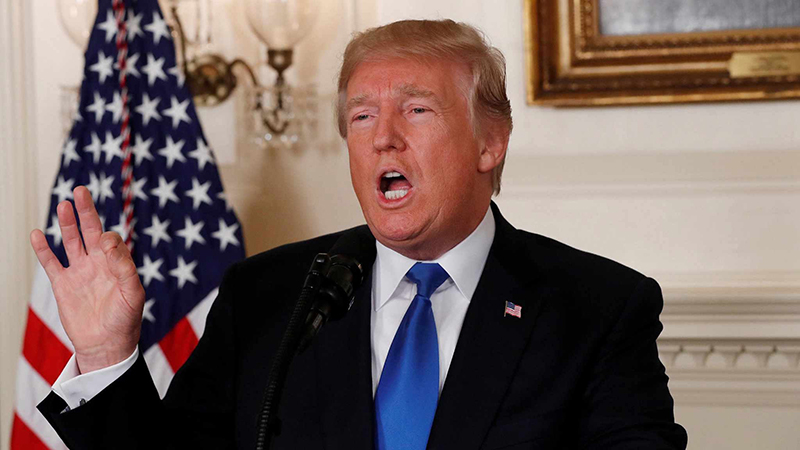
Δ?US President Donald Trump speaks during a roundtable talks in the Roosevelt Room of the White House, in Washington, Tuesday, March 20, 2018. On March 16, 2018, US President trump personally signs the “Taiwan Travel Act”. [Photo: CGTN]
The United States’ Strategy of “Suppressing China and Intervening in China’s Unification”
The United States has not only changed its “One-China policy” on the Taiwan issue, which has been adhered to for 40 years, but has also adjusted its strategy toward China from “engagement with containment” to pure “containment”. However, the current “containment” strategy is comparatively soft and mild because the United States cannot afford the burden and cost of a second Cold War. It has been forced to choose the next best option, which is to replace Cold War with Cold Confrontation. China will not launch a new Cold War with the United States, but China will also never shrink away from the United States’ cold confrontation.
The United States sneakily changes its policy toward Taiwan by gradually and skillfully “hollowing out” its “One-China policy”, so as to support the DPP (Democratic Progressive Party) authorities without antagonizing the Chinese mainland. In this way, the two sides of the Taiwan Straits are certain to maintain a cold confrontation and China’s reunification will be obstructed. The United States cannot openly support “Taiwan independence”, but it manages to obstruct China’s reunification through the use of Taiwan’s separatist forces. This is also known as playing the “Taiwan card”, which constitutes a part of the United States’ overall “containment” strategy in regards to China. It is neither an exaggeration nor a misjudgment to say that the United States has returned to its “containment” strategy towards China, a strategy which specifically laid focus on obstructing China’s unification. This conclusion can be judged from the following facts and clues:
- Less than a year after taking office, President Donald J. Trump unveiled a new National Security Strategy called the “National Security Strategy of the United States of America” on December 18, 2017, addressing key challenges and trends that affect America’s standing in the world, including those in regards to revisionist powers, such as China and Russia.
- The National Defense Authorization Act for Fiscal Year 2018, passed by the U.S. House of Representatives on December 13, 2017, contains controversial provisions about re-establishing regular ports of call by the U.S. Navy at Kaohsiung or any other suitable ports in Taiwan. It also permits U.S. Pacific Command to receive ports of call by Taiwan.
- The U.S. Department of Defense released a synopsis of its 2018 National Defense Strategy, entitled “2018 National Defense Strategy of the United States of America” on January 19, 2018, saying that U.S. military advantage has been gradually eroding and is facing strong competition from other countries.
- On February 2, 2018, The U.S. Defense Ministry officially published the 2018 Nuclear Posture Review,?presumptuously speculating about the intentions behind China’s development and playing up the threat of China’s nuclear strength.
- S. President Donald Trump signed the National Defense Authorization Act for Fiscal Year 2019 into law on August 13, 2018.?The act includes clauses such as directing a whole-of-government strategy on China and submitting an assessment and plan on strengthening Taiwan’s force readiness.
- A U.S. government report mandated by Congress, known as the “Annual Report on Military and Security Developments Involving the People’s Republic of China”, was published online on August 16, 2018, saying that China’s military strongly objects to the report as it misinterprets China’s military strategy, exaggerates the rhetoric of the “China military threat” and has provoked negative cross-Strait relations.?
- On March 16, 2018, U.S. President Donald Trump signed a bill that encourages visits between the United States and China’s Taiwan at all levels.
- S. Assistant Secretary of State for Educational and Culture Affairs Marie Royce attended the dedication ceremony of the new office complex of the American Institute in Taiwan (AIT) on June 12, 2018.
- The U.S. Navy invited Taiwan to participate in the Pacific Partnership humanitarian relief training mission in the Solomon Islands on June 25, 2018.?
- Tsai Ing-wen made transit stops[1] and attended events in the United States on August 12 and August 18, 2018.
- The U.S. said it had recalled its top diplomats in the Dominican Republic, El Salvador and Panama over those countries’ decisions to sever diplomatic ties with Taiwan on September 7, 2018.
Even with such a large number of moves and tricks, the United States remains unable to achieve the goal of suppressing China and intervening in China’s unification. Instead, it has to pay an undue price for its unreasonable bullying behavior. If the United States were to use force in the Taiwan Strait, it would only serve to put Taiwan in jeopardy. The People’s Liberation Army will certainly take counter-actions to defend the sovereignty and territorial integrity of China. If so, the U.S. military will be left with a dilemma. A possible choice for the United States is to withdraw from the first island chain in advance and lose control of the Western Pacific.
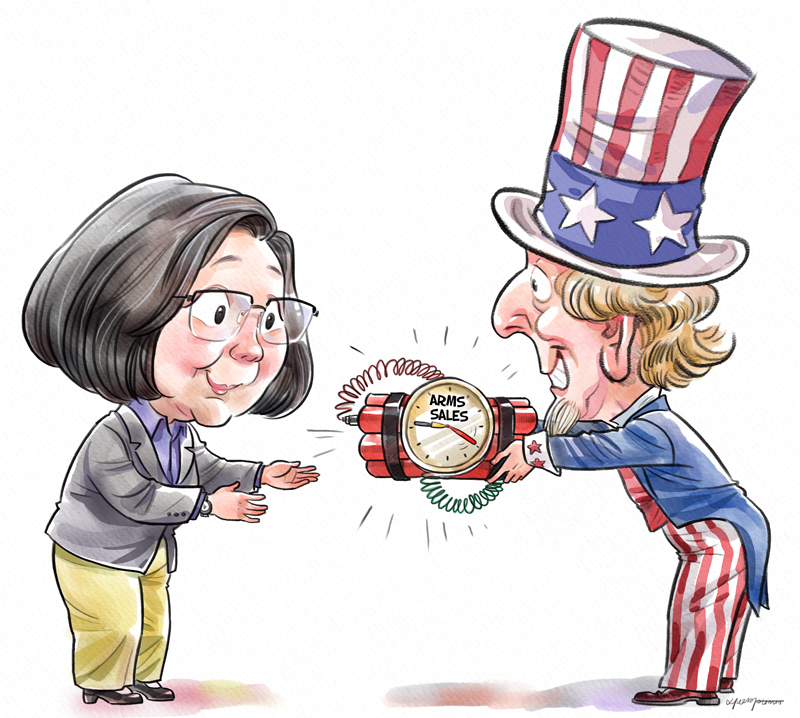
Δ?Li Min/China Daily
The United States’ Political Motivation Behind Playing the “Taiwan Card”
The United States will not admit that it aims to suppress China and obstruct China’s unification, because this is an immoral and indecent aim that cannot be made public. However, all the unscrupulous deeds carried out by the United States still exist even though it does not want to acknowledge them. Remember Tsai Ing-wen’s call to Trump? The U.S. explanation at the time was that the president-elect was only receiving a congratulatory message from an economic partner, which did not need to be interpreted politically. As a result, another political event that was much more serious than the overseas calls took place. With this view, who dares to deny that the United States has a conspiracy on the Taiwan issue? It is at least a plot. From the perspective of American society and public opinion, hostility to China appeals to a broad base. The two chambers of Congress passing the “Taiwan Travel Law” with a unanimous vote indicates as such. Therefore, it is justified to label the U.S. strategy to suppress China as an overt conspiracy.
From the perspective of behavioral patterns, the United States’ plots are always wrapped in a legal cloak, a diplomatic cover-up or cultural packaging. Only when all these tricks are found to be of no use will they take direct action. Playing the “Taiwan card” is this sort of performance. The strategic motivation of the United States is that the Taiwan issue involves China’s core interests and affects the Chinese government and society. Making unrest in Taiwan is certain to interrupt the pace of China’s unification, slow down the development of China and eventually postpone the rise of China.
?
Δ Photo: IC
“Benign Hegemon” or “Rogue Superpower”?
The day after Tsai Ing-wen returned from her “visitation” to Central and South America, El Salvador broke off diplomatic relations with Taiwan and announced the establishment of diplomatic relations with Beijing. Tsai Ing-wen claimed that there was a major breakthrough on her transit stop in the United States, but El Salvador’s decision to break off diplomatic relations with Taiwan was absolutely a slap in the face. Combined with Panama and the Dominican Republic, Tsai Ing-wen has lost three “friends” in the Americas since she took office. Such a continuous blow has brought embarrassment and discomfort to both Taiwan and the United States. The United States is worried about causing a domino effect, and its officials have loudly criticized China for undermining the status quo in the Taiwan Strait and interfering with politics in the Americas. They have also threatened China not to “oppress the Taiwanese people.” What’s more, they threaten El Salvador, treating it like a child. A U.S. senator even recently exclaimed that he would promote a legislative case and prevent other countries from giving up Taiwan. This is to put blame on the victim: If Tsai and her officials hadn’t refused to recognize the “1992 Consensus”, would mainland China endeavor to end the “diplomatic truce” that exists on both sides of the straits?
The United States regards Central and South America as the “backyard of the United States”. The politics there are similar to the domestic politics of the United States. Therefore, small neighbors cannot establish normal diplomatic relations and economic ties with China. This is the logic of the American New Monroe Doctrine. Regardless of diplomatic common sense, is using national legislation to threaten neighboring countries and impose their will on others not an act of bullying?
The United States has long desired to play the role of the “benign hegemon”, and now has finally revealed its true face as the “brassy hegemon”, in turn becoming the “rogue superpower”.
?
The author of this article is deputy director and a researcher at the Shanghai Institute of East Asian Studies
Editors: Elena, Sophie
Intern Editors: Shou Pan, Yang Ruoxi
Related Readings:
China Forced to Take Countermeasures Against US Trade Bullying