A Correct Understanding of China Matters
 Facebook
 Twitter
 Linkedin
 Google +
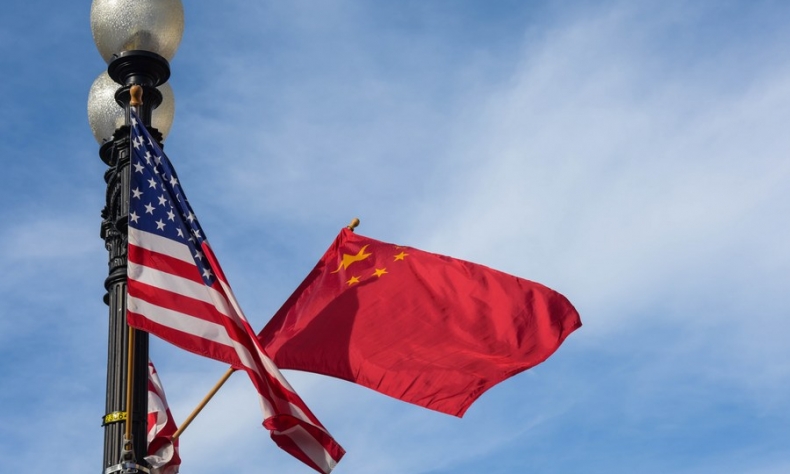
Rather than blaming China for its own problems, the U.S. should begin looking to China as a partner in solving them.
This year marks the 50th anniversary of Dr. Henry A. Kissinger’s icebreaking visit to China. The world’s most important bilateral relationship now is in transition, with far-reaching regional and global implications.
In this particularly unpredictable year of 2021, President Xi Jinping and his U.S. counterpart Joe Biden had phone conversations on September 10 and on the eve of the Chinese New Year in February. Senior officials held a face-to-face strategic dialogue in Anchorage, Alaska, in March.
China-U.S. relations have encountered unprecedented difficulties due to the U.S. irrational suppression of China’s legitimate rights and interests, which has damaged the interests of both nations and taken a toll on world stability and development.
The Biden administration has not moved past its misperceptions of China, and has not found the right way to develop bilateral relations with China.
The fact is that if the U.S. and China fail to manage this relationship, the entire world will face a massive wave of division, turmoil and conflict. Assessing the current realities and reviewing the history of China-U.S. relations provides a number of key lessons for charting their future direction.
First, resolving basic epistemological issues is a precondition for rebuilding mutual political confidence. It’s important for each country to manage its own affairs well instead of deflecting blame onto other nations. Attributing all the problems facing the U.S. to China and the Communist Party of China (CPC) won’t resolve America’s troubles.
Former U.S. President Donald Trump’s trade war against China failed to bring industry, capital and jobs back into the U.S. It, instead, caused the loss of 245,000 U.S. jobs. According to a recent study released by the U.S.-China Business Council, Americans and U.S. companies have paid a high price for the government’s unilateral act of decoupling from China, which has not only decreased the potential of U.S. economic growth, but could also cut U.S. GDP by $1.6 trillion over the next five years.
Suppressing China won’t solve the U.S. leadership problem either. Rather than blaming China for its own problems, the U.S. should begin looking to China as a partner in solving them.
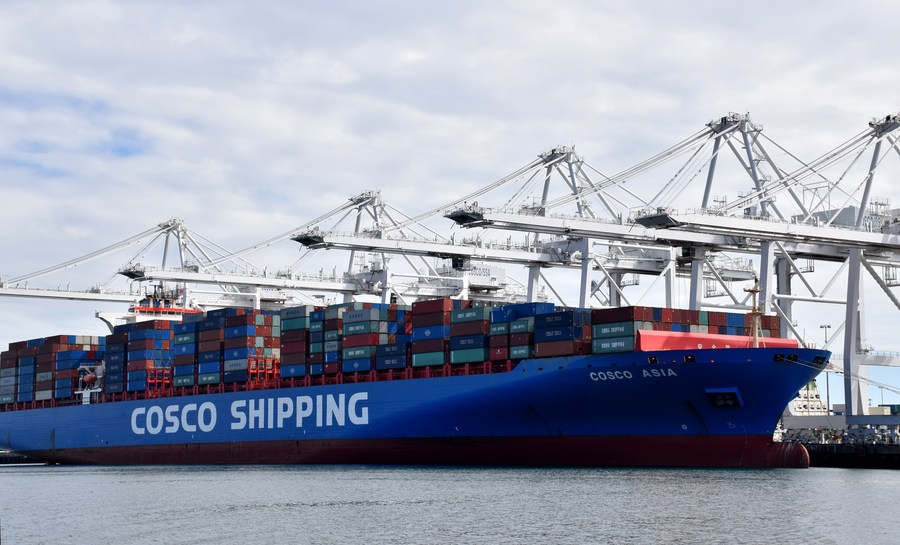
Second, the right direction should be derived from strategic height and with a long-term perspective. The U.S. defines China-U.S. relations as having competitive, cooperative and adversarial aspects. The definition blurs the distinction between the “mainstream” and “sub-stream” of the relations and reflects a lack of clear direction and goals. The success of one side does not mean that the other side has to fail.
China holds that the two sides shall transcend the fate of “unavoidable conflicts between an emerging major country and an established major country,” overcome the differences in ideology and social system and the Cold War mentality of bloc confrontation, explore the path of peaceful coexistence and win-win cooperation, develop a bilateral relationship based on coordination, cooperation and stability, and advance their relations in the right direction.
Third, misinterpretation and misperception of China’s intentions should be corrected. China has no intention of competing with the U.S., of interfering in the U.S. political system, or of challenging or replacing U.S. status or influence. Everything it does aims to create a better life for the Chinese people, rather than seeking to replace or unseat any other country. What matters to China is constant progress and self-improvement. China will blaze the trail for a peaceful rise distinct from the trajectory of traditional powers; one that underlines peaceful coexistence and mutually beneficial cooperation with countries around the world.
The wisdom stemming from China’s millennia of history is that hegemony will lead to failure, and that a strong country should not seek hegemony. China never seeks global hegemony. It does not believe in invading through the use of force, or to topple other regimes, or to massacre the people of other countries; all of those would only cause turmoil and instability worldwide.
Fourth, respecting China’s political system is the foundation. From the outset of the normalization process, China-U.S. relations have always been based on the common understanding that both sides recognize and respect each other’s different social systems.
Some U.S. politicians claim that the original U.S. purpose of entering into diplomatic relations with China was to change China, and that the U.S. policy of engagement with China has become a total failure. China is portrayed as having tried over the years to fool and deceive the U.S. But these allegations discredit the enormous efforts and contributions made throughout past decades by people across the two societies to promote the development of China-U.S. relations.
The Shanghai Communiqué of 1972 stated that “there are essential differences between China and the U.S. in their social systems and foreign policies. Yet, the two sides agreed that countries, regardless of their social systems, should conduct their relations on the principles of respect for the sovereignty and territorial integrity of all states, non-aggression against other states, non-interference in the internal affairs of other states, equality and mutual benefit, and peaceful coexistence.” The two sides stated that progress toward normalizing China-U.S. relations served the interest of all countries. The Shanghai Communiqué, the Joint Communiqué on the Establishment of Diplomatic Relations in 1979, and the 1982 Joint Communiqué established the principles of mutual respect, equality and seeking common ground while putting aside differences as the guiding principles in conducting China-U.S. relations.
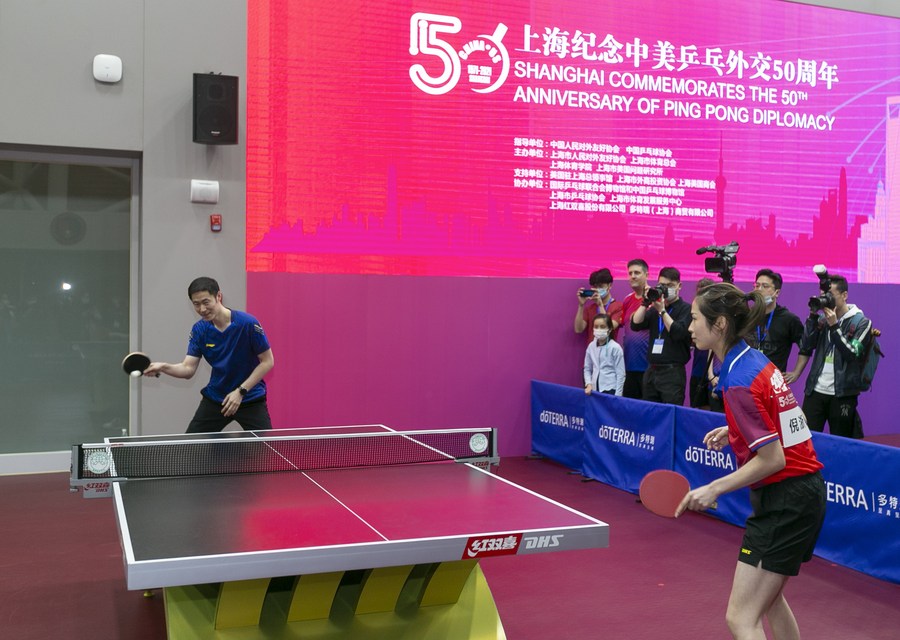
The fundamental reason that the two countries were able to break the ice of long-term antagonism and estrangement to establish full diplomatic ties 50 years ago, and that they have since enjoyed a fruitful cooperation across the board, lies in the very fact that both have managed to act in the shared interests of their two countries and peoples, as they aspired to seek common ground while reserving differences on the basis of respecting each other’s political system and development model.
China holds that each country can choose a development path in light of its own circumstances and its people’s needs, and upholds the common values of humanity, i.e., peace, development, equity, justice, democracy and freedom. A peaceful world should nurture diverse civilizations. A stable world order should accommodate different systems. And a confident major country should be inclusive to diverse values.
Fifth, the essence of China-U.S. relations is mutual benefit rather than a zero-sum game. China and the U.S. share extensive and important common interests, and shoulder special global responsibilities and obligations. Working together, the two sides can be an anchor for world peace and a propeller for global development. Alternatively, being stuck in confrontation will spell disaster for both countries and beyond. Cooperation is the best option for both.
—Unity and cooperation are the most powerful weapon to fight COVID-19. China supports greater international cooperation against COVID-19, under the leadership of the World Health Organization (WHO), to defeat the virus at an early date. U.S. politicians should immediately cease politicizing and stigmatizing the virus and scapegoating China. The U.S. should fulfill its duty to its own people, live up to its international responsibility as a major country, and work with the international community to promote global cooperation on COVID-19 response and saving lives.
—Trade issues should not be politicized, and the concept of “national security” should not be abused. China will always welcome U.S. business investment in China, and it falls on both sides to provide a fair, open and non-discriminatory environment for each other’s companies. China is ready for closer macroeconomic policy coordination and more cooperation with the U.S. This will maintain the safety of global industrial and supply chains, and maintain global economic and financial stability, which in turn will revive economic growth in the two countries and the world as a whole.

—For China and the U.S., climate change, renewable energy and low-carbon, sustainable development should be areas of mutually beneficial cooperation. China is committed to following a new development philosophy and delivering its pledges under the Paris Agreement. China has announced its goals of striving to peak carbon dioxide emissions before 2030 and achieve carbon neutrality before 2060.
—There should be closer exchanges and cooperation between the two militaries and in law enforcement, drug control and cyber security. There should also be more communication and coordination on regional hotspot issues and on major global challenges such as poverty reduction through development, counterterrorism and nonproliferation. Together, the two sides could deliver more public good to the world. They could also strengthen cooperation at the UN, the WHO, the Group of 20, APEC and other multilateral fora to enhance global governance and promote a globalization process that is more open, inclusive, balanced and beneficial to all.
—China welcomes more American people to visit the country and experience what it really is like. China will continue to encourage and support exchanges and cooperation between the two peoples in education, science, technology, culture, sports, media and other areas.
Sixth, proper management of differences, no crossing of the “red line.” China and the U.S. are not doomed to pose a threat to each other, and differences are no reason for confrontation between them. The most important thing learned from decades of exchanges is that difference does not prevent them from seeking common ground. What matters is to manage differences properly so that they do not stand in the way of developing overall relations. Both sides need to respect each other’s core interests and major concerns, and respect each other’s choices of political system and path toward development. These issues constitute a red line that must not be crossed. Any trespassing would end up undermining China-U.S. relations and America’s own interests.
—Playing the “Taiwan card” is dangerous. The Taiwan question is central to China’s sovereignty and territorial integrity, and there is no room for compromise and concession. It would be wise for the U.S. to abide by the one-China principle and the provisions of the three Sino-U.S. joint communiqués, to stop official exchanges and military contacts with and arms sales to Taiwan, and not to send wrong signals to “Taiwan independence” forces or try to cross China’s red line to prevent peace and stability in the Taiwan Straits from suffering serious damage.
—The electoral system in Hong Kong Special Administrative Region (HKSAR) is a local system in China. No foreign government, organization or individual has the right to interfere. Improving HKSAR’s electoral system must follow the principle of “patriots administering Hong Kong.” The U.S. should stop trying to mess up Hong Kong again or obstructing China’s implementation of the “one country, two systems” principle.
—Xinjiang-related issues are not about human rights, ethnicity or religion. They are about fighting violent terrorism, separatism and extremism. The gates to Xinjiang are wide open to the world; Americans are welcome to visit Xinjiang and see for themselves. But China will not accept any investigation in Xinjiang based on the presumption of guilt by those who are biased, condescending or behaving like a preacher. China hopes that the U.S. can respect facts, call off attacks against and smearing of China’s Xinjiang policy, and abandon double standards on counterterrorism.
—The 14th Dalai Lama is a political exile who has long been engaged in anti-China separatist activities under the guise of religion. China hopes that the U.S. will abide by its commitment to recognizing Tibet as a part of China and refraining from supporting “Tibet independence,” carefully and properly handle Tibet-related issues, revoke sanctions against related Chinese officials, and cease to exploit Tibet-related issues to interfere in China’s internal affairs.
—It is undemocratic in itself to label China as “authoritarian” or “dictatorial” simply because China’s democracy takes a different form from that of the U.S. Democracy is not a patent held by a few countries. It is a common value of humanity. There are various ways to realize democracy, and there is no fixed model or standard answer. True democracy must be rooted in the realities of a country and serve its people.
China’s socialist democracy is a whole-process, most representative democracy, the core of which is the people being masters of the country. Important legislation and policy-making must go through set procedures and extensive discussions, and the final decision must be made on the basis of scientific and democratic deliberations. It is the most representative democracy, in that people’s matters are widely consulted for the greatest common denominator that suits the will of the whole society.
—China is a country that is always committed to protecting and promoting human rights. As the largest developing country, China takes a people-centered approach to human rights. It believes that the rights to subsistence and development are basic human rights of paramount importance. At the same time, it strives for a comprehensive and coordinated development of economic, social and cultural rights as well as civil and political rights, and gives priority to improving people’s wellbeing and promoting well-rounded human development. Looking ahead, China will continue to earnestly fulfill its international human rights obligations, participate in international human rights governance, and work toward the building of a fair, reasonable and effective international human rights system.
—What China and the international community follow or uphold is the UN-centered international system and the international order underpinned by international law, not what is advocated by a small number of countries of the so-called rules-based international order. The overwhelming majority of countries in the world would agree that the U.S. itself does not represent the global community, and the Western world does not represent global public opinion, and that the rules made by a small number of people should not serve as the basis for the international order. True multilateralism means openness, inclusiveness, rule of law, consultation, cooperation, and keeping pace with the times. Multilateralism should not be used to form new opposing blocs or exclusive circles.
The author is an op-ed contributor to Beijing Review and an expert on international studies.