A Joint Cause
 Facebook
 Twitter
 Linkedin
 Google +
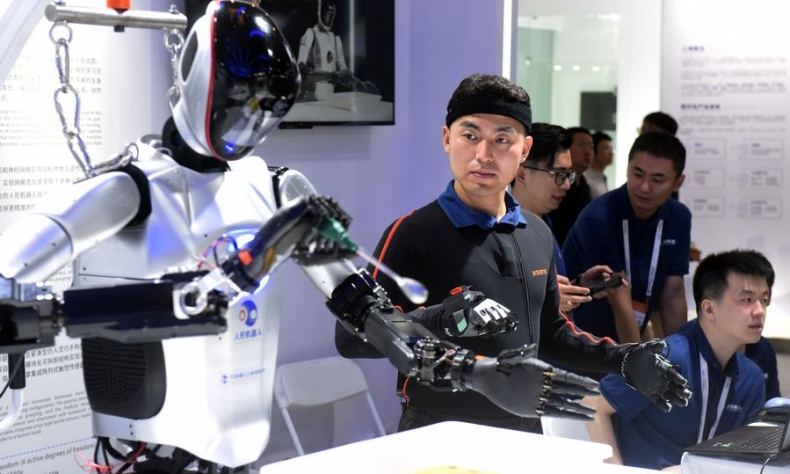
Though the legal system for IP protection in some Western developed countries is already very mature, in terms of the capability of the government to advance innovation, China leads the world.
President?Xi Jinping once said to protect intellectual property (IP) is to protect innovation.
Recently, the Tsinghua University School of Law and the World Intellectual Property Organization (WIPO) jointly launched a master’s program on IP and innovation policy, welcoming the first batch of students. IP has become a tool to promote global innovation and economic development and China has become a pacesetter in the application of industrial intellectual property rights, WIPO director general?Daren Tang said.
A complete IP talent education system has taken shape in China, and now it will become more internationalized, thanks to the new master’s program. “China is advancing its innovation-driven development while ratcheting up efforts to protect IP rights. A large group of high-caliber talents is needed and this program, open to students from across the globe, with its courses taught in English, aims to cultivate high-end intellectual property talents with international perspectives but rooted in the Chinese context,” Zhou Guangquan, dean of Tsinghua University School of Law, told?China Today.
Progress in IP protection
By the end of 2023, China’s invention patents numbered nearly 5 million, while registered trademarks crossed 46 million. According to a white paper released by the China National Intellectual Property Administration titled “IP Protection in China 2023,” in 2023, China’s social satisfaction with IP protection scored 82.04, a new high.
“China has joined the first echelon in global IP protection. Our invention patents and registered trademarks volumes both rank first in the world,” Professor Cui Guobin, who is also director of the?Center?for?Intellectual Property?at?Tsinghua University Law?School, told?China Today. “In many technological innovation fields, like wind power, solar power, electric vehicles, ultra-high voltage power transmission and transformation, and artificial intelligence (AI), China has made great breakthroughs.”
Many foreigners are curious about China’s IP protection system and want to know how the government is making policies to encourage innovation and advance the country’s science and technology progress, Cui added. He pointed out that though the legal system for IP protection in some Western developed countries is already very mature, in terms of the capability of the government to advance innovation, China leads the world. “China’s studies in the IP field are setting the pace globally,” Cui remarked.
IP protection legislation started in China in the 1980s. By the end of 2022, there were 27 IP tribunals and four IP courts, as well as 70 national IP protection centers. In 2023, Chinese courts received over 540,000 IP cases.
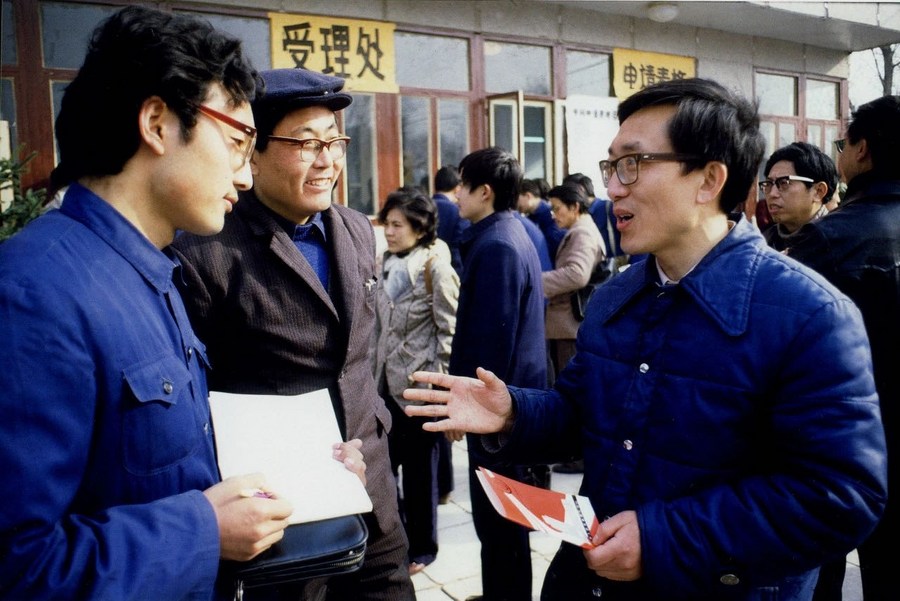
In Cui’s view, the rapid formation and improvement of China’s IP protection system can be ascribed to two factors. “The foreign investment influx since China’s reform and opening-up created the need for IP protection in order to maintain order in market competition, and so legislation was advanced. Later, as China rapidly rose to the status of the world’s factory, domestic innovative enterprises mushroomed. Their strong need for IP protection improved the legal system.” Cui also stressed the important role of the government in raising public IP protection awareness.
Cause celebre IP cases and strict law enforcement have helped promote the public’s IP protection awareness. In 2023, courts across the country awarded punitive damages in 319 cases, an increase of 117 percent year on year. The amount of compensation awarded was RMB 1.16 billion, a 3.5 times increase year on year.
The substantial damages awarded for IP infringement have begun to show their deterrent effect. On June 14, 2024, the IP Court of the Supreme People’s Court made the final ruling in a high-stake legal case. Automaker Geely had sued electric vehicle manufacturer WM Motor for infringing its trade secrets, demanding RMB 2.1 billion in compensation. The court, considering the large-scale poaching of technical talents and resources which led to the infringement, ordered WM Motor to pay Geely approximately RMB 640 million. It was the highest compensation awarded in an IP infringement lawsuit in China.
Role of the state
Innovation policy is a focus of the newly launched program, as its name “intellectual property and innovation policy” indicates. “We hope our students will know not only the IP legal system well but the innovation system too. National policies and government measures play an important role in running the whole system, for example, the promotion of advanced technologies,” Cui told?China Today.
China still lags behind the United States in some sectors of fundamental science research. “If we establish a system that can swiftly spread technical knowhow and quicken its commercial application, it can also sharpen a country’s competitive edge. We hope our students will know the whole process and related systems,” Cui said.
In some cases, the legal system for IP protection and the market are not enough to inspire innovation. Then the government can take the baton by formulating industrial policies to encourage enterprises to develop a certain technology by means of mechanisms like tax reduction or subsidies. “China has done very well in this aspect. Many Western countries are keen to know our system. I think our program will provide international students with a good chance to learn how China’s industrial policies work,” Cui said.
When the market success anticipation is low or the market scale is small, it’s hard for many small and medium-sized enterprises to attract investment. In such a scenario, Cui thinks specific technologies can be quickly commercialized if the government provides office space, introduces preferential policies, or even plans industrial clusters, gathering enterprises from related industrial chains in the same area.
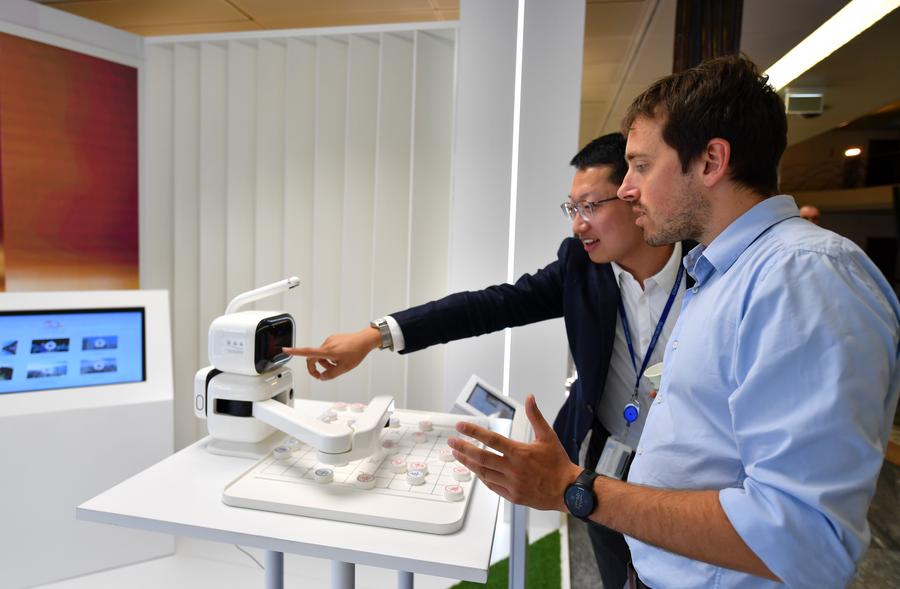
Some Chinese cities have aready successfully implemented this model. For example, Hefei, capital of Anhui Province in east China, hosts a new energy vehicle industrial cluster and has seen an integrated circuit industrial chain take shape through government investment and industrial policies.
“We set great store on students’ mastery of the innovation system. For example, we have a course called innovation economics and policies. It’s an interdisciplinary course, with the focus on both economic knowledge like how society organizes innovative activities and the country’s industrial policies to promote innovation. Our students will get a macro perspective on how the whole system runs in terms of innovation, instead of being confined to the micro-level legal or economic operation,” Cui said.
The program also features some frontier courses related to subjects like data and AI governance. “Data involves issues like privacy and national security. In this course, we’ll discuss AI governance and invite the team of lawyers of Microsoft AI to join us to start the course,” Cui said.
Nurturing tomorrow’s rule makers
The program also aims to cultivate the global competence of students to enable them to participate in the formulation of international rules in the future. “We aim to help students gain insights into the core issues of IP while making them sensitive to the social reality,” Cui said.
The WIPO invites renowned experts to join the team designing the courses and provides the budget for guest lectures. It is also offering scholarships and internships to students. To ensure the course is international, the teachers will be selected from all over the world. This year, the faculty includes William W. Fisher, a renowned professor from Harvard Law School.
“We hope to build an open international teaching platform, pooling the world’s top-level IP scholars. Apart from supporting our program, scholars can also carry out academic exchanges through the platform,” Hong Yan, secretary-general of the program, told?China Today.
The Tsinghua University School of Law has been active in international exchanges in IP. Together with Oxford University and the National University of Singapore, the law school has established an annual forum held in rotation in each country. It also works with the University of California, Berkeley to organize seminars on IP protection. In Europe, Max Planck Institutes have a cooperation with Tsinghua.
“We hope to cultivate high-caliber IP talents with international perspective, humanistic spirit and interdisciplinary background to promote global progress in IP protection and innovation policy formation,” Zhou Guangquan told?China Today.