A Landmark Bond Issuance and Beyond
 Facebook
 Twitter
 Linkedin
 Google +

But if Washington is serious about preserving the dollar’s global stature, it should stop viewing developments in global financial markets with a hostile attitude in general, and definitely stop weaponizing the dollar in particular.
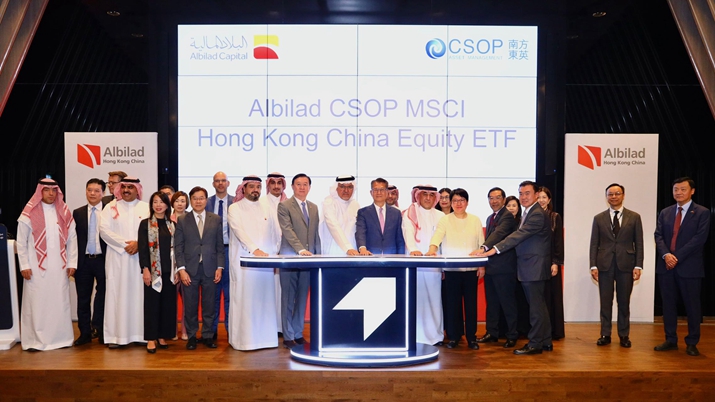
China’s issuance of 2 billion in U.S. dollar-denominated sovereign bonds in Riyadh, Saudi Arabia, in November has raised many eyebrows in the global financial market. Plenty of alarmist comments have been floating around, some raising geostrategic and geopolitical concerns, and others bordering on outright conspiracy theories. What is distinctive, and perhaps a little unusual, about this transaction can be categorized into four main aspects.
The first is the oversubscription ratio. Normally, a bond issuance would be deemed successful if the demand exceeds supply by above a two-to-one ratio. The U.S. Treasury Department typically achieves oversubscription ratios of between two and three when it issues new Treasury bonds for financing federal deficits. This time around, the bonds China issued in Riyadh received approximately $40 billion in bids, achieving an oversubscription ratio of about 20.
The second point, which is related to the first point, is that the interest to be paid on these bonds is extraordinarily low, only about 1 to 3 basis points (0.01 percent to 0.03 percent) higher than for U.S. Treasury bonds. The bonds were issued in two tranches: $1.25 billion maturing in 2027 with a 4.284-percent annual interest rate, and $750 million maturing in 2029 with a 4.34-percent rate. By contrast, even AAA-rated countries such as Switzerland typically pay interest 10 to 20 basis points above U.S. Treasury rates. Slim markups on rates are expected when demand greatly exceeds supply and, in this case, the oversubscription ratio is extraordinarily high. (The AAA rating is the highest credit rating that may be assigned to an issuer’s bonds—Ed.)
The third aspect is the location of issuance. Why Riyadh? It is not an international financial hub on the same level as, for example, London, Hong Kong or Singapore. While the new-generation leadership in Saudi Arabia has huge aspirations for developing its financial sector, aided by its huge petrodollar reserves accumulated over decades, the capital market in Riyadh has never seen the likes of a $2-billion bond issuance by China.
This leads to the fourth aspect, which is about the implications of the issuance. That China is able to raise this amount of capital denominated in the currency of a country with which it is engaged in such intense competition, and do so on terms almost as favorable as those enjoyed by that country, is probably the main driving force behind so many alarmist speculations and even conspiratorial warnings from analysts in the West. Most of them are total gibberish in my view, but one article did attract some serious attention and was even cited by Newsweek.
Untenable?assumptions
In the article, formerly China-based French entrepreneur and commentator on economics and geopolitics Arnaud Bertrand proposed two intriguing theories on his X account in late November, which are worth some serious examination. The first is the “dollar competition theory,” in that, if it significantly increased the volume of dollar bonds it issued, “China would effectively be competing with the U.S. Treasury in the global dollar market. Instead of countries like Saudi Arabia automatically recycling their dollars into U.S. Treasury bonds, they could put them into Chinese dollar bonds that pay the same rate. This would create a parallel dollar system where China, not the U.S., controls part of the flow of dollars.”
The second theory, which I call the “BRI debt swap theory,” suggests that China is using the dollar-denominated funds it raised to help countries participating in the China-proposed Belt and Road Initiative (BRI) to repay dollar-denominated debts they owe to Western lenders and instead repay their debts to China in the form of Chinese yuan or RMB, resources or through other arrangements. (The BRI aims to boost connectivity along and beyond ancient Silk Road routes—Ed.)
According to Bertrand, “This would create a triple win for China: They get rid of their excess dollars, they help their partner countries escape dollar dependency, and they deepen these countries’ economic integration with China instead of the U.S.”
Let’s take a look at both of these theories. The argument that China is creating a parallel dollar system in which it partially controls the flow of dollars is a serious stretch of the imagination when comparing the size of this bond issuance to the total amount the U.S. borrows on the open market. In 2024, the U.S. Federal Government is expected to run a $1.83-trillion deficit. Combined with borrowings for serving its current debt, the U.S. Treasury is expected to issue about $2 trillion worth of new debt for the whole year. Dividing $2 billion by $2 trillion, yields 0.1 percent. Granted, $2 billion is just the beginning, as Bertrand argued, but even with an annual issuance amount 10 times as high, it still pales in comparison with the IOUs the U.S. writes every year. The “dollar competition theory” does not hold much water, simply because the numbers don’t add up.
The “BRI debt swap theory” is also not well-founded in reason, as I suspect that the purpose of this $2-billion issuance is for restructuring the debt for some heavily debt-laden BRI participating countries, such as Pakistan and Sri Lanka. The fact of the matter is, as Bertrand says, China is not short of dollar assets at all. It is sitting on a pile of foreign exchange reserves over $3 trillion, about one third of which is invested in U.S. Treasury bills and bonds. So even if it is to roll over debtor countries’ balances, it has the resources to do it on its own instead of resorting to the Saudi capital market in a systematic way.
Furthermore, again, the numbers don’t add up. Right now the total size of the BRI-related lending amounts to about $1 trillion, according to AidData, an international development research lab at William & Mary College in the U.S. Probably less than 10 percent of it may be in a difficult situation. Suppose $100 billion in debt can potentially be swapped out with RMB. Converting $100 billion of debt into RMB isn’t seriously likely to swing many countries out of dollar dependency.
The significance
The issuance of $2 billion worth of bonds isn’t really much of a big deal for an economy the size of China’s. And it is not the first time that China has done something like this. But I do agree that what is indeed of significance is the selection of Riyadh as the location. And this is more likely driven by Saudi Arabia than by China. Mohammed bin Salman Al Saud, Crown Prince, Prime Minister and de facto leader of Saudi Arabia, has high aspirations for developing the country’s domestic financial markets into a global financial powerhouse. Saudi Arabia has the clout and the financial resources due to its petrodollar cache, and so its cooperation with China in the financial arena can potentially generate great benefits in terms of moving a step ahead toward its post-fossil-fuel vision.
Beijing’s interest is most likely driven by viewing Riyadh as a long-term viable place for raising dollar capital if needed. Riyadh maintains good relations with both Beijing and Washington, albeit more economically with the former and more on a national-security basis with the latter. Washington probably doesn’t see a thriving global financial powerhouse in Riyadh as particularly threatening, and there is likely to be less concern that Saudi Arabia is somehow falling into the Chinese orbit.
Washington is obsessed with outcompeting China these days. And China’s every development in the economic domain is being viewed through a geostrategic and geopolitical prism. The incoming Republican administration, especially President-elect Donald Trump, is particularly fixated on the global stature of the U.S. dollar. Trump has openly threatened to impose prohibitively high tariffs on BRICS countries that are considering an alternative trade settlement system that bypasses the dollar. (BRICS is an acronym for Brazil, Russia, India, China and South Africa, five major emerging markets with?considerable economic potential. It has now evolved into an influential international cooperation mechanism with an expanded membership—Ed.)
“We require a commitment from these Countries that they will neither create a new BRICS Currency, nor back any other Currency to replace the mighty U.S. Dollar or, they will face 100-percent Tariffs, and should expect to say goodbye to selling into the wonderful U.S. Economy,” Trump recently posted on Truth Social, his own media company’s version of Twitter/X.
This is nothing short of weaponizing the dollar. And it is precisely this type of weaponizing that is switching off other countries’ appetites for the U.S. dollar. Rounds and rounds of sanctions based on the use of the dollar are leaving so many countries screaming for alternatives. Let’s face facts. The U.S. dollar will remain by and large the world’s most dominant currency for many years to come. But if Washington is serious about preserving the dollar’s global stature, it should stop viewing developments in global financial markets with a hostile attitude in general, and definitely stop weaponizing the dollar in particular.
The author is a professor of economics at the University of?International Business and Economics.