A Post-Abe Era
 Facebook
 Twitter
 Linkedin
 Google +
Abe’s pursuit of amending the constitution to strengthen the military, and his efforts over the years to strengthen Japan’s global alliance to contain China, seem to have led Japan into a dead end. Perhaps, now is a chance for Kishida to turn a corner.
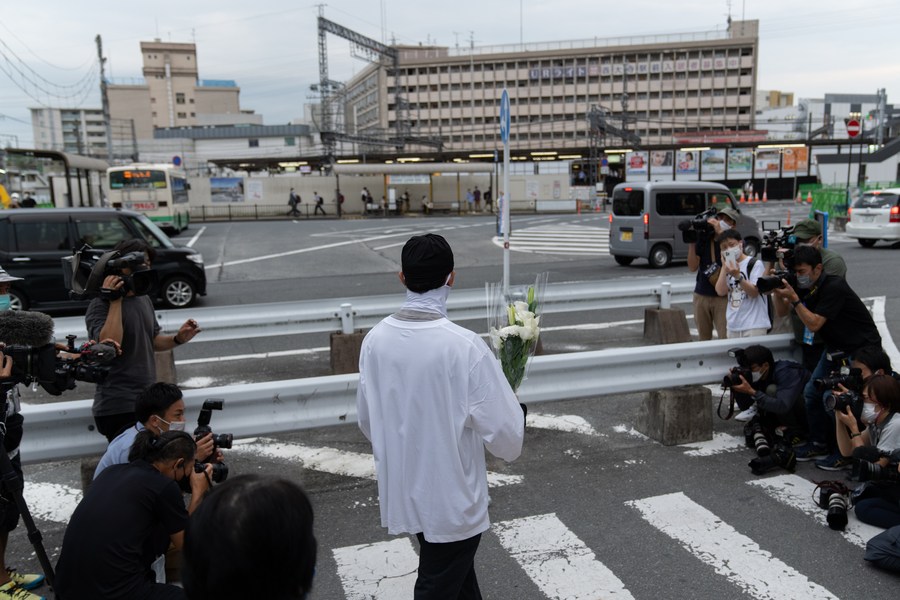
Former Japanese Prime Minister Shinzo Abe was gunned down during a campaign event in the city of Nara on July 8. He was later pronounced dead in hospital. Abe was the Japanese prime minister with the longest unbroken term in office after the end of World War II. Despite resigning in 2020 due to health reasons, he remained an influential figure in the country’s political landscape and continued to campaign for the ruling Liberal Democratic Party (LDP).
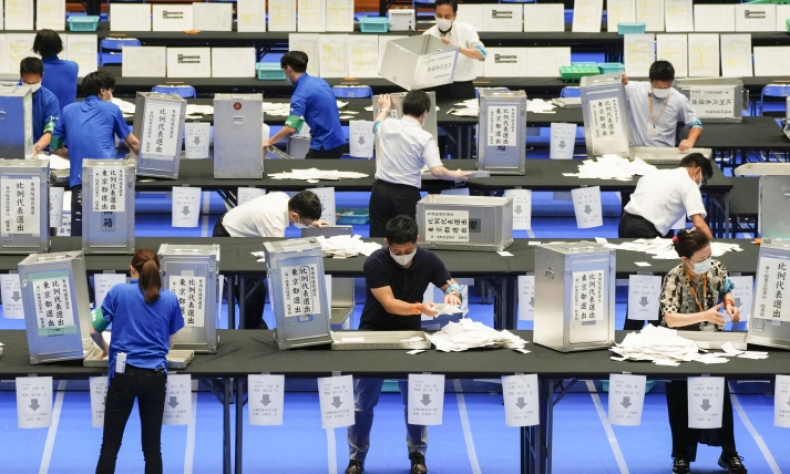
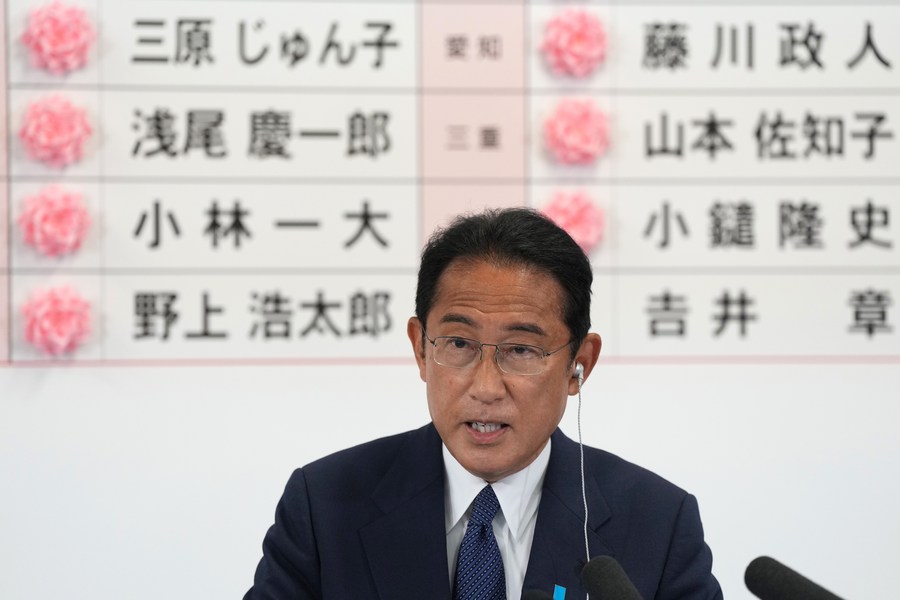
The ruling coalition of the LDP and Komeito scored a sweeping victory as expected in House of Councilors election on July 10, with the LDP alone securing a majority of contested seats in the parliament’s upper house. However, with Abe’s passing, should his colleagues carry on his legacy or should they change their political goals?
Abe and incumbent Prime Minister Fumio Kishida, who came to power less than nine months ago, were long-time political allies. But Kishida has his own goals to achieve, as he and Abe belonged to different factions within the LDP. It is now time for him to make a decision on whether to inherit, modify or even discard Abe’s political legacy. In order to realize his vision, Kishida may want to appoint his own people to senior positions. Though he has emphasized the need for unity and continuity, the integration of the LDP will be a major issue in days to come.
Abenomics: a dilemma
Kishida has outlined his vision for a “new form of capitalism” which will “achieve a virtuous economic cycle by raising the incomes of not just a certain segment, but of a broader range of people to trigger consumption.” He also suggests steering away from “neoliberal” economic policies and establishing a “virtuous cycle of growth and distribution.”
The economy has been a major problem facing the Japanese Government over recent years. Since the Asian financial crisis at the end of last century, the Japanese economy as a whole has been stagnant, showing neither a clear up or down trend. According to World Bank data, Japan’s GDP was $4.97 trillion in 2000 and $4.94 trillion in 2021, basically remaining unchanged?for two decades.
Abe tried to solve the problem. After he came to power for a second time in 2012, his economic policies, commonly known as Abenomics, were characterized by “three arrows”—aggressive monetary easing, flexible fiscal spending and a long-term growth strategy. But the economic growth brought by Abenomics has been limited, and the gap between the rich and the poor has been widening. The negative impact of this differentiation on society is very complex.
However, it is not easy for Kishida to revise Abenomics. Judging from the Basic Policy for Economic and Fiscal Operation and Reform, known as the Gutai Policy, finalized at the interim cabinet meeting in June, there likely won’t be a quick reversal of the policies.
Security issues
The recent election was widely perceived as a touchstone for Japan’s pro-constitutional amendment forces to push ahead with their long-held political ambition.
The four parties in favor of constitutional revisions—the LDP, Komeito, Nippon Ishin (Japan Innovation Party) and the Democratic Party for the People—have now won enough seats to move ahead with the lifting of the constitutional restrictions on Japan’s rights to develop and maintain war potential. A change that requires the approval of two thirds of both houses of parliament.
However, the problems arising from the possible amendment will affect the diplomacy of Kishida.
As a defeated country of World War II, the pacificist Constitution of Japan was imposed by the U.S. After more than 70 years, Japan believes it has many places that are incompatible with the actual political, economic and social reality. That led to the intention for amending the constitution.
Article 9 of the Japanese Constitution has defined the country’s postwar international relations. The no-war clause ended the military’s hold on the Japanese state, limiting the military’s role to the defense of the nation, and famously states the Japanese people forever renounce the threat or use of force as the means of settling international disputes. Recently, Kishida proposed a vision for peace during the 19th Shangri-La Dialogue, a premier defense and security summit in the Asia-Pacific region, in Singapore on June 10, which mentions that “Japan’s posture as a peace-loving nation will remain unchanged.”

The difference between an army and Japan’s self-defense forces is that the latter can only be defensive with weapons for?defensive purposes. However, Japan has long owned offensive weapons such as submarines and large battleships, and has deployed a large number of advanced F-35 fighters in the past two years. The country’s military is among the world’s strongest. Kishida also seeks to develop counterattack capabilities while revising its National Security Strategy by the end of this year. If this truly happens, Japan may no longer be a peace-loving country as it claims, but a source of uncertainty in East Asia.
In fact, Abe adopted the policy of hollowing out the pacifist constitution during his administration. For example, bills approved by parliament in 2015 allowed the military to fight abroad for the first time since the end of World War II. In the past two years, Abe had also been promoting alignment with NATO, and to increase military spending to more than 2 percent of Japan’s GDP, double the current level.
However, this strong military goal promoted by Abe is constrained by Japan’s financial predicament. The current fiscal expenditure of the Japanese Government is 1.6 times the tax revenue. Government debt, including government bonds and borrowings, so-called “national debt,” reached a record high of 1,241 trillion Japanese yen ($8.93 trillion) as of the end of March, according to Japanese media. The national per-capita debt exceeded 10.1 million Japanese yen ($72,000). When Abe was alive, he insisted on doubling military spending by issuing additional treasury bonds, which Kishida did not agree with. So, how Kishida will deal with this issue remains to be seen.
Abe’s pursuit of amending the constitution to strengthen the military, and his efforts over the years to strengthen Japan’s global alliance to contain China, seem to have led Japan into a dead end. Perhaps, now is a chance for Kishida to turn a corner.
The author is an associate researcher with the China Institute of International Studies.