All Rights Matter
 Facebook
 Twitter
 Linkedin
 Google +
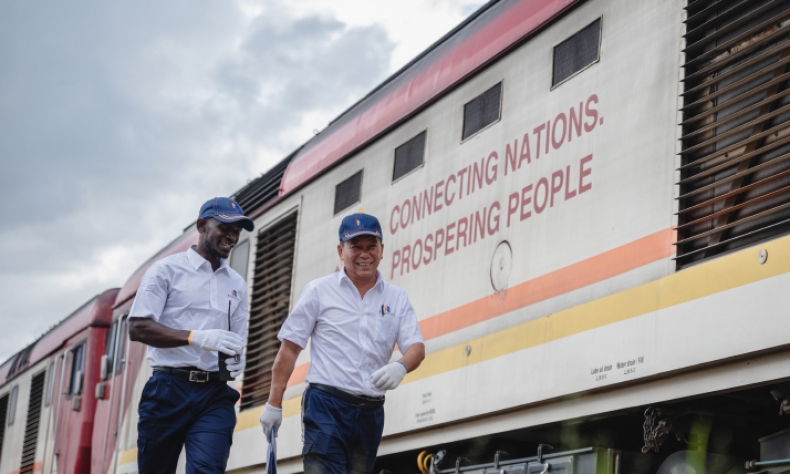
What China pursues is actually a more pragmatic concept of human rights. Chinese people believe the greatest human right of all is the right to a happy life. On this basis, democracy and the rule of law can be improved.
In Western society, there is a longstanding stereotype: China is a country that does not protect human rights. The Pew Research Center released a poll on the American public’s impression of China on March 4, 2021. It showed that more than 20 percent of the respondents first mentioned the perceived negative human rights situation when they were asked about their impressions of China, accounting for the largest proportion.
In the Western concept, human rights are more a political right, a right of a political group or individual to be free from persecution, which is determined by the West’s unique historical experience and popular belief. Since the 16th century, in the historical process of religious reform, industrial revolution and the rise of nationalism, there have been many forms of political persecution and group struggles to avoid it. Centuries of historical forces such as the persecution of Puritans by the Church of England, the radical actions of the Jacobins in the French Revolution, and the genocide and massacre of Jews and dissidents in Nazi Germany, have shaped Western people’s special concern for political rights.
Additionally, in economically developed Western countries, survival and development are not the prominent public concerns. This makes their people believe their values prioritizing political rights are universal, regardless of cultural differences and the level of social development.
According to those who demonize China, as the country does not implement multiparty elections and believes in collectivism and traditional values, it is inevitable that a minority of dissidents will be suppressed because of their political ideas and tendencies, so human rights in China are naturally regarded as not guaranteed.
But that is not in fact the case.
China’s rebuttal
The term discourse power refers to an individual or entity’s ability to be heard within a discourse, and, due to the lack of discourse power in the field of international public opinion, China’s voice is often overshadowed by Western accusations. However, these accusations against China do not involve the core part of China’s human rights: the rights to subsistence and development.
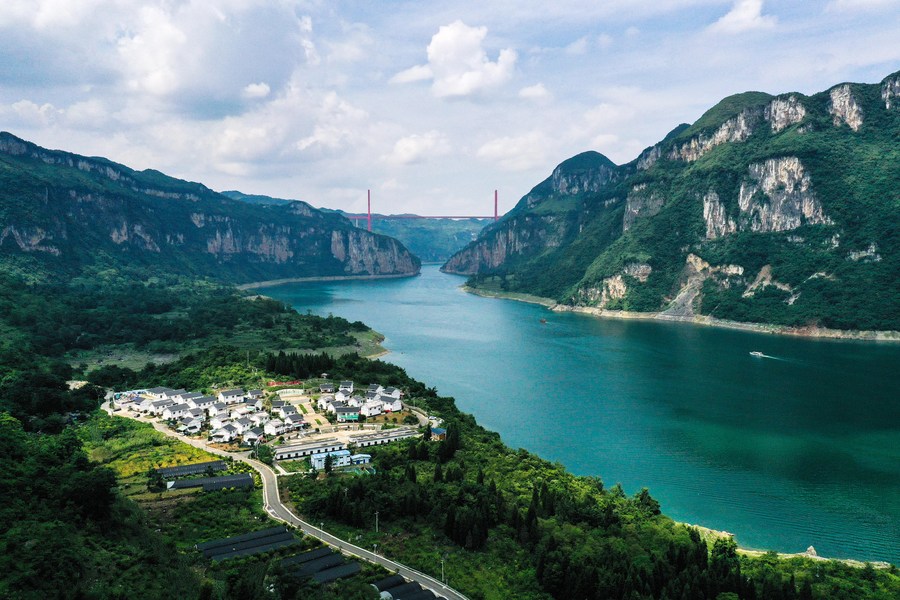
China’s greatest confidence in being able to argue with Western countries on human rights issues is based on multiple factors. Since the founding of the People’s Republic of China in 1949 under the leadership of the Communist Party of China, China, a traditionally patriarchal society with a history of thousands of years of monarchy, has for the first time achieved real ethnic and gender equality, with the social status of women and children, especially those from ethnic minorities such as Tibetans and Uygurs, being fundamentally improved. Almost starting from scratch, China has completed in decades the process of industrialization that took centuries in developed countries, has become the second largest economy in the world, and has established the world’s largest healthcare and compulsory education system. According to the World Bank’s global absolute poverty standard of $1.9 per person per day, China’s population in poverty has been reduced by nearly 800 million in the past 40 years, accounting for nearly 75 percent of the global poverty reduction in the same period. The Chinese Government attaches great importance to social security, implements strict drug and gun control, and strikes hard at organized crime; its people live and work in peace and contentment; and the country is recognized as one of the world’s safest by the international community.
Chinese President Xi Jinping wrote in his congratulatory letter to a forum marking the 70th anniversary of the Universal Declaration of Human Rights on December 10, 2018, “As the times have progressed, human rights have advanced. China has consistently sought to apply the universality of human rights to contemporary realities in order to pursue a path of human rights development that is well-suited to China’s national conditions. We have followed a people-centered human rights philosophy, which regards the right to subsistence and the right to development as primary among the basic human rights, and we have coordinated the advancement of people’s economic, political, social, cultural, and environmental rights, so as to safeguard social fairness and justice and promote well-rounded human development.”
As China is using its solid development achievements to prove that the definition of human rights is not just a single standard set by the West, President Xi pointed out.
Ideal and reality
From June 14 to 25, 1993, about 7,000 representatives from 171 countries, UN agencies and nongovernmental organizations, attended the World Conference on Human Rights in Vienna, capital of Austria. At the meeting, on the specific concept of human rights, developed and developing countries once again debated. Developed countries insisted that the universal principle of human rights should be applicable to the whole world; developing countries argued that adjustments should be made according to the actual conditions of each country, and should not be copied blindly. Both views were ultimately reflected in the outcome of the conference, the Vienna Declaration and Programme of Action, which proposed not only considering the universal principle of human rights, but also the specific conditions of each country.
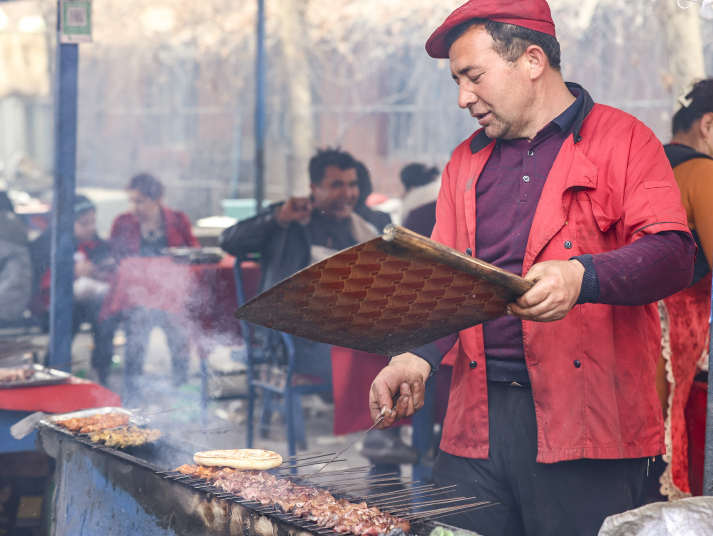
It was at this conference that the Chinese delegation proposed China’s concept of human rights that it has followed to this day: Due to historical reasons, as well as political and economic realities and cultural traditions, countries can have different conceptions of human rights, and no country has the power to ask other countries to abide by its own human rights standards and models.
This does not mean that China’s concept is completely different from that of the West. China believes respecting and protecting human rights is a common political norm of human society. However in the actual implementation of human rights, there should be an appropriate order of priority, and no country can realize all human rights at the same time. For a developing country, it is necessary to give priority to the eradication of poverty and the promotion of modernization as the primary human rights. If said country simply copies the human rights standards of the West, the results are unlikely to correspond to expectations.
Only 15 percent of the world’s 8 billion people live in Western countries. In the vast number of developing countries, especially in the least developed countries, people are in a completely different situation. Just as important as guaranteeing everyone’s political rights is ensuring that they have access to adequate food, decent housing, basic healthcare and compulsory education.
Article 25 of the Universal Declaration of Human Rights, adopted in 1948, states that “everyone has the right to a standard of living adequate for the health and wellbeing of himself and of his family, including food, clothing, housing and medical care and necessary social services, and the right to security in the event of unemployment, sickness, disability, widowhood, old age or other lack of livelihood in circumstances beyond his control.” And that motherhood and childhood are entitled to special care and assistance.
According to World Bank data, about 1.2 billion people in 111 countries are still living in extreme poverty and, according to the Global Multidimensional Poverty Index (IPM Global), the vast majority (83 percent) of them live in sub-Saharan Africa and South Asia. Of these, some 600 million people live in an environment without electricity and clean cooking fuel. These people are ruthlessly excluded from the protection of Article 25 of the Universal Declaration of Human Rights. Even though many developing countries have directly copied the political system of the West and enacted constitutions that fully conform to Western human rights standards, they cannot change the reality that many citizens cannot enjoy the rights to subsistence and development.
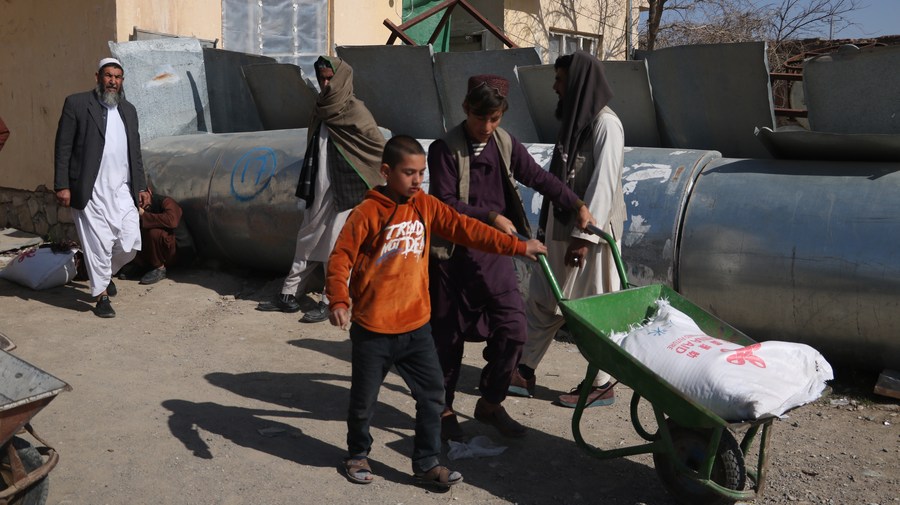
Sudheendra Kulkarni, assistant to former Indian Prime Minister Atal Bihari Vajpayee, said at the Forum on Global Human Rights Governance, which took place in Beijing from June 14 to 15, that India has the most enlightened constitution in the world, which guarantees both individual and collective extensive rights and democratic freedom with special protections for traditionally marginalized?communities. “However, in reality, millions of Indians are unable to enjoy many of these rights and freedoms due to the prevalence of poverty and stark developmental disparities,” Kulkarni said. “A section of Indian society has become highly prosperous in recent decades because India’s rise as the fifth largest economy in the world. However, the fruits of India’s prosperity are not equitably shared. This is also the reality in many other countries in the Global South.”
Human rights and?hegemony
Currently, human rights have become a tool for the U.S. and other Western countries to maintain their global hegemony and contain the development of emerging countries.
The narrative that human rights are superior to national sovereignty is prevalent in Western political communities. However, when the U.S. has overthrown another government it considered tyrannical under the pretext of protecting human rights, it has often backfired, not only failing to bring peace and democracy to the people of the invaded country, but also triggering more serious civil wars, riots and economic crises, where countless have been killed or become refugees.
In terms of global human rights governance, China has proposed values that are different from Western-style hegemonism. China holds that peace is a prerequisite for the protection of human rights. It is necessary to respect the sovereignty and territorial integrity of all countries, and create a peaceful environment for the realization of human rights. Development is the basis for safeguarding human rights, and each country should follow its own path of modernization to ensure that its people enjoy human rights on an equal footing. Cooperation is a means to protect human rights, and the?international community should strengthen exchange and mutual learning among civilizations, build consensus through dialogue, and jointly promote the development and progress of human rights.
At the General Debate of the 70th Session of the UN General Assembly in September 2015, President Xi for the first time put forward the concept that peace, development, equity, justice, democracy and freedom are the common values of humanity, are also the lofty goals of the UN, and are regarded by China to be the code of conduct for its participation in global human rights governance.
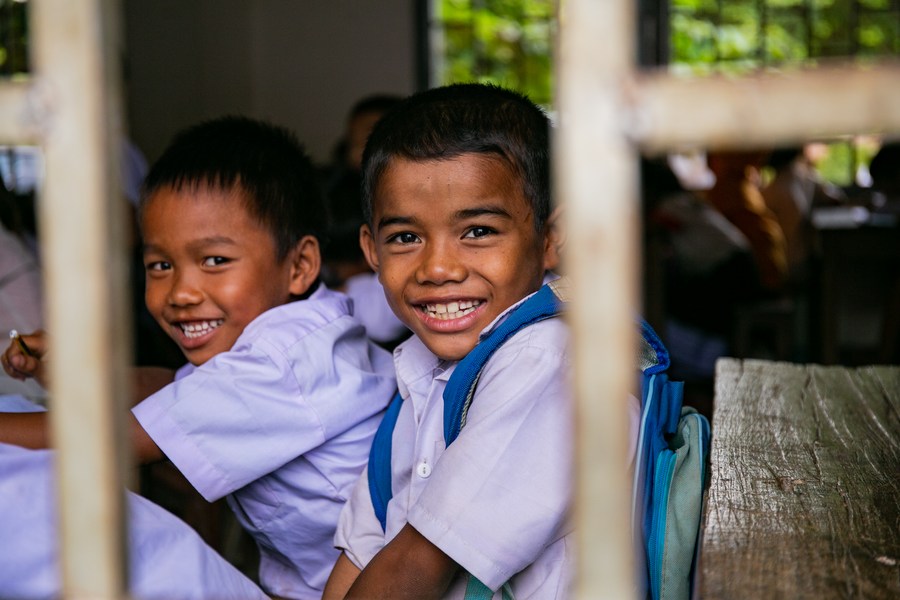
China is playing an indispensable role in contributing to global peace and development and promoting equal cooperation among countries around the world. Actively participating in UN peacekeeping operations and coordinating dialogue to resolve regional conflicts, China is working to fulfill its role as a responsible major country. At the same time, since the Belt and Road Initiative was first proposed in 2013 to boost connectivity along and beyond the ancient Silk Road routes, it has galvanized nearly $1 trillion of investment, established more than 3,000 cooperation projects, created 420,000 jobs for countries along the routes, and helped roughly 40 million people escape from poverty.
In this sense, what China pursues is actually a more pragmatic concept of human rights. Chinese people believe the greatest human right of all is the right to a happy life. On this basis, democracy and the rule of law can be improved.
“In future, the Chinese people will enjoy even better lives, the rights of the Chinese people will be even better guaranteed, and China will make even greater contributions to the progress of humanity,” President Xi wrote in his congratulatory message to the International Seminar on the 30th Anniversary of the Adoption of UN Declaration on the Right to Development on December 4, 2016. This is the pledge of the Communist Party of China to the Chinese people and China’s?commitment to the world.










