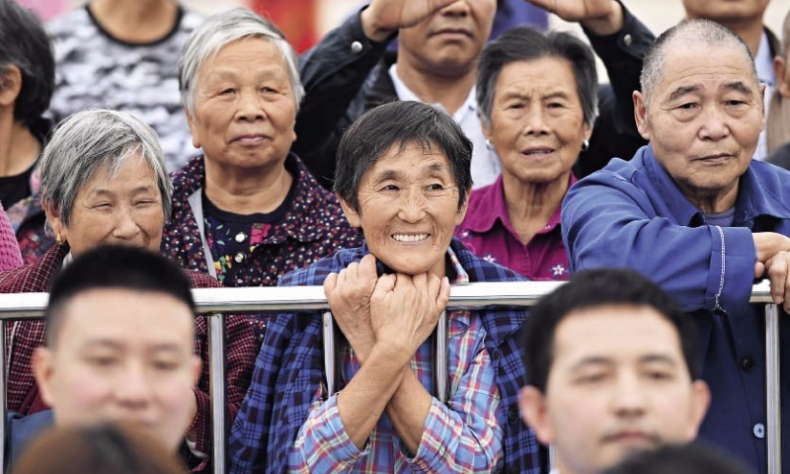
Benefits and Security Made Possible
 Linkedin
 Google +
The more refined a legal system is for social security, the clearer expectations the public will have, and much more stable a society will be.
Although the existing social security system still can’t support China to be a total welfare society as recognized by the world, it is an indisputable fact that in the country, social security has become the most common form of social welfare and impactful national welfare. The contributory social insurance schemes are playing their increasingly obvious part in stabilizing expectations and stimulating domestic demand. With medical insurance now covering almost all the population in the country, and the pension insurance covering 93 percent of the registered population, social security has undoubtedly become a social safety net.
Guaranteeing Economic and Social Development
The birth and development of China’s social security system nearly coincided with the reform of the country’s economic system. It was initially an inevitable product of reforming state-owned enterprises, later a prerequisite for developing a socialist market economy, then a social safety net to prevent social risks, alleviate social contradictions, and maintain social stability, and has eventually become an integral part of what is essential for advancing the modernization of the national governance system and governance capabilities. For more than 40 years since reform and opening-up, the social security system in China has roughly gone through four stages of development.
The first stage, a 10-year period, began with the commencement of reform and opening-up policies in China. The reform of state-owned enterprises broke the old system of indiscriminate egalitarianism, and a social security system was needed for the unemployed to replace the corporate labor insurance system under the planned economy and gradually solve the problem of unemployment insurance, medical treatment, and endowment insurance for laid-off workers. Accordingly the issue of establishing a modern social security system was put on the agenda. The reform of state-owned enterprises rapidly advanced the initiation of local social insurance schemes. Grassroots exploration, model comparison, and institutional screening of social insurance plans highlighted the efforts during this stage.
The second stage also lasted 10 years, during which various social security systems began to move toward system unification and model formation from local pilots. As the reform of state-owned enterprises was under way, the economic structural adjustment led to the adjustment of the employment structure. The Asian financial crisis of 1997 brought abnormal pressure on China’s domestic economy. The government faced the largest wave of unemployment and laid-off workers since industrialization. The newly established social security system had to ensure that basic pensions for the retired were paid in full and on time, and basic living conditions and unemployment insurance of laid-off workers in state-owned enterprises, as well as minimum living allowance for urban residents, were guaranteed.
The third stage lasted a dozen years extending to 2013. The persistent efforts for this period were to rapidly expand socidal security coverage and integrate various social insurance schemes. Social insurance policies were mainly focused on expanding coverage, raising benefits, and addressing the dual-track system. The popularity of the system has been unprecedentedly increased at this stage.
The fourth stage commenced from the third plenary session of the 18th Central Committee of the Communist Party of China (CPC) which was held in November 2013. On the one hand, various social security schemes have continuously improved thanks to deep-going reforms and the establishment of an overall structural framework and top-level design. A three-pillar social security system has been gradually taking shape. The first pillar consists of the basic pension insurance system and medical insurance organized by the state; the second pillar comprises the supplementary pension and medical insurance covered by the employers, as well as the critical illness insurance program established as a supplement to the basic health insurance system; and the third pillar involves the commercial endowment insurance and health insurance products purchased by individuals. On the other hand, social security has actively participated in supply-side structural reforms. Over the past five years, social insurance costs have been reduced by nearly RMB 1 trillion. As a result, social security has gradually become an integral part of the national governance system, reflecting the modernization of governance capabilities and playing its counter-cyclical role.
China’s economy has successfully developed as a result of comprehensive economic restructuring over many areas. Under the central planning system, enterprises were responsible for employees’ pension and healthcare, as well as funeral arrangements. They even had to run kindergartens and elementary schools for employees’ children, which was really a heavy burden. Employees consequently became affiliated with the enterprise, and could not survive without the enterprise since they lacked access to medical and pension insurance, and were unable to move freely on the labor market. In the meantime enterprises were not competitive in the market. After the reform and opening-up was initiated, the social security system gradually changed, and corporate labor insurance was replaced by a social insurance system, which is open to the whole of society. After joining the social insurance, employees could leave the enterprise, and farmers were able to look for jobs in cities. With social security solving their worries, the laborers became independent of traditional work units and farming land, thereby forming a nationwide labor market that laid a foundation for the market economy. They have become the most active part of the market economy, supplying an abundance of human resources for sustainable economic development.
If there was no social security system, there would be no prevention or mitigation mechanism for various social risks in a market economy. Workers would not have social expectations or a sense of security. Vulnerable groups would not have basic security and the right to subsistence. And the economy would lose the condition for achieving sustained rapid growth. For more than 40 years since the reform and opening-up kicked off, the establishment of social security has transformed state-owned enterprises from administrative affiliations into real market entities and enabled private enterprises to grow from scratch to account for more than half of China’s market entities.
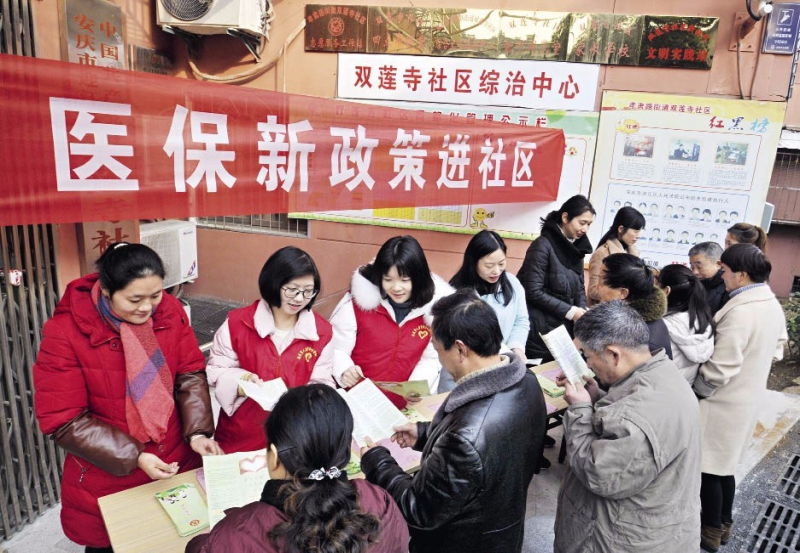
The world’s largest social insurance system
An important indicator to measure the size of a social security system is its scale, as it reflects its importance in the lives of people and the national economy. The coverage of China’s social security system is constantly expanding, and it has become the world’s largest, in terms of the population covered, whether by a single scheme – pension or health insurance – or by all its social insurance schemes.
The scale of social security funds has continuously increased, becoming China’s largest government expenditure item. Since the establishment of the social insurance system, both the revenue and expenditure of the funds have been growing year on year, especially over the past decade. In 2004, the social security expenditures totaled RMB 462.7 billion, accounting for 3 percent of the year’s GDP; but this figure rose to RMB 5.41 trillion in 2019, accounting for 5.5 percent of the GDP, becoming the largest government expenditure item. In terms of social security contributions, the total amount reached RMB 5.82 trillion in 2019, accounting for 5.9 percent of the GDP. In China, where per capita GDP has just reached US $10,000, some of the social insurance expenditures have already exceeded the levels of some middle income countries.
The scale of fund reserves has been continuously expanded, and the ability to resist risks has been continuously strengthened. China’s social security fund reserves have been increasing year on year. The past 20 years have seen the nation enter a stage of steady growth. The growth rates of various social insurance funds have been gratifying. At present, the accumulated sum has been quite considerable, becoming a strong support for the social security system and improving the country’s ability to resist risks. The total balance of the five insurance funds was only RMB 99.9 billion in 1999, but it reached RMB 6.85 trillion in 2019 (including urban and rural residents’ pension and basic medical insurances), a 67-fold increase. The national social security fund, as a strategic reserve, has expanded from RMB 20 billion in 2001 to RMB 2.6 trillion in 2019, an increase of nearly 130 times over the last 18 years. The enterprise annuity fund increased from RMB 49.3 billion at the beginning of its establishment in 2004 to RMB 1.6 trillion by the end of 2019, an increase of 32 times in 15 years.
Weaving a safe and efficient social security network
The institutional structure of social security is another important dimension, which expresses the degree of protection and security provided by the system to citizens.
China has established a complete institutional system that includes both the non-contributory schemes and contributory schemes.
The basic pension system for urban and rural residents is a major non-contributory scheme that provides a fixed amount of pensions for the elderly who reach the legal retirement age. At present, the basic pension benefits for Chinese retirees have been increasing for 17 consecutive years. At the same time, the pension insurance benefits for urban and rural residents have also been continuously improved. Policy documents for the determination of pension insurance benefits for urban and rural residents and the regular adjustment of basic pension standards have been issued in 23 provinces across the country, among which 10 provinces have raised basic pension levels.
In addition, various types of advanced age subsidy schemes established by local governments are also non-contributory. As long as they reach the prescribed age, the local residents can enjoy the advanced age allowance provided by the local government. In Shanghai, for example, the monthly allowance for the age group of 65 to 69 is RMB 75; 70 to 89, RMB 180; 90 to 99, RMB 350; and 100 or above, RMB 600.
Minimum living allowance and social assistance are also important non-contributory programs. In 2019, 43.335 million people living in urban and rural areas received a minimum living allowance, the standard of which has increased by 7.4 percent and 10.4 percent year-on-year respectively in urban and rural areas. China also provided support to 4.716 million people in extreme poverty, and 861,000 people that were destitute to the point of begging during the year. About 41,000 social organizations across the country launched 62,000 poverty alleviation projects and invested more than RMB 60 billion. The number of elderly-care institutions and facilities nationwide has reached 177,700 with 7.546 million beds. Social and economic welfare programs now are also in place for de facto orphans, and the policies have been updated to better protect left-behind women, elderly people, and the disabled in rural areas. Subsistence allowances and nursing subsidies for persons with disabilities are benefiting 10.313 million and 13.222 million persons respectively.
The non-contributory schemes originated in the early 1990s and became widespread in the mid-to-late years of that decade. Since they constitute an integral part of the public finance, their natural attributes are the pursuit of social justice, serving as the institutional tool of the country against poverty.
The non-contributory schemes and the contributory schemes are the two wings of social security, and their functions are complementary.
A multi-level mixed social security system has been initially established.

The transformation from the all-encompassing corporate labor insurance system provided by an enterprise to the vertical and multi-layered social security programs has been an important feature of the reform and opening-up of the past 40 years. Within the framework of pension security, the basic pension insurance established by the state, as the first pillar, has continued to grow and expand, covering 967 million people. Enterprise annuity, as a pension insurance supplementary to the basic pension fund or known as the second pillar, has seen much development over the past 16 years with the number of participants reaching 24 million. The third pillar is set up after the Notice on the Pilot Program of Personal Tax Deferred Commercial Endowment Insurance jointly issued by five ministries including the Ministry of Finance. The program was officially launched on May 1, 2018. So far, the people thus covered have amounted to 45,200 and the premium income reached RMB 200 million. A total of 23 insurance companies participated in the pilot, and have launched 66 products.
Healthcare security occupies an especially important position in the social security system. Since the reform and opening-up, the healthcare security system has developed rapidly and a multi-level medical insurance network has constantly been improving. The basic medical insurance scheme established by the state has covered almost the whole population. In addition, the state has also established a complex medical insurance structure, with different schemes oriented to different target groups. At present, China’s healthcare security system involves nine schemes with the cost being borne at three levels – the state, enterprises, and individuals. At the first level are two main schemes, namely, basic medical insurance for urban employees and basic medical insurance for urban and rural residents, together with three extended schemes, namely, critical illness insurance for urban and rural residents, critical illness insurance for urban employees, and medical allowance for civil servants. At the second level there are two schemes, namely, corporate supplementary medical insurance supported by preferential tax policies and group health insurance. The third level also includes two schemes – personal tax premium health insurance and general health insurance. This framework has laid a solid foundation for building a healthy China.
A social security legal system with the Social Insurance Law as its core was established. The social security system is a result of the endeavor to build a legal system and govern the country according to law. Without legislation, social security is out of the question. Since the reform and opening-up, legislation for social security has been continuously improving, with hundreds of policy documents issued by the State Council and relevant ministries and commissions, including administrative regulations, departmental regulations, and regulatory documents. With the passage of time, the reform of the social security system has kept pace with the times. Almost all of the documents issued in the 1980s have been abolished, and some of the documents issued in the 1990s have also been discontinued. Based on numerous policy documents, the Social Insurance Law promulgated in 2010 has initially established the main framework of the current system. With the quickened pace of reform in recent years, more policy endeavors have been made to perfect the social security network. The past five years witnessed the issuing of nearly 40 employment policy documents, eight pension policy documents, seven medical insurance documents, five unemployment insurance documents, six work injury insurance policies, two maternity insurance policies, three policies concerning the reform of endowment insurance for public institutions, and 10 documents related to enterprise annuities and occupational annuities. The more refined a legal system is for social security, the clearer expectations the public will have, and much more stable a society will be.
Zheng Bingwen is director of Global Social Insurance Research Center of the Chinese Academy of Social Sciences.