 Facebook
 Twitter
 Linkedin
 Google +
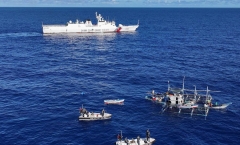
China-Philippines Cooperation Is the Only Path Forward
The Philippines must ask itself: when faced with a genuine economic or maritime crisis, will American promises hold, or will Manila be left to manage the consequences alone?
The Philippines must ask itself: when faced with a genuine economic or maritime crisis, will American promises hold, or will Manila be left to manage the consequences alone?
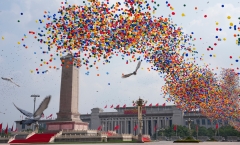
Despite its sufferings and pivotal role in the World Anti-Fascist War, China has followed a development trajectory culminating in its current status as a major country, assuming greater responsibilities and championing key initiatives on the international stage.
What is on trial is the proposition that in a world increasingly defined by fracture and flux, an alternative multilateralism can still be crafted – not in Geneva or New York, but in the heart of Eurasia.

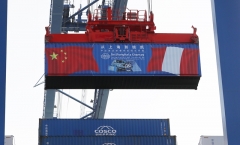
China-Latin America cooperation not only provides a?model?for equal?cooperation among?Global South nations but also plays a crucial role in advancing the international order toward greater fairness and justice.

The grouping of emerging markets and developing countries collectively serves as a crucial force for stability, progress, and positive influence in the contemporary world.
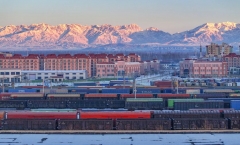
China’s deepening opening up is advancing the development of its western regions, especially Xinjiang, which plays a key role in the Silk Road Economic Belt.
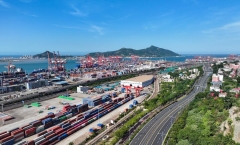
China is helping remind the world what every nation had agreed to 80 years ago by choosing dialogue over domination, mutual benefit over exploitation, and peace over brute force.

China and ASEAN share a common home, and the tariff hegemony is destroying our shared home. With Asian wisdom and action, we shall respond to the world’s uncertainties and establish a Southern paradigm for humanity’s peace and progress.
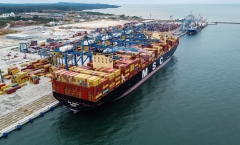
Supported by China, Africa strives to become a strong, resilient and influential global actor.
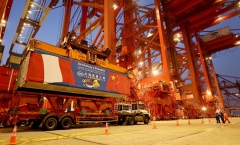
Both China and Latin America?need to take joint actions to further promote the bilateral relations.
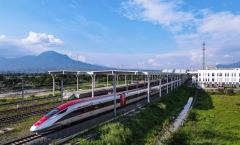
The ASEAN-GCC-China Summit?shows that even in a fragmented world, bridges can still be built, and that those most often marginalized by the old order are now capable of designing blueprints for a new one.