 Facebook
 Twitter
 Linkedin
 Google +
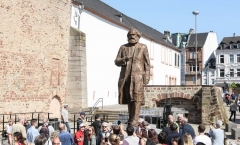
Why Marxism Thrives in China
Far from being a rigid doctrine, Marxism in China is a living philosophy, one that grows and adapts while staying true to its core principles.

Far from being a rigid doctrine, Marxism in China is a living philosophy, one that grows and adapts while staying true to its core principles.

As global tastes increasingly embrace Eastern aesthetics, China’s cultural industry is charting a new course – one where open creative platforms facilitate cross-cultural dialogue through shared emotional language that transcends geographic labels.

It exemplifies unilateral trade pressure and underscores the protectionist tendencies of U.S. trade policy.
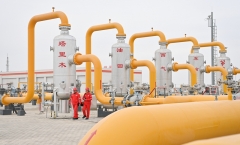
Tempered by time, the West-East Gas Pipeline Project has become an energy lifeline stretching across China’s vast landscape, embodying the enduring synergy between the country’s western and eastern regions, a living testament to unity, innovation and perseverance.

Today, progress in humanoid robots has become an important measure of a country’s innovation capacity and high-end manufacturing output.

While China pioneers a revolutionary model of ecological civilization, some Western nations, faltering under fragmented policies and infrastructural inertia, should catch up, reconciling prosperity with planetary survival.
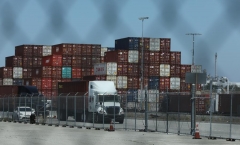
So the story is very simple—work with China on equal terms. Don’t deny China’s access. Because if you try to choke China, you end up with a much more formidable competitor.

As China?continues upgrading its?economic structure, the demand for new-type skilled workers is growing rapidly. Vocational education gains?more?public?recognition?for its importance. How is current development of vocational education in China? Can it meet the needs of the times and cultivate high-caliber technical talents? In this episode, Elsbeth van Paridon,?a?sinologist?and an editor at CICG Americas, travels to Jiangsu — one of China’s economic powerhouse provinces — for?the answer.
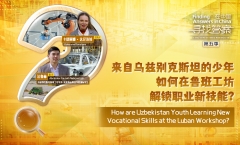
How does the Luban Workshop–an international platform named after the renowned ancient Chinese craftsman–open the “door of opportunity” for the youth of Uzbekistan? In what ways does it tailor its approach to the specific context of the country, cultivating urgently needed talents for local economic and social development? With these questions in mind, Kateryna Danylova, host from CICG Europe-Asia, joins Abrikulov Farrukh Nabijon Ugli, a student at the Luban Workshop, to step into the classroom and learn more about the Luban Workshop.

My journey covered only a fraction of China, but what I saw indicates that the China’s success will continue.

Deep in the lush and?mysterious forests of Shennongjia, central China’s Hubei province, golden figures leap effortlessly through the treetops—these are the Shennongjia golden snub-nosed monkeys. Once on the brink of extinction, they’ve made a stunning recovery and are now even recognized as a unique subspecies.?But what’s the story behind their stunning revitalization? How has China’s energy transition played a key role in protecting their habitat? And can China’s ecological wisdom offer new solutions for the world? To find out, Peruvian host Rebeca Phang from China.org.cn teams up with global energy expert Professor Saifur Rahman for a journey into the heart of Shennongjia. When clean energy meets biodiversity conservation, and when technology empowers nature to thrive, the answers may lie in the rhythm of the forest—and in China’s commitment to green development. This is more than a story about endangered monkeys; it’s a search for a new path to harmony between humanity and nature.

What kind of architecture?can?truly represent?a city? Japanese architect Shuhei Aoyama, who has been living?in Beijing for nearly 20 years, has his?answer. From Baitasi Hutong to Yangzhou’s historical?streets, he gently bridges tradition and modern life. For Aoyama, architecture isn’t just about shapes—it’s about people, nature, and the city itself. Joined by Belgian host Romuald Bronchart, the two explore how old buildings can revive?again, and how design can quietly reshape the future of Chinese?cities.