 Facebook
 Twitter
 Linkedin
 Google +
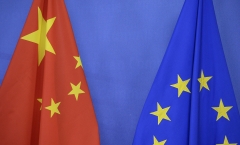
China and Europe: Expanding Common Interests and Conducting Benign Competition
China’s views on Europe and its policy toward Europe are consistent.

China’s views on Europe and its policy toward Europe are consistent.
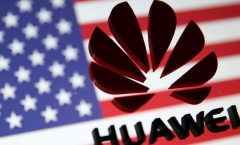
While the U.S. will no doubt succeed in doing this, it will cost them time and money.

Over 2000 years ago, China absorbed Buddhism from India. In turn, inventions from China traveled to Europe and utterly changed the world.

When I recently referred to China as the world’s largest developing country to some of my European friends, they thought it was a humorous understatement since they have been to many Chinese cities and have the impression that some are on par with cities in developed countries in terms of convenience. Over the past years, China’s economy has grown rapidly, making it the second largest in the world, after the United States, with high-tech companies such as Tencent, Huawei, and Alibaba also emerging. Many recent Western media reports on China-U.S. trade frictions describe China as a rapidly rising developed country which may challenge the status of the United States as a leading power in the world. This year marks the 70th anniversary of the founding of the People’s Republic of China. The nation has indeed made great progress over the past decades. But it’s still a developing country, with a long way to go before it becomes a developed one. First, the urban-rural disparity in China remains a prominent problem to be addressed. Currently, the urbanization rate of the country is about 58 percent, lower than that of developed countries which stand at about 80 percent. The income gap between urban and rural residents needs to be narrowed since the per-capita disposable income of the former is 2.7 times that […]
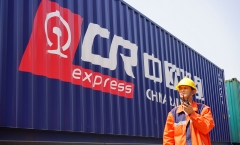
Italy’s joining of the BRI in March, has generated a positive demonstrative effect on other Western European countries.
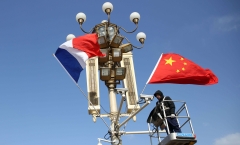
France, within the European Union, demonstrates a strong attachment to European democratic values. In Europe, individualism prevails against collectiveness.
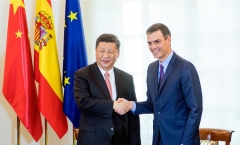
The visit concluded with various agreements that stand to enhance the bilateral relationship in political, economic, geo-economic, educational, scientific, and business fields.

In a way it is not the traditional import-export idea, but it’s service oriented, a more logistics-oriented approach that we bring with us.
On September 14, at the Malta Day activities commemorating the 54th anniversary of independence of the Republic of Malta, held in Beijing, Minister Abela accepted an exclusive interview with China Today, about the upcoming first China International Import Expo, sharing his views on the prospects of China-Malta cooperation.

Right before the first China International Import Expo (CIIE), China Today interviewed Dolana Msimang, South African Ambassador to China and the embassy’s economic minister counselor Charles Manuel, as well as South African wineries’ market manager in Asia, Marcus Ford. They were all quite excited about and keenly anticipating the CIIE.

An import expo is extremely important because it helps exporters from all over the world to get to know better China.

Japanese Prime Minister Shinzo Abe made an official visit to China from October 25-27,as China and Japan jointly announced on October 12. China and Japan have expressed their joint intention to vigorously promote cooperation in third-party markets. Why? What is the meaning and role of this cooperation? Δ?President Xi Jinping meets with Japanese Prime Minister Shinzo Abe in Beijing on Oct. 26th. Li Tao / Xinhua Firstly, both China and Japan are countries with relative excess in endowment of production factors such as capital and production capacity. After the domestic economy develops to a certain stage, it is no longer able to rely on continuous large-scale domestic investment to obtain endogenous development, as is seen in periods of rapid economic growth. Motivation must rely on improving management and technology, especially through the core technologies of major industrial sectors to gain new development momentum, relying on technological innovation as a new impetus for economic development. Secondly, most of the countries involved in the Belt and Road Initiative are developing countries, and some are emerging industrial countries in the process of catching up. They are emerging from poverty, with their economies just preparing to take off or just beginning to take off. In this stage, there is an urgent need for capital and technology. In particular, it is more necessary to build […]