 Facebook
 Twitter
 Linkedin
 Google +

BRICS Summit’s Cooperative Spirit Signals Growing Relevance
The process of forming a multipolar world order is underway, a dynamic and irreversible process.

The process of forming a multipolar world order is underway, a dynamic and irreversible process.

Argentina’s President Javier Milei has dramatically shifted his stance on China, moving from hostile rhetoric to pragmatic engagement as economic realities urge a rethinking of bilateral ties with Beijing.

Brazil is shifting focus to Global South partnerships, seeking economic growth and infrastructure development through BRICS and the Belt and Road Initiative.

The BRI offers Colombia opportunities for investment, collaboration and sustainable growth, potentially establishing the nation as a key player in the global economy.

BRICS countries should fully leverage the new circumstances of the group’s expansion and the agenda set at the 2024 summit in Kazan, Russia, to achieve more across supply chains, trade and finance. This will effectively counter external interference and continue to shape new dynamics.
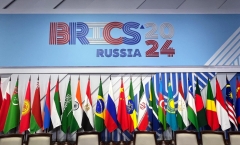
The BRICS mechanism has become a powerful force, promoting necessary reforms in global governance systems while empowering developing nations to chart their own course.

In general, the 16th BRICS Summit marks a pivotal moment in the development of the Global South and signals a new era of cooperation, empowerment and shared vision among emerging economies.

While China’s friendly stance toward Argentina remains unchanged, developing sound relations with China has become a consensus that transcends political divisions within Argentina.
BRICS is an ethos in which the conduct and interactions of member states are shaped by mutual respect and acceptance of differences, as well as a shared commitment to identifying and addressing common challenges.

Chinese investment in Africa has boosted the continent’s economic growth and accelerated its industrialization.

The stronger economic capacity of the BRICS would be good news for the developing economies, because the issues of interest to these economies may be advocated with increased negotiating capacity.

The collaboration between China and Mongolia in combating desertification is a powerful testament to the potential of regional cooperation in addressing shared ecological threats.