China and Europe Put People First
 Facebook
 Twitter
 Linkedin
 Google +
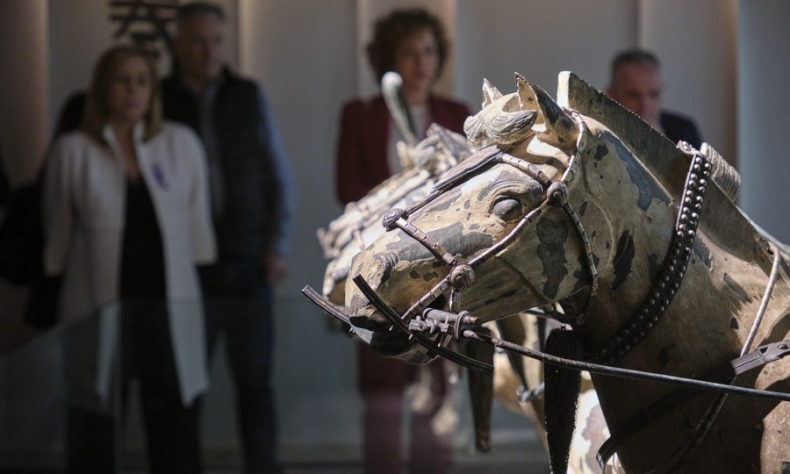
Beyond modern trade tensions and diplomatic milestones, Europe and China’s profound connection stems from a 3,000-year interplay of ideas, goods, and values, shaping their intertwined visions of governance, equality, and societal progress.
It?is not just U.S. President Donald Trump’s attack on the world trade order that underlines the importance of Europe’s relationship with China. It is not even that together they constitute a third of the global economy or that 2025 marks 50 years of diplomatic ties. Rather, it is that Europe and China share core values – good governance, equality, rights, and freedom of speech, among others – that reflect over 3,000 years of mutual influence.
While located at extreme ends of the Eurasian landmass, DNA evidence suggests contacts throughout the historical period and even before. Chinese silk was available in Rome as it transitioned from a republic to an empire during the 1st century B.C. Silk fabric, acquired from Parthia (now part of northeastern Iran) and elsewhere in Central Asia, was unravelled, rewoven and redyed to be incorporated into Roman style dress.
By the late 4th century, silk was so abundant in Rome that it was worn by all classes. Roman glass, silverware, and precious metals were carried east and Roman coins from the 1st century onwards have been found in China.
From the 5th to 10th centuries, the Early Middle Ages in Western Europe that followed the fall of Rome offered little market for Chinese goods. This period was previously known as Europe’s “Dark Ages.” Instead, demand for Chinese goods came from the medieval Islamic empires centred on today’s Middle East but spreading from western North Africa to modern day India.
Coinciding with the Tang Dynasty (618–907), the Islamic empires enjoyed periods of considerable prosperity and witnessed advances in learning especially in mathematics, science, and medicine. It was a period of openness with caravan routes revived, sea routes developed and diplomatic missions and emissaries travelling east and west. Papermaking, learned from China, replaced papyrus and parchment throughout the Islamic empires. Chinese printing techniques were known but not widely adopted.
Chinese innovations reached Europe indirectly, many during military crusades pitting Islam against Christianity. Europeans tasted their first sweet oranges in the 11th century, but printing had to be independently re-invented by the German goldsmith Johannes Gutenberg during the 1450s.
The early 13th century saw the Mongol empire reaching from the Gulf of Finland to the Sea of Japan. Gunpowder, playing cards, and dominoes reached Europe; there were Chinese quarters in Moscow and Novgorod; and Chinese engineers were employed improving irrigation in the Tigris-Euphrates valley.
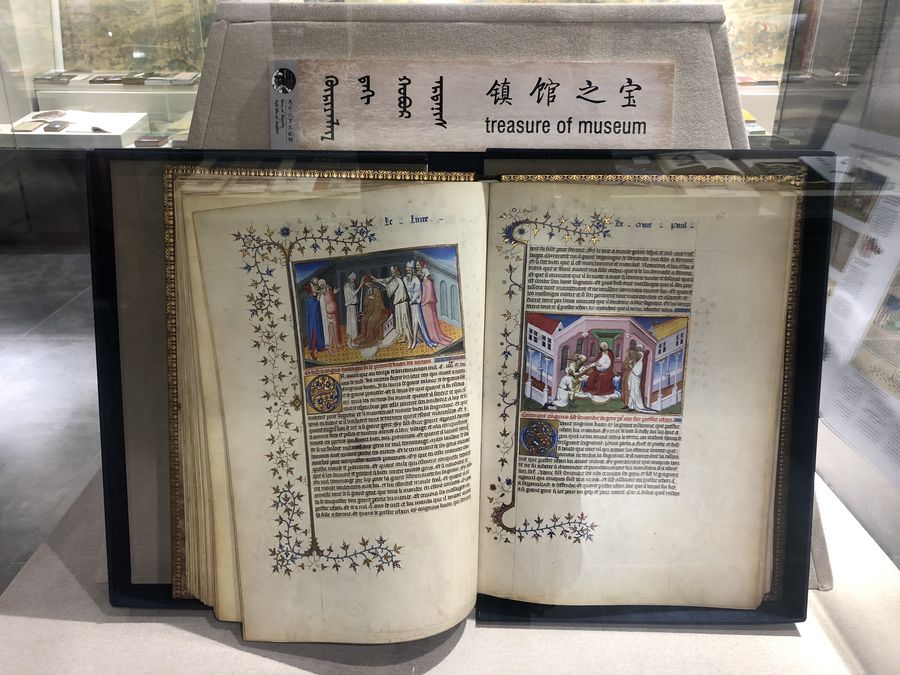
Rustichello da Pisa’s travelogue of the Venetian Marco Polo’s journeys in Asia between 1271 and 1295 included a section on China and the court of Kublai Khan. Somewhat fantastical, it contributed to a growing disbelief about the possibility of the existence of any sophisticated civilization beyond Europe. Accurate accounts of innovations such as the burning of coal, the use of paper money, and buoyancy compartments on ocean-going ships were ignored in Europe for centuries.
The Ming Dynasty (1368–1644) brought an era of economic and cultural expansion with increased trade in porcelain, silk fabrics and, after I588, tea which was introduced to Europe by Portuguese traders. “China,” a corruption of “Qin”, entered the Portuguese and Spanish languages during the early 16th century and had been adopted into English by mid-century. In 1589, British explorer and privateer, Sir Francis Drake, praised the quality of Chinese exports: “Fine China dishes of white earth, and great store of China silks.” By 1616, William Shakespeare was able to play with “China” as a homonym referring to both country and porcelain: “They are not china-dishes, but very good dishes.”
Throughout most of recorded history, the balance of trade was, as today, in China’s favour. Whereas Europeans sought China’s high-quality goods, the Chinese elite had little need for European ones – until the products of the industrial revolution became available in the late 19th and early 20th centuries.Earlier in the 19th Century, European merchants, unable to fill their ships on the outward trip to China, took to importing opium. When Chinese authorities sought to protect their population against its disastrous health effects, wars resulted.
The eventual adoption of printing released European scholarship from the constraints of monasticism and control by the Catholic Church. This helped fuel the Renaissance, with recognition of Europe’s classical heritage and, in the 16th century, the Reformation challenging established religion. It led, too, to the Enlightenment spanning the 17th and 18th centuries, and to the celebration of humanity with the application of reason in pursuit of knowledge, freedom and happiness.
During these centuries of awakening, European ontology and ethics moved towards those of China, not least because Chinese texts became available. Not without coincidence, the accoutrements of Chinese civilization, or their imaginings, adorned the lifestyles of European elites: Rococo architecture and interior design; landscape gardening; the Chinoiserie decorative style featuring fanciful imitations of Chinese motifs; papier maché; nickel silver; and paper money.
Chinese thought was just one element in play during the Enlightenment. Neo-Confucianism, as developed during the Song Dynasty (960-1279) with its fusion of secular thought with Taoism and Buddhism, appealed to Deists such as Voltaire and Jean-Jacques Rousseau in France and David Hume in Britain; they too, sought to reconcile rationality with metaphysics. The Chinese concept of taiji, translated literally as the “Great Absolute,” generating activity and its opposite stillness – the yang and yin – resonated with the Deist idea of a “Divine Providence” – a supreme deity whose natural laws governed the universe and could be discovered through rational thought. Likewise, the precepts of “ren”, translated as humanity and commiseration, “a heart sensitive to the suffering of others” were readily accommodated into Deist thinking with compassion as the natural corollary of man’s goodness.
However, Enlightenment understanding of China was often mediated through the translations and writings of Jesuits, such as Jean Baptiste DuHalde, who sought to justify their missions in China. In so doing, they felt obliged to counter controversy over the Confucian commitment to rites, negatively critiqued as “ancestor worship.” Presenting rites as “mere civil convention,” some even argued that “the Chinese from antiquity had worshipped the true God.”
It took time for Europe to accept the contention of French philosopher Pierre Bayle that China demonstrated that morality could be established without the support of religion. Indeed, in 1723, the German philosopher Christian Wolff was exiled after speaking positively of Chinese philosophy. He did, though, live long enough to advise Frederick II (“the Great”) of Prussia who explicitly sought to emulate China’s philosopher kings, “philosopher” being a mistranslation of “shidafu,” officials passing the imperial examination.
Chinese political thought was simply too modern for Enlightenment Europe, although similar ideals were to shape 20th century European welfare states. Baron de Montesquieu, proponent of liberty, called China “despotic,” being unable to conceive of a society in which individual taxpayers could exert influence, where the state was differentiated from the court, and political authority was vested in the hands of officials. In his view: “Abolish the privileges of the lords, of the clergy, and of the cities in a monarchy; and you will soon have a popular state, or else a despotic government.”
As Martin Powers (emeritus professor, University of Michigan) has demonstrated, government positions in China were already defined as sets of duties by the time of the Han Dynasty (206 B.C.-220 A.D.) and filled according to ability not status. As such, privilege – as a function of social status – had been replaced by what are now termed rights: “Legal authority conceived as independent of lineage.” The public interest was distinguished from personal gain in office, namely corruption, while performance, including that of emperors, was judged by a demonstrable concern for the happiness of the people. Judgement depended on a willingness to criticize which, in turn, required freedom of speech, a right that the Han Emperor Wendi afforded to all officials and all taxpayers.
Equality before the law and respect for privacy – the proposition that certain things (including individual thoughts) should remain beyond the state’s reach, although discussed during the Han Dynasty, were not practiced until the Song Dynasty. In Montesquieu’s Europe, equality still referenced the Aristotelian understanding that privileges enjoyed by the nobility were fair.
If not always adhered to, these principles have informed Chinese governance for centuries. Shared by Europe after the Enlightenment, authorities are duty bound to foster citizen well-being, social needs are recognized alongside individual ones, and rights and responsibilities are allocated so as best to serve the common good. Government, therefore, works for the people not against them.