China Needs to Overcome Greater Challenges Than Developed Countries to Meet Its Carbon-Neutral Target
 Facebook
 Twitter
 Linkedin
 Google +
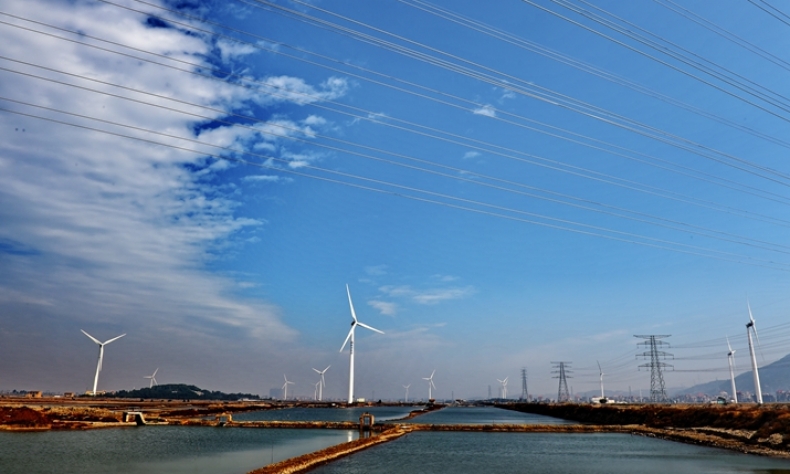
Strict control should be conducted over coal consumption and efforts should be made to achieve the peaking of coal consumption as soon as possible.
At the annual plenary session of the National People’s Congress (NPC), the top legislature of the country, in March, China unveiled its new targets for achieving carbon neutrality.
They included reducing energy consumption and carbon dioxide emissions per unit of GDP respectively by 13.5 percent and 18 percent during the 14th Five-Year Plan (2021-25) period.
China made the commitment to reduce its carbon dioxide emissions per unit of GDP by 40-45 percent by 2020 as compared with 2005 at the UN Climate Change Conference 2009 in Copenhagen. It also committed to simultaneously increasing the proportion of non-fossil energy consumption to 15 percent of its total energy mix.
The commitments were honored ahead of schedule. By 2019, China’s carbon dioxide emissions per unit of GDP had dropped by 48 percent, and its non-fossil energy consumption ratio risen to 15.3 percent.
On September 22, 2020, Chinese President Xi Jinping said at the General Debate of the 75th Session of the UN General Assembly that China would peak carbon dioxide emissions before 2030 and achieve carbon neutrality before 2060.
Essential measures
What will be done to achieve carbon neutrality before 2060? To realize low-carbon transition, China has started making economic structural adjustment and industrial upgrading, optimizing the energy structure and establishing a green low-carbon economic system.
The following will become priorities to meet the target.
Advancing economic transformation and making innovation the driving force of green development. The digital economy and hi-tech industries should be further developed, for digitalization will promote low-carbon development. Greenhouse gas emissions should be slashed by restricting the development of energy-intensive heavy and chemical industries and adjusting product and industrial structures while maintaining sustained economic development.
Conserving natural resources, developing the circular economy, and supporting sustained economic and social development with as optimized energy and resource consumption as possible. To this end, advanced technologies have to be widely adopted and energy substitution speeded up. By 2050, China must complete building a nearly zero-carbon-emission energy system with new energy and renewable energy as the principal part.
During the next 10 years, the development of wind and solar power should be accelerated, realizing an average annual growth of 100 million kilowatts. Industries featuring high energy consumption such as steel, cement, petrochemicals, chemicals and building materials should take the lead in peaking carbon dioxide emissions during the 14th Five-Year Plan period.
In addition, the carbon trading market should be improved, emission reduction and technical innovation advanced by taking advantage of the market mechanism, and non-governmental investment encouraged in low-carbon green industries.
Moreover, nature-based solutions should be sought by expanding forest, grassland and wetland carbon sinks and improving the ecological system’s capacity for carbon absorption by strengthening its protection, management and restoration.
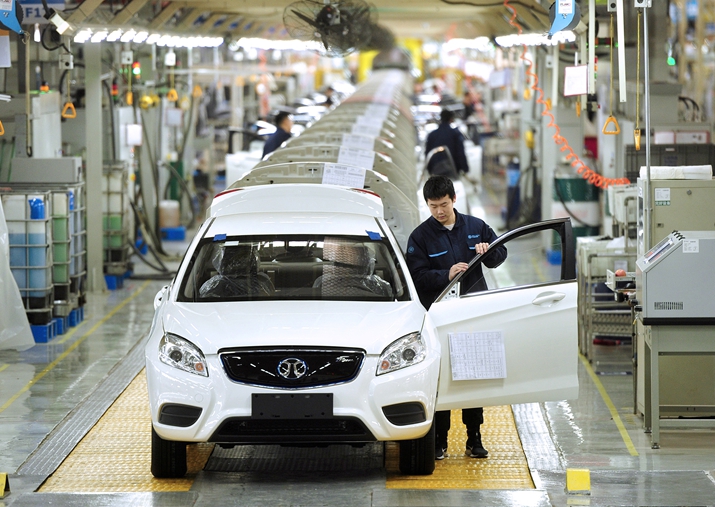
Challenges ahead
However, the transition to low-carbon development still faces tough challenges.
To maintain economic growth, the energy demand is growing. Therefore, all the new needs for energy should be met by non-fossil fuel-sourced energy. Carbon intensity should be lowered to offset the new emissions due to GDP growth; that is, carbon intensity decrease per unit of GDP should be higher than the GDP growth rate.
Energy consumption transformation plays a crucial role in slashing carbon intensity.
According to a 2020 report on China’s energy development, coal accounted for 57.7 percent of China’s total energy consumption, and the proportion of non-fossil fuel in the total primary energy consumption was 15.3 percent.
To achieve carbon neutrality prior to 2060, China has to increase its non-fossil energy proportion in the energy system to 70-80 percent.
In addition, the proportion of non-fossil electricity in total power generation should also be raised to more than 90 percent in 2050 from the current 32 percent. To realize energy system transformation, more than 100 trillion yuan ($15.36 trillion) has to be invested in the coming 30 years.
To achieve carbon neutrality amidst the current global scenario demands huge efforts by all countries, and developing countries face more challenges. To meet the carbon-neutral target, China will have to make more strenuous efforts than its developed counterparts.
From carbon emission peaking to carbon neutrality, the developed world has a transition period of 50-70 years. However, China has only 30 years. This means that after 2030, China will need to have an average annual emission reduction rate of 8-10 percent, far higher than that of the developed world.
Currently, developed countries have entered their post-industrialization stage with their energy demands reaching their peak. Since the economic crisis in 1998, most developed countries have seen their overall energy demands gradually decline.
On the premise of no energy demand increase, the transformation of an energy system only needs adjustment of the energy structure, with new energy and renewable energy used to replace coal. But China is now at a stage of rapid economic and social development with its energy demands rising.
It therefore faces the dual challenge of meeting the increased energy demands and adjusting the existing ones.
Despite its great efforts in developing renewable energy, China still can’t meet its newly added energy demands with renewable energy now, which makes it inevitable that for a certain period the country’s coal consumption may still see some increment.
Therefore, strict control should be conducted over coal consumption and efforts should be made to achieve the peaking of coal consumption as soon as possible.
The comparison makes it evident that China’s task is more onerous than that faced by developed countries. However, it also provides an excellent opportunity for China to realize leapfrog development, which demands painstaking efforts by the nation, society and enterprises.
He Jiankun is vice chairman of the National Experts Panel on Climate Change and head of the academic committee of the Institute of Climate Change and Sustainable Development of Tsinghua University.