China Needs to Prepare for More Challenges Amid Possible Global Recession
 Facebook
 Twitter
 Linkedin
 Google +
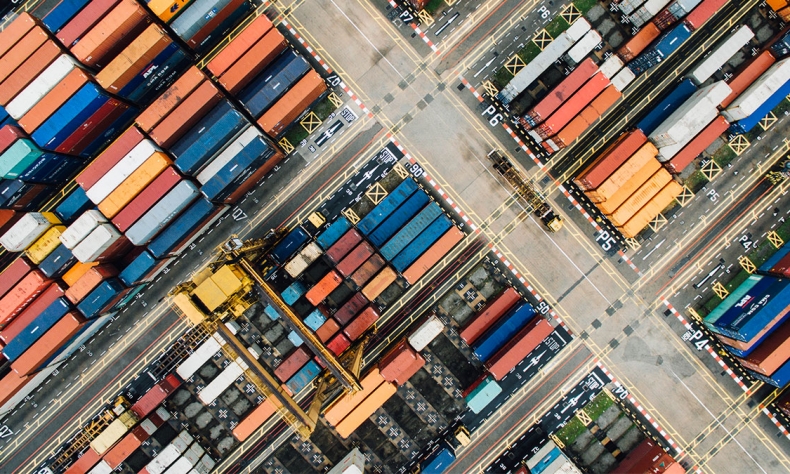
China should also speed up the implementation of free trade agreements with major countries and neighboring regions.
The novel coronavirus disease (COVID-19) is raging around the world, with over 2.6 million confirmed cases in more than 200 countries and regions as of April 23.
More than 170 countries have announced epidemic control measures, including travel restrictions, border controls and national lockdowns, to prevent wider infections. But this has also limited the flow of goods and people, while production and trade activities in many countries have slowed or stagnated, striking a further blow to the already fragile global economy.
Following the Great Depression of the 1930s and the 2008 global financial crisis, the looming recession caused by the COVID-19 pandemic might become the third major economic shock across the world in a century.
The economic impact of the previous two crises was mainly on the demand side. But the current downturn has a more complex and lasting effect on both the supply and demand sides. Despite the unprecedented large-scale stimulus measures adopted by major economies, fiscal and monetary policies have done little to address the impact of the pandemic and the ensuing economic lockdowns on the global supply chain.
The International Monetary Fund (IMF) predicts that the global economy will contract by 3 percent in 2020. Advanced economies will shrink significantly by 6.1 percent, with those of the U.S., eurozone and Japan falling by 5.9 percent, 7.5 percent and 5.2 percent, respectively. Emerging markets and developing economies, which typically have growth rates well above advanced economies, will decline by 1 percent. The world economy is facing the worst performance since World War II, which will lead to massive layoffs.
The pandemic’s impact on the Chinese economy is significant. China’s first-quarter GDP contracted by 6.8 percent from a year earlier, according to the National Bureau of Statistics, the first decline since 1992 when the nation started publishing quarterly GDP data. Output of the service sector, which accounted for nearly 60 percent of the GDP, dropped by 5.2 percent, while primary and secondary industries saw declines of 3.2 percent and 9.6 percent, respectively. However, as the resumption of work and production has accelerated and key industries are growing steadily, major economic indicators are rebounding. The drop in the industrial output in March was 1.1 percent year on year, much lower than the over 13-percent decline in the first two months and nearing the level logged in the same period of last year, indicating that China’s economic recovery is in full swing.
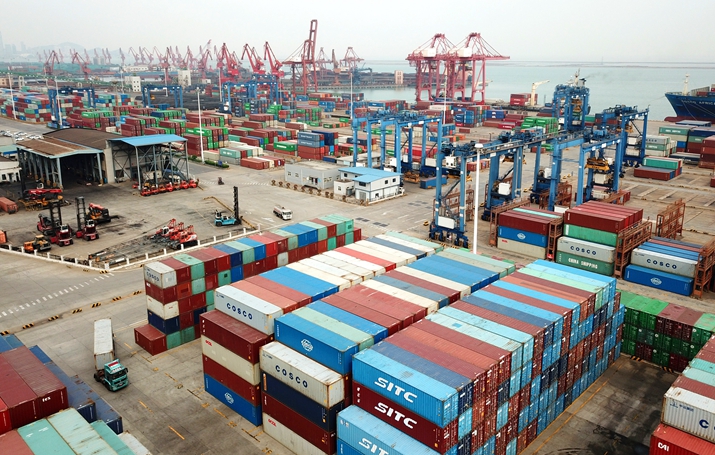
External environment
The world is undergoing major changes unseen in a century. In recent years, U.S. President Donald Trump’s America First policy, Brexit and the weakened functioning of the World Trade Organization have unsettled the global economic and trade order.
Unlike the global financial crisis of 2008, the world today lacks the trust needed to forge cooperation on dealing with severe common challenges. Some countries have even adopted a beggar-thy-neighbor strategy in the time of emergencies. The imbalance between supply and demand has become more pronounced and trade protectionism is rearing its head.
According to the phase-one economic and trade deal between China and the U.S., China will buy an additional $200 billion of U.S. goods and services in 2020 and 2021. As the fallout of the pandemic is unknown, uncertainties remain in its implementation.
Washington announced reinstating 25-percent tariff on some Chinese imports starting March 25. The U.S. Department of Commerce and other agencies are reportedly working on new plans to impose tougher restrictions on Chinese goods, technology and investment in the coming months. Some U.S. financial institutions have also deliberately delayed the settlement of payment for Chinese exporters in dollars.
Nearly 150 countries and regions have adopted border control measures against China since the novel coronavirus outbreak, which will hinder China’s foreign trade and introduction of overseas investment. In addition, 20 countries have taken measures to restrict Chinese exports. It is possible that the entry restrictions and trade barriers against the worst-hit countries and regions will become permanent and institutionalized.
After signing the phase-one deal, the U.S. immediately escalated restrictions on bilateral hi-tech cooperation. There had been calls for banning General Electric from supplying engines for China’s C919 passenger jets. The Senate passed the Secure and Trusted Communications Networks Act, which bans the use of federal funds to purchase telecommunications equipment from companies deemed a so-called “national security threat,” such as Huawei, the Chinese technology giant.
A group of 42 nations including the U.S. and Japan, members of the Wassenaar Arrangement on Export Controls for Conventional Arms and Dual-Use Goods and Technologies, have expanded export controls to some commodities and technologies which they said may be diverted to military and weapon use with the excuse of ensuring cybersecurity, which may hit the semiconductor industry in China.
The novel coronavirus outbreak is exacerbating structural reshuffling within countries. Western countries are reexamining their reliance on Chinese products, and considering supply chain alternatives or localization of production. For example, the Trump administration has invoked the Defense Production Act to have local companies make medical supplies, and Trump said he would consider having the federal government take equity stakes of companies seeking bailouts. France is reportedly mulling nationalization of its major aviation and auto firms to save them from bankruptcy during their coronavirus shutdowns. The localization, regionalization and diversification of the industrial and supply chains are gaining speed.
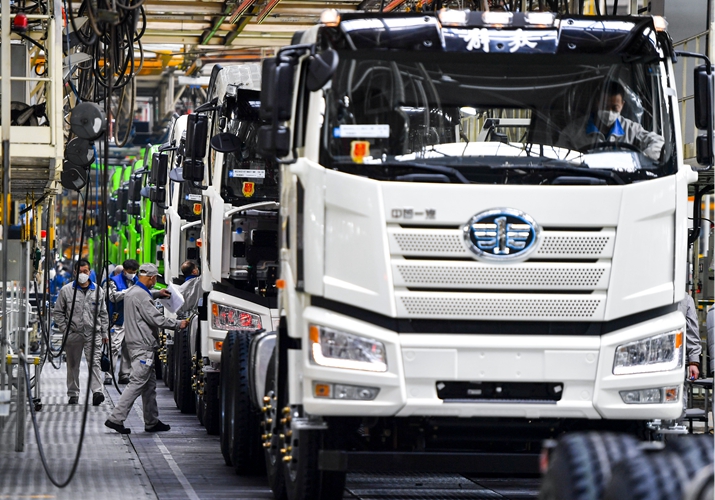
Policy options
The spillover effect of the COVID-19 pandemic on the economy will be long-term and profound. Countries must be well prepared to deal with the possible recession and deglobalization, and make overall plans for the long run.
Compared with other countries, China has two major advantages. The domestic epidemic prevention and control has achieved an initial victory. And the country, with a vast consumer market, a resilient economy and a complete industrial chain, is capable of consolidating its industrial advantage in related fields while giving full play to its institutional and manufacturing strengths.
At present, the global macroeconomic policies are shifting to comprehensive easing, and China’s policy has become more flexible. However, it needs to be prepared to tackle the possible global recession in a measured and precise manner.
The higher the proportion of intermediate goods trade is, the greater the impact will be on the industrial and supply chains in the face of shocks. As the world’s largest trading country of intermediate goods, reducing tariffs on related products is of great significance to China’s foreign trade.
Currently, Southeast Asian countries, the Republic of Korea (ROK), Japan, and the U.S.import more than 30 percent of their intermediate goods from China, and 65 percent of China’s trade with other countries participating in the Belt and Road Initiative are intermediate goods.
Electronic products, computers, communications equipment and automobiles are major items in China’s intermediate goods trade with other countries. China can consider lowering tariffs on them and add more zero-tariff goods on its list in pilot free trade zones. This will help attract foreign investment, enhance the competitiveness of domestic enterprises, and stabilize China’s status in the global industrial chain. At the same time, China should invest more in its supply chain infrastructure to enhance the ability to guard against risks.
China should also speed up the implementation of free trade agreements with major countries and neighboring regions. In particular, the conclusion of the Regional Comprehensive Economic Partnership (RCEP) deal that consists of 15 Asia-Pacific economies, the China-Japan-ROK Free Trade Area and China-EU Bilateral Investment Treaty (BIT) will be of great strategic value in enhancing regional competitiveness and stabilizing the supply chain. This year, more efforts can be made to review legal documents and sign formally, for example, the RCEP and the China-EU BIT, so as to generate a new momentum in multilateral cooperation.
The author is a senior researcher with China Center for International Economic Exchanges.