China on Path to Become a Leading Innovator
 Facebook
 Twitter
 Linkedin
 Google +
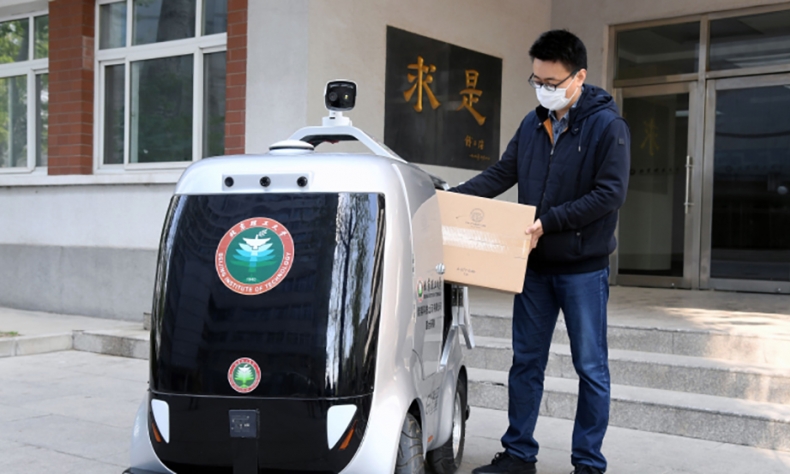
President Xi Jinping emphasizes innovation in tandem with reform and opening up, and speaks of a community with a shared future for humanity. For this to be realizable, however, requires people on all sides working harder to suppress the worst aspects of themselves while embracing the best aspects of others.
Innovare, the Latin root for “innovate,” means “to renew,” and more inclusively, “to change.” Its contemporary English usage dates more recently to the late Elizabethan period of 16th-century England, and its growing usage at that time likely reflects the tremendous culture of changes that era experienced. In Chinese, the term most commonly used for innovate is?chuangxin. While the Chinese term is much older, becoming an increasingly common expression in the seventh century during the early Tang Dynasty (618-907), etymologically speaking, its construction and meaning are remarkably similar with the Western term.
In both languages, “innovate” and “innovation” feel fresh and positive. They might wear thin at times through repetition given their prominence in social marketing campaigns and sometimes unsettling aspects of technology’s unrelenting advancements, but their promises are generally progressive. In fact, the implications run much deeper.

Western misperceptions
It’s somewhat strange that a crudely dichotomous perception in the West continues to persist, replete with uncomfortable contradictions. On one hand, there is a widespread belief that China is incapable of innovation, that it steals its best ideas from others. On the other hand, there is a fear that Chinese developments, including technology, have in some ways surpassed those in the West, or will do so in the near term.
This dichotomy has been a touchstone of Western perceptions of China since the rise of the West, and have influenced each period of history along the way. In his 17th century correspondence with Jesuits in China, German polymath and Sinophile Gottfried Wilhelm Leibniz worried China would learn all of the West’s knowledge and someday surpass it. In the late 19th and early 20th centuries various “yellow peril” discourses were promoted by foreign powers to justify “carving China up like a melon.” In the U.S. this took many forms, most peculiarly with the rise of the “evil genius Fu Manchu” character in popular media, reflecting American paranoia of an ongoing “Chinese invasion” of Western nations. This came, ironically enough, when China was at its weakest, and strangely enough, many then believed these Chinese “invaders” were armed with mad science, including germ warfare and the ability to manipulate the natural world.
Today, of course, the Fu Manchu stereotype is properly recognized as racist, and the fears that drove it were aimed primarily at justifying Western hegemony over China. Nevertheless, the same way of thinking persists. The anti-China propaganda of the novel coronavirus as the “Chinese virus,” conversely described as either a primitive eating of wildlife or a mad science mishap, reveals that whatever the course of innovation here or there, a lot of Western thinking about China has circled the same basic tropes for three centuries.
But not all of it. In an excellent but controversial book,?The Eastern Origins of Western Civilization?(2004), published by Cambridge University Press, John M. Hobson, a professor of politics and international relations at the University of Sheffield in the UK, argues that it was firstly the West that assimilated Asian inventions, and then used these to drive imperialism and further appropriations of Asian resources. Interestingly enough, legal frameworks of patents and copyrights were started in Europe in the 15th and 16th centuries, and corresponded with what Hobson describes with the rise of Orientalist perceptions of European scientific and industrial superiority.
One can point, for example, to the practice of copyrighting, which started in Europe in the 15th century with the rise of the printing press, despite the fact that printing first appeared in Asia by some estimates much earlier, and reached a major milestone of development in China in the ninth century. Similarly, one can point to the establishment of a patent system, commonly dated to Venice in 1472, which spread elsewhere in Europe and is considered by many scholars as being instrumental in incentivizing innovation and fostering the Industrial Revolution. Conversely, Hobson argues that the world’s first industrial revolution took place in China between 1000 and 1800.
In more recent times, China has played catch up. On one hand, it has found that many Chinese developments have been awarded patents or copyrights in other countries. A key example here relates to traditional Chinese medicine, which originated in China but over which companies in the Republic of Korea (ROK) control many international legal rights. On the other hand, while China and Chinese firms are frequently accused of violating patents and copyrights and stealing from others, few discuss one of the major spoils the United States acquired from Germany in 1945—the acquisition of German patents, sometimes described as the “great patents heist,” which in turn contributed by some accounts in decisive ways to post-World War II U.S. development and global hegemony.
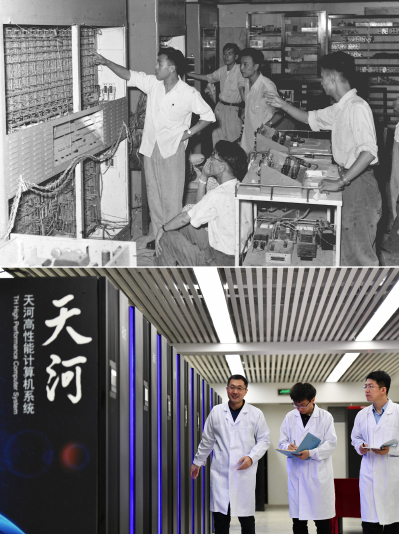
Catching up
In terms of sheer numbers of new patent filings, China is presently the global leader. However, several studies indicate that quantity, as we might expect, does not equal quality. State policies aiming to incentivize innovation in part by subsidizing patent filing costs, as well as the bureaucratic goals of increasing the number of patents, appear to have inflated the number of awards. These efforts date to just over a decade ago when China began to promote innovation and intellectual property rights as a crucial part of reform and opening up.
Patent filings typically fall into three categories of increasing value: design, utility model and invention. Invention is considered the most innovative of the three, and has accounted for only around 20 percent of Chinese filings over the past decade. This is important in part because inventions tend to be more profitable and longlasting.
Some findings indicate that a large number of China’s design and utility patents are not renewed after five years. This is unsurprising in a society that has experienced so much change in short periods of time, where managing accelerated states of change is among the primary political and economic objectives and where literally designs and utility models are transformed, but it also indicates that there is still perhaps a lot of room for strengthening the invention side of innovation in China. Nevertheless, while these qualifications temper the otherwise proud accomplishment of more filings and awards now than any other country, they appear to reflect a pattern of development seen in other countries in recent times, including Japan and the ROK. Consequently, some experts have concluded that while China is not yet the world leader of innovation that it aims to be, it is clearly on the path to become one in the near future, with big strides already being made in hi-tech, medicine and green development, among other fields.
These developments should be welcomed. Historically, China has contributed significantly to human advancement and indeed Western development in ways that are frequently either forgotten or feared. Now that China is once again emerging as a major contributor to innovation, some worry that China will do as Western nations did and employ advances to establish Chinese imperialism and hegemony. To be sure, the competitive nation-state system, which Europe more or less created and thrust upon the world starting in the 17th century, in tandem with capitalism and market competition, continue even now to create powerful motives to innovate for nationalistic purposes.
China, however, asserts it has learned the lesson of history firsthand and foreswears such developments. President Xi Jinping emphasizes innovation in tandem with reform and opening up, and speaks of a community with a shared future for humanity. For this to be realizable, however, requires people on all sides working harder to suppress the worst aspects of themselves while embracing the best aspects of others. This, it would seem, is the central element of any truly innovative advance, and consequently, for those embracing progress, a necessity for peace and development.
The author is professor of politics and director of the International Graduate Program in Politics at East China Normal University in Shanghai