China’s Coffee Industry Is Brewing up a Dynamic Market
 Facebook
 Twitter
 Linkedin
 Google +
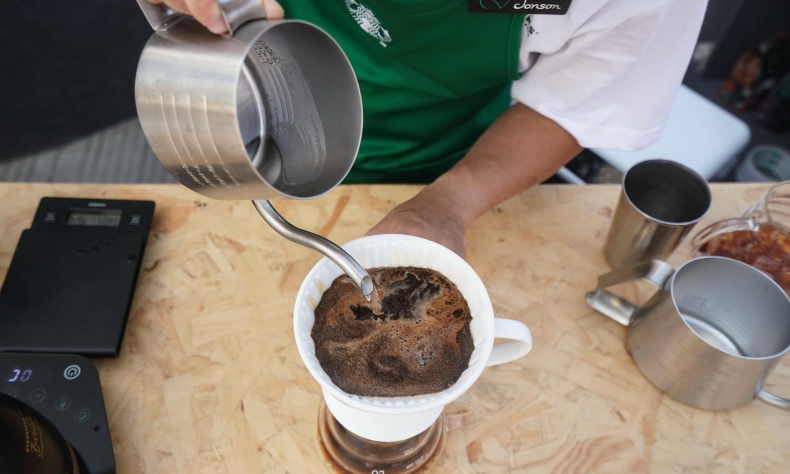
In China, a great market is brewing in coffee cups.
For many in China, starting the day with the aroma of coffee is becoming a morning ritual—and fueling a caffeinated revolution. Though China has long been a tea-drinking nation, a booming coffee culture is taking hold while driving a thriving industry.
The coffee beans they consume are largely from Yunnan Province in southwest China. The region’s subtropical climate and high altitude create favorable natural conditions for growing high-quality beans.
According to the provincial authorities, Yunnan’s coffee plantations covered more than 84,400 hectares and yielded an annual output of 146,000 tons in 2024, accounting for over 98 percent of China’s total coffee cultivation area and production, respectively.
U.S. coffee chain Starbucks, which has operated in the Chinese mainland market for more than two decades, had opened 7,758 outlets across the Chinese mainland as of late March, covering more than 1,000 counties (cities). It has also been investing in local coffee cultivation, particularly in Yunnan.
Jia Ziyi, a coffee ambassador for Starbucks China, told Beijing Review that the company provides free training for local coffee growers and incentivizes the growing of high-quality beans.
“Over the past decade, the proportion of Yunnan coffee beans that pass Starbucks’ quality tests has risen from 20 to 80 percent,” Jia said.
In China, for China
Yunnan coffee was once considered relatively mediocre as its quality fluctuated due to inexperienced growers, climatic disasters and insect damage, leading to low prices.
However, in 2012, Starbucks began working with the Yunnan Provincial Government on breeding new weather-tolerant and disease-resistant varieties of coffee beans and established its first Asia-based Farmer Support Center (FSC) in the province in the same year. As of late September 2024, the FSC had trained over 36,800 local farmers.
Starbucks has paid 20 to 30 percent higher than average market prices for premium Yunnan coffee beans in order to motivate farmers. Growers also receive extra incentives for specialty-grade beans that meet or exceed Starbucks’ quality standards.
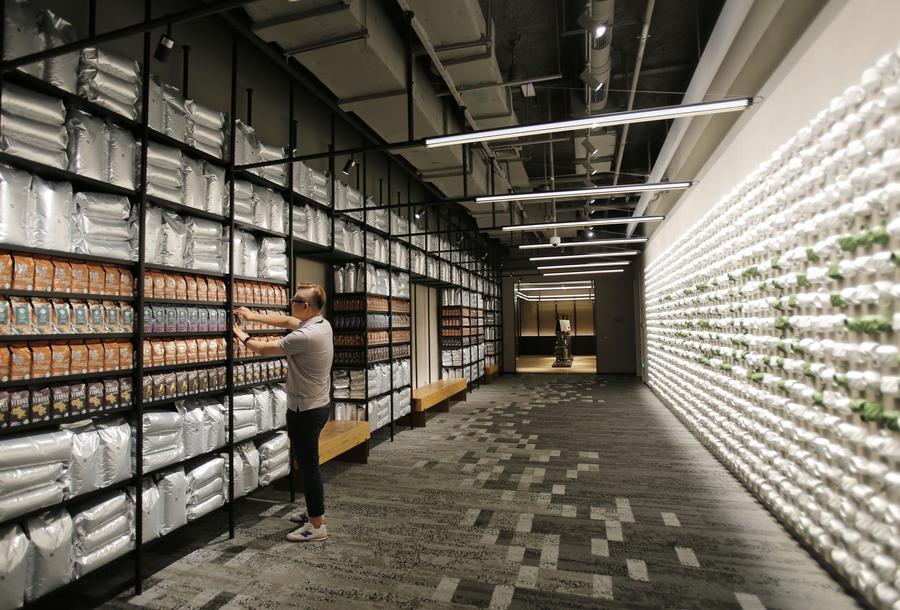
To further improve its supply chains, Starbucks opened its China Coffee Innovation Park in Kunshan, a county-level city in the eastern province of Jiangsu in 2023, closing the bean-to-cup loop in the Chinese mainland market.
The park is located an hour’s drive from Shanghai, home to the most cafés in China. The 1.5-billion-yuan ($205-million) facility is Starbucks’ largest coffee manufacturing and distribution center outside the United States.
In the 80,000-square-meter park, Arabica green beans from more than 30 countries and regions, including China, are roasted through low-carbon technologies before being packaged and distributed to Starbucks stores across China.
Starbucks China has also been tailoring its products to the demand of Chinese coffee lovers to consolidate its market presence. It unveiled a range of sugar-free flavored coffee products on April 7 for health-conscious customers. The coffee line separates flavor from sugar, allowing consumers to enjoy a full-flavored coffee experience.
This innovation creates at least 500 different combinations of flavors and sweetness levels, enabling diverse options, the company said.
Fortune in fragrance
In China, a great market is brewing in coffee cups. According to iiMedia Research Group, a Chinese consulting and data analytics company, China’s coffee industry is expected to exceed 1 trillion yuan ($138.3 billion) in market size this year.
By the end of 2024, Shanghai had 9,115 coffee shops, leading the world in the number of cafés, the China Urban Coffee Development Report 2025 said.
While global coffee brands like Canada’s Tim Hortons and Britain’s Costa Coffee continue to expand their presence in China, homegrown players such as Luckin Coffee and Manner Coffee are driving a market transformation. With over 20,000 stores nationwide, Luckin has leveraged competitive pricing and digital-first strategies to dominate the domestic coffee scene.
Many of the coffee chains are also increasingly penetrating small cities and rural towns in China, which were once untouched by coffee trends, to explore the untapped markets.
From hidden gem cafés in Shanghai to minimalist spaces in rural areas, spending leisurely afternoons in stylish coffee shops and snapping aesthetic photos to unwind has grown into a popular trend among young Chinese. Many coffee shops in China now feature artistic latte designs, and gorgeous interiors or nice outdoor views that make them perfect backdrops for photos.
The booming coffee culture has also made coffee festivals trendy events among Chinese young people, drawing increasing numbers of new coffee brands. At the INDIGO Coffee Youth Day in Beijing on April 3-6, Proud Mary, a coffee brand established 15 years ago in Melbourne, Australia, was one of the brands enthusiastically embraced by participants.
Proud Mary’s General Manager Brodie Roberts told Beijing Review at the event that the brand provides “curious and wild” ranges of coffee, with beans from El Salvador, Honduras and Panama.
According to Roberts, the event provided the first opportunity for Chinese coffee enthusiasts to have a taste of Proud Mary’s products.
Alex Lees, another staff member with the coffee brand, told Beijing Review that he saw a lot of innovative offerings of Chinese coffee brands during the event. “The breadth of different flavors and processing methods are amazing,” he said.

Innovative blends
Facing mounting competition, coffee brands operating in China are going beyond low-pricing strategies and introducing innovative products to gain a competitive edge.
The people of Xinjiang Uygur Autonomous Region in northwest China have long been known for their love of milk tea. But coffee is also becoming an emerging trend. Founded in Xinjiang in 2019, N44° café now has 12 stores in the region, providing coffee brewed with locally-sourced?ingredients.
Wang Sisi, founder of the brand, told Beijing Review that its products include “The Last Tear in the Atlantic,” “Beautiful Girls Like Flowers” and “Mount Tianshan Lake Salt,” which are all inspired by local iconic landmarks and culture.
The drink named “The Last Tear in the Atlantic” features milk foam and a rosemary garnish, with a refreshing mojito-like taste. Its color changes from blue to green when stirred, mimicking the stunning scenery of Sayram Lake, often called the “Last Tear of the Atlantic,” in Xinjiang.
Another of its menu items, “Beautiful Girls Like Flowers,” merges diverse fruits from Xinjiang in layered flavors, with a sun-dried apple jam slice as topping, and a sweet-sour balance with strawberry and apricot notes. “Guli Meimei,” the Chinese name of the offering, derives from the Uygur word for “flower.” The drink “Mount Tianshan Lake Salt” boasts a refreshing and slightly salty taste.
“Our customers demand far more than just a caffeine fix. They seek quality, creativity and multisensory experiences in every cup,” Wang said.
There are also innovative blends between coffee and local specialty products from around China. In 2023, premium liquor brand Kweichow Moutai partnered with Luckin Coffee to produce liquor-flavored coffee. Another brand Coffee Backpackers in Guizhou Province, southwest China, has also blended coffee with locally produced rice wine.
COFFEE ZHI, a coffee brand based in Henan Province in central China, has mixed coffee with Henan’s traditional spicy soup hulatang. It makes the spicy soup first by boiling beef, tofu and spices together, and then mixes it with Yunnan espresso and black sugar syrup to create a balanced flavor.
The coffee craze has emerged alongside another trend of pursuing physical health. First founded in 1669 in Beijing, Tong Ren Tang pharmacy introduced its wellness-focused sub-brand Zhima Health in 2018. This brand has integrated innovative ideas with traditional Chinese medicine, attracting a young audience with its new healthy-living concepts.
Zhima Health has introduced health-infused coffee and beverages, with a goji berry latte being one of its star products. Goji berries, or wolfberries, have health benefits such as protecting eye health and preventing liver and kidney damage.
Liu Minghui, founder of Aini Garden, a coffee subsidiary of Yunnan-based agricultural company Aini Group, told Beijing Review that young domestic consumers place emphasis on the sources and brewing techniques of coffee, and have developed an increasing trust in coffee beans grown in China.
Last year, Yunnan exported 32,500 tons of coffee beans, up 358 percent year on year, to 29 countries and regions, including the U.S. and Germany, according to statistics from Yunnan Customs.
Liu said there is still much room for Yunnan coffee to expand its global market share. “China still remains at the lower end of the global industry chain. Domestic producers should invest heavily in coffee quality improvement to move up the ladder,” he said.