China’s Development Path—Opportunities and Challenges
 Linkedin
 Google +
The remarkable economic achievement did not happen following the Western world’s favored developmental tools, but rather through China’s unique path.?
From 1978 to 2018, China achieved continuously high economic growth under controllable inflation pressure. Over the past four decades, the average annual GDP growth in the country has been around nine percent.
This remarkable economic achievement did not happen following the Western world’s favored developmental tools, but rather through China’s unique path.
Chinese Solutions
As China celebrates the 40th anniversary of its reform and opening up, analysts around the world have been pondering how the country developed so quickly. And the term “Chinese solutions” emerged, which has become even more attractive after the conclusion of the 19th National Congress of the Communist Party of China (CPC) in Beijing in October 2017. The report to this congress instilled more confidence in the Chinese people that their country would embrace a bigger and brighter vision by following a path with Chinese characteristics.
Yuen Yuen Ang described the economic development as “directed improvisation” in her famous newly published book How China Escaped the Poverty Trap. Sifting through so many different theories on the reasons for China’s rise, the author emphasized: “It was the introduction of some democratic qualities through bureaucratic reforms and Beijing’s willingness to allow and direct local improvisation that enabled the nation’s economic dynamism. Instead of relying on top-down commands, the country leveraged local knowledge and resources, promoted diversity, and motivated people to contribute their ideas and effort.”
Many Chinese scholars focusing on labor economics and demographic economics have pointed to the Lewis turning point theory, which is estimated to have taken place in China in the early 2000s. China’s success can be attributed to a huge demographic dividend. China could realize an almost double-digit development speed for years due to surplus cheap labor driving manufacturing industries kindled by foreign investment. To sustain fast development despite losing the demographic dividend after the Lewis turning point, China should change its development mode by upgrading its technology and human capital to explore a new demographic dividend based on human capital.

In the political arena, Chinese solutions are even more enticing considering historical ideological differences between Western and Eastern countries. Before China’s reform and opening up, the situation was totally different from now. Deng Xiaoping, the “chief architect” of China’s reform and opening up, emphasized that China’s political reform could not veer away from socialist democracy. He emphasized “one central task and two basic points,” of which the “one central task” refers to economic development and the “two basic points” refer to the four cardinal principles (insisting on walking on the socialist road; insisting on the people’s democratic dictatorship; insisting on the leadership of the CPC; insisting on Marxism-Leninism and Mao Zedong Thought) and the policy of reform and opening up, during which balance in choosing a development road neither “too far left” or “too far right” was emphasized as well.
A big historic milestone in the reform took place in 1992, when Deng highlighted the market economy in the country’s development. The ideological identification of what is capitalism and what is socialism has loomed ever since then. The private economy prospered, and the Western style of living became popular among many young Chinese. The pattern seemed to be “small government” and “big market.”
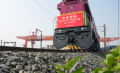
Yet the central government never abandoned macro-control over the economy and only strengthened the leadership of the CPC, which has been raised to unprecedented levels in the Xi Jinping era thanks in no small part to the extensive anti-corruption campaign. This anti-corruption campaign is still ongoing. And the Belt and Road Initiative proposed by President Xi in 2013 has helped bring China’s development to a new phase.
Xi once noted that China’s greatest advantage is that its socialist system can effectively pool resources to address major problems and raise working efficiency, which is key to the accomplishment of the country’s ambitious goals.
Challenges
Although China is now the world’s second-largest economy, it remains a developing country considering that its per capita income is still a fraction of that in developed countries. According to China’s current poverty standard (per capita rural net income of 2,300 yuan per year in 2011 prices), about 55 million poor people remained in rural areas as of 2015.
Rapid economic development has also brought many problems such as inequality with a shockingly high Gini index, rapid urbanization, environmental pollution and challenges to sustainable development. China also faces demographic pressures due to an aging population and internal migration of labor.
Significant policy adjustments are required for China’s growth to be sustained. Experience shows that transitioning from middle-income to high-income status can be more difficult than moving from low to middle income. And history has seen many examples of the “middle-income trap.”
Yet, China’s 13th Five-Year Plan (2016-2020) has outlined guidelines to address these issues, highlighting the development of services and measures to cope with environmental and social imbalances and setting targets to reduce pollution, increase energy efficiency, improve access to education and healthcare and expand social protection. The annual growth target during the 13th Five-Year Plan period is set at 6.5 percent.
“China is still transforming its economic development mode, shifting from the old traditional extensive development mode to an intensive one through deepening reforms,” said Dr. Han Fangming, chairman of the Charhar Institute, one of China’s leading think tanks. Han added that when facing the huge challenge of the so-called “middle-income trap,” Chinese people show no fear. They are determined to overcome all roadblocks through further reform.
As celebrations for the 40th anniversary of China’s reform and opening up unfold, reflections on the country’s development miracle are currently enriching world civilization. It provides new answers and a new path forward in terms of development theories. Studying China’s experience could indeed provide insights to many other developing countries or even developed countries on how to build a better country. Yet, every country still needs to seek its own path for development. China isn’t looking for other countries to copy the “China model” or establish hegemony by exporting its values. The world is still a diverse place, and it should stay that way.
The author is a senior fellow from the New Zealand-based OCEANIA Silk Road Network established in March 2017 during Chinese Premier Li Keqiang’s visit to New Zealand.
Source:China Pictorial