China’s Diplomacy Promotes a Human Community with a Shared Future
 Facebook
 Twitter
 Linkedin
 Google +
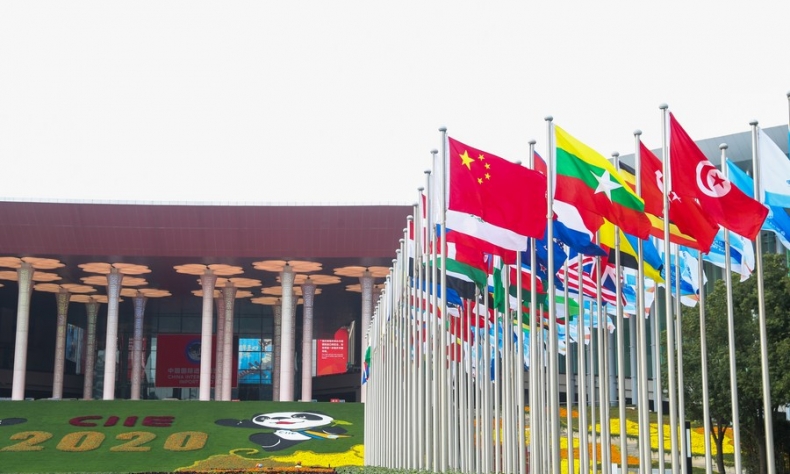
The concept of “building a community with a shared future for mankind” is a reinterpretation of universalism in the Western style and may usher in a new era of world enlightenment, not to mention new enlightenment in the face of a West that is increasingly immersed in the shadows of xenophobia, populism, anti-science discourse, violence, internal division, protectionism, unilateralism, and fake news.
This year China celebrates the centenary anniversary of the founding of the Communist Party of China (CPC). Leading up to the commemoration, many international analysts have already started to debate China’s new foreign policy and its impact on the international order. This debate has two motivating factors. The first and most important is the prediction that the Chinese economy will surpass the American economy before 2030. The other factor is the role of Chinese diplomacy in combating the pandemic, through which China has helped more than 100 countries in COVID-19 prevention, control, and vaccination, in contrast to the U.S.’ lackluster responses to the pandemic. This is not a discussion about the world’s leadership profiles but a global governance model for the future.
In the field of international relations and international law studies, European and American theories predominate. To continue along these lines means the world will not be able to come up with new ways of organizing international relations in a context of global transformation, in which China assumes an unprecedented role in its history and the history of humanity.
I assume that, in the 21st century, no major challenge for humanity will be solved without the active participation of China. Challenges related to the environment, financial crises, international security, and global public health, for example, will only be effectively addressed if there is a Chinese contribution. If we agree with this assumption, then there needs to be an understanding of China and a constant dialogue with it. So, what are the obstacles preventing this? Little is known about the Chinese way of thinking, cooperating, and resolving conflicts and how this Chinese approach and wisdom, reflected in its daily diplomatic practices, could favor a new standard of diplomacy and international relations.
The current contemporary international system was structured according to a Western world view, resulting from European expansion and colonization on practically all continents in the world and, also, from the unfolding of the two world wars that had Europe as the center stage. The Cold War displaced the center of gravity outside the European continent. Still, the victory of the U.S. over the former Union of Soviet Socialist Republics meant, in everything, the affirmation of Western heritage. While there are several positive aspects of this heritage that have been taken up by American diplomacy, negative concerns like the use of force in defense of their national interests remain, sometimes despite international law itself. In 2019, then U.S. President Donald Trump confessed to former President Jimmy Carter his concern that, “China is getting ahead of us.” After reminding Trump that the United States has enjoyed only 16 years of peace in its 242 years of history, Carter said, “China has not wasted a single penny on war.”
If we look at it through the lens of history, Jimmy Carter’s statement leads us to question why China does not have war as an intrinsic part of its foreign policy. It seems that it has been this way since dynastic times. But the same cannot be said of foreign countries, whose attacks on China date back to the Ming Dynasty, having catastrophic effects on the Chinese people in the late Qing Dynasty (19th century), and extended until the first decades of the 20th century. These facts have left indelible scars on the memories of Chinese people and society, with repercussions on the country’s contemporary history to the present day.
The priority for China is the preservation of its sovereignty, which depends, in turn, on the maintenance of its national unity. At the level of external relations, this unity is guaranteed by defending its territorial integrity and, at the domestic level, it emphasizes social stability. National unity, territorial integrity, and social order are interlinked and elementary objectives of the CPC in governing the country. For this reason, Western analysts who think China wants to become a hegemonic country in the world are mistaken and take as a reference the way the West has related to other countries, including China. Perhaps they fear that they had taught China the “diplomacy of muscle” that they used and abused when it suited them. But Western fears seem to ignore China’s current priorities, which are likely to span this century.
From 1949, the year in which the People’s Republic of China (PRC) was founded, until 1978, when the reform and opening-up policy was rolled out, the CPC had prioritized organizing the country’s administration and breaking with the old diplomacy of humiliation that had characterized China’s foreign relations prior to that point, reviewing international treaties that imposed unfavorable conditions on China. In 1955, at the Bandung Conference, China defended an international order based on the Five Principles of Peaceful Coexistence, namely: mutual respect for sovereignty and territorial integrity, mutual non-aggression, non-interference in each other’s internal affairs, equality and mutual benefit, and peaceful coexistence, supporting multilateralism and establishing a strong friendship with the vast majority of developing countries. The criterion for foreign policy decisions was the strict defense of the national interest, which has safeguarded and promoted its economic development. To this end, China leaves aside ideological issues to give way to a diplomacy of results based on the search for common interests in the dialogue with other countries. This is the synthesis of Chinese pragmatism.
From 1978 to 2008, China has seen its GDP increase from RMB 367.9 billion to RMB 31.4045 trillion. This rapid and extraordinary economic development resulted from the successful policy of reform and opening-up, and had to be accompanied by an adequate foreign policy. The PRC indeed increased its presence on the global stage by joining more than 100 international organizations. Still, Chinese engagement in the international economic system was focused on its adaptation to a standard of international norms and relations established under the framework of Western “globalization.” China’s entry into the WTO in 2001 is a milestone in the country’s integration into the multilateral trading system. And in 2008, with the Beijing Olympics, China seemed to celebrate its acceptance by the Western world. But such a glorious event also symbolized the beginning of a new stage in its diplomatic history.
From 2008 to the present day, China’s foreign policy has proved to be more active and present in diverse subjects. Besides, foreign policy has become a crucial dimension for the continuation of the country’s economic growth towards becoming a developed nation in the middle of this century, when it will celebrate the 100th anniversary of the founding of the PRC.
On March 23, 2013, President Xi Jinping raised the concept “a community with a shared future for mankind” in his speech at the Moscow State Institute of International Relations for the first time, when he said: “People live in the same global village, in the same space and in the same time, where history meets the reality of the present. A community with a shared future for mankind has emerged in which everyone is dependent on everyone.” In my understanding, this is the Chinese version of “globalization,” which, while supporting free trade, defends that international trade must be fair and efficient, and international relations have to, above all else, respect the differences between peoples. The globalization of the 90s proclaimed the uniformity of values and standards of behavior that, in reality, promoted the “Westernization” of the world. But, as Xi Jinping said, “All civilizations are rooted in their unique cultural environment. Each embodies the wisdom and vision of a country or nation, and each is valuable for being unique itself.” Chinese diplomacy does not, therefore, aim to make the world more sinicized, but it is contrary to its forced Westernization.
How can this concept be translated into Chinese diplomatic practice? First, it supports a method of dialogue and cooperation that is based on extensive consultation, joint contributions and shared benefits. On the economic front, it has been translated into the Belt and Road Initiative, which is the only major economic integration project of this 21st century. Based on the connectivity of countries through infrastructure, the Belt and Road Initiative creates the conditions for an effective exchange between peoples, proving to be broader and more open than a superficial free trade zone – an integration model generally preferred by the U.S. – and less complicated and cumbersome than the European model of economic integration. Finally, at the political level, the concept of “building a community with a shared future for mankind” defends the international system’s greater democratization. In the words of Xi Jinping, “Developing countries should have more say and greater representation in this process.” This is a crucial issue for the guarantee of world peace, and it arises from the defense of multilateralism and the strengthening of international organizations.
In his government work report delivered at the fourth session of the 13th National People’s Congress on March 5, 2021, Chinese Premier Li Keqiang stated, “We will actively work to develop global partnerships and promote the building of a new type of international relations and a human community with a shared future. We will continue to pursue the policy of opening up and cooperation and work to make the system of global governance fairer and more equitable.”
For all these elements, Chinese diplomacy points to a reform of the current global governance system. China underlines the relevance of cultural differences in each country and differences in domestic governance models. The concept of “building a community with a shared future for mankind” is a reinterpretation of universalism in the Western style and may usher in a new era of world enlightenment, not to mention new enlightenment in the face of a West that is increasingly immersed in the shadows of xenophobia, populism, anti-science discourse, violence, internal division, protectionism, unilateralism, and fake news.










