China Seas U.S. Lurking in the Shadows
 Facebook
 Twitter
 Linkedin
 Google +
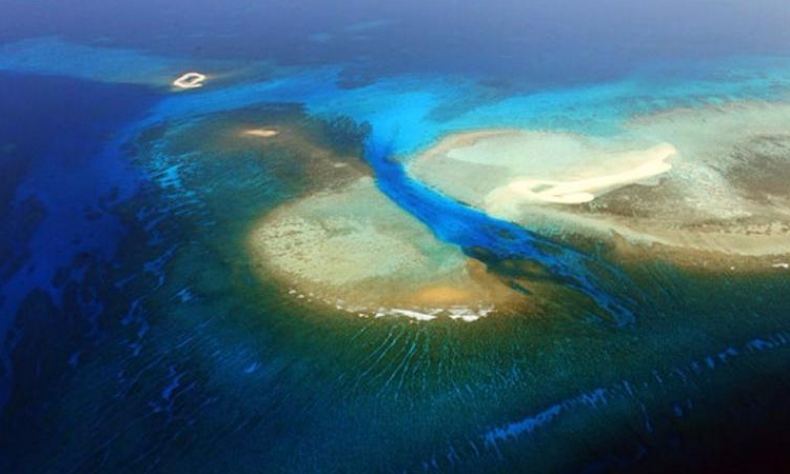
Political manipulations over South China Sea issue fuel tensions.
Tension in the South China Sea has recently flared up again.
On August 5, two Philippine supply ships, one carrying construction materials, attempted to reinforce and repair the Philippine Navy transport ship BRP Sierra Madre, a rusting vessel that was deliberately stranded on China’s Ren’ai Jiao in 1999. The Chinese side was made to respond to this provocative move, and China Coast Guard took warning measures in accordance with the law.
Ren’ai Jiao has always been part of China’s Nansha Qundao (Islands), and China’s position on it is consistent and firm, a spokesperson of the Chinese Embassy in the Philippines said on August 8. China has always stayed committed to maintaining peace and stability in the South China Sea, the spokesperson stressed, adding, “Regrettably, the Philippines, in disregard of China’s repeated dissuasion and warning, tried to deliver the construction materials for overhauling and reinforcing the grounded military vessel.”
The U.S. State Department quickly issued a statement saying it stood by its Philippine ally and threatened that China’s “armed attack” on Philippine public vessels in the South China Sea would trigger American mutual defense obligations under Article IV of the 1951 United States-Philippines Mutual Defense Treaty.
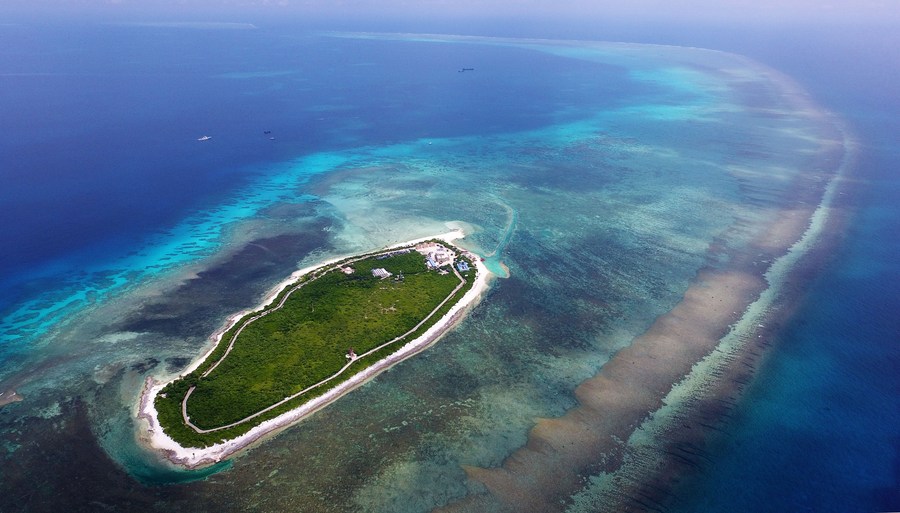
The Ren’ai Jiao reef
Since the 1970s, the Philippines has occupied eight reefs in China’s Nansha Qundao, through military operations. Ren’ai Jiao, a submerged reef, is about 15 km long and 5.6 km wide.
The Philippines first took possession of the feature in 1999. On May 8, 1999, the U.S.-led NATO forces carried out a barbaric missile attack on the Chinese Embassy in the Federal Republic of Yugoslavia. The next day, the BRP Sierra Madre illegally ran aground on the coral atoll, claiming it was “stranded.” Since then, a contingent of more than a dozen Philippine marines and sailors have been stationed on the dilapidated warship, which has become a symbol of the Philippines’ outpost in the offshore islands.
China’s principle in dealing with the Ren’ai Jiao issue over the past 20 years has been not to engage in armed conflict. While maintaining control over the surrounding waters, China has allowed the delivery of basic necessities to the crew of the BRP Sierra Madre but prohibits the delivery of military supplies and construction materials. In the most recent conflict, the Chinese side released another cargo ship with food supplies, but Western politicians and media never mention this fact.
Like many countries in the world, China has island sovereignty disputes with several neighboring countries. The reason, on the one hand, is that most Asian countries suffered long periods of armed invasion and colonial rule by Western countries and in the process lost their diplomatic autonomy. Let’s take Ren’ai Jiao as an example. As early as the 1930s, the Chinese Kuomintang regime of the time sent surveying and mapping teams to the reef and clearly marked it on the map of China. As the colonial occupier of the Philippines, the U.S. had no objection to Chinese ownership of the Nansha Qundao, including Ren’ai Jiao, and the Philippines, as an American colony, had no independent diplomatic rights to negotiate with China. On the other hand, for a long time, countries around the world did not realize the significance of these islands and reefs, which could disappear under the sea at high tide. It was only in the 1970s, with the rise of the concept of exclusive economic zones, which refers to an area of the ocean, generally extending 200 nautical miles beyond a nation’s territorial sea, within which a coastal nation has jurisdiction over both living and nonliving resources, that sovereign over uninhabited islands and reefs became highly valued—and disputes arose.
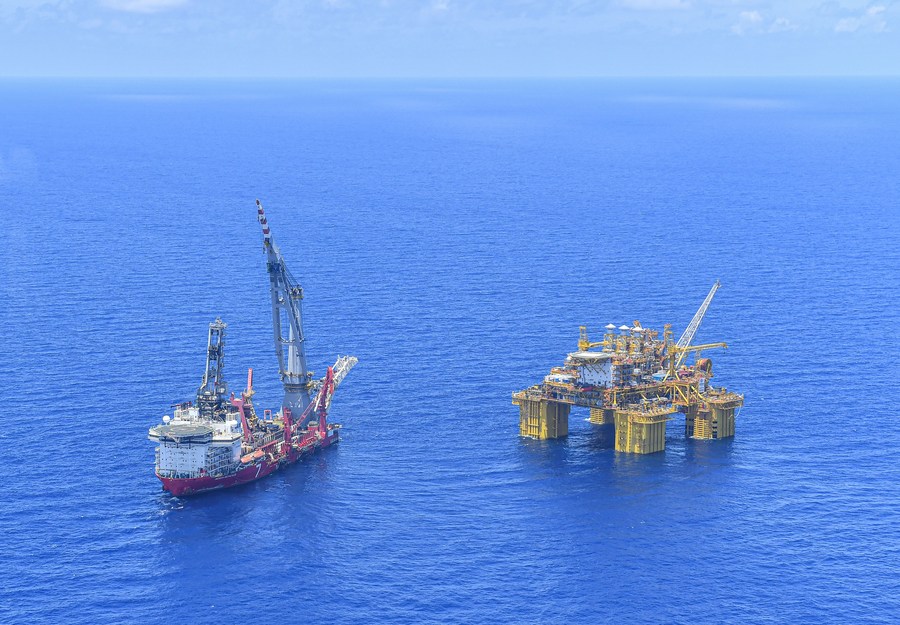
The deadlocks
China has always wanted to peacefully resolve its island sovereignty disputes with neighboring countries. China and the Association of Southeast Asian Nations (ASEAN) established dialogue relations in 1991. Over the past three decades, the two sides have been committed to promoting regional stability and prosperity through comprehensive cooperation that has brought tangible benefits to people in the region.
In 2002, China and ASEAN countries reached the Declaration on the Conduct of Parties in the South China Sea (DOC), which stipulates that “the parties undertake to exercise self-restraint in the conduct of activities that would complicate or escalate disputes and affect peace and stability including, among others, refraining from action of inhabiting on the presently uninhabited islands, reefs, shoals, cays, and other features and to handle their differences in a constructive manner.”
The Philippines is one of the DOC’s signatories, but as its domestic politics is deeply influenced by the U.S., it is often commanded to act as a pawn to undermine peace in the South China Sea.
Every time the conflict between China and the Philippines escalates, the U.S. lurks in the shadows. In 2012, after the U.S. proposed the strategy of “returning to the Asia Pacific,” the Philippines began to intensify confrontation with China over Ren’ai Jiao.
In 2013, the Philippines even submitted the South China Sea issue to “international arbitration.” On July 12, 2016, the Permanent Court of Arbitration (PCA) issued a ruling on the case that was highly unfavorable to China. However, the United Nations clarified that the organization has no relationship with the “arbitral tribunal” in this case; the PCA does not belong to the International Court of Justice or other judicial bodies of the United Nations system. Public information also indicates that the PCA is an intergovernmental organization based in The Hague, the Netherlands, and is not part of the international body. “Unlike a court in the traditional sense, the PCA provides the services of an arbitral tribunal to resolve disputes arising out of international agreements between member states, international organizations or private parties.”
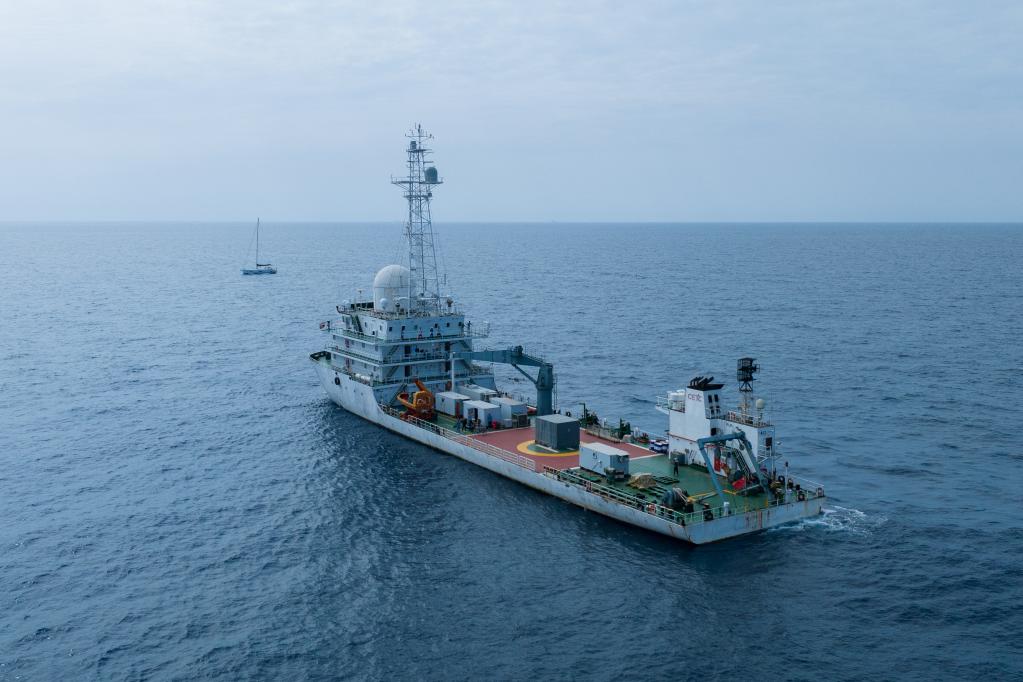
Code of conduct
During Philippine President Rodrigo Duterte’s administration (2016-22), China always considered the Philippines one of its closest neighbors. With the new administration in power, the Philippines has been adjusting its foreign policy and moving closer to the Americans. In early April, the U.S. announced plans to open four additional military bases in the Philippines, bringing the total to nine. The two countries also agreed to new bilateral Defense Guidelines, which clearly state that defending the Philippines will include defending the South China Sea. The American backing now gives the Philippines more confidence to reignite its sovereignty dispute with China.
And the Ren’ai Jiao incident may be just the beginning. Based on strategic considerations to contain China’s rise, the U.S. hopes to draw more and more countries into the anti-China camp, especially countries that have sovereignty disputes with China. And when China is caught in endless disputes with its neighbors, the U.S. will reap the benefits.
This is one of the most important reasons why China insists on resolving territorial disputes through peaceful negotiations and opposes foreign forces meddling in the region.
During his visits to Singapore and Malaysia on August 10-11, Foreign Minister Wang Yi exchanged views on the current situation in the South China Sea with the leaders of the two countries. He expressed China’s hope that regional countries will maintain necessary vigilance against the “evil claws” at work behind the scenes and take the initiative for the maintenance of peace and stability in the South China Sea in their own hands.
“China is ready to work with ASEAN countries to accelerate the negotiation on the Code of Conduct in the South China Sea and strive to reach a regional norm that is effective, substantive and in line with international law, including the UN Convention on the Law of the Sea. China believes that China and ASEAN countries are capable and wise enough to maintain peace and stability in the South China Sea and build their common home,” Wang stressed.