Creating a Better Future Together
 Facebook
 Twitter
 Linkedin
 Google +
China-Europe exchanges are of great significance not just for China and Europe, but also for the entire world as well.
This?October, the China-Europe Talent Forum will convene its sixth session in Beijing. Earlier this year, on March 29, the China-EU High-Level People-to-People Dialogue (HPPD) also held its sixth meeting in the Chinese capital. They are just two examples of the many people-to-people exchange activities between China and Europe over recent years. Inspired by the success of the China-EU Summit and the HPPD, such exchanges have increased in number and diversity, connecting the two major civilizations, bringing their people closer, and promoting friendly cooperation. They are of great significance not just for China and Europe, but also for the entire world as well.
History
The HPPD was launched in 2012 as a complement to the China-EU High-Level Strategic Dialogue and the China-EU High-Level Economic and Trade Dialogue. Together the three mechanisms serve as major pillars supporting the healthy and positive development of China-EU relations.
Back in October 2003, in response to the EU’s policy document A Maturing Partnership – Shared Interests and Challenges in EU-China Relations, China released its first policy paper on the European Union. This document states that both China and the EU member states have a long history and splendid culture, and they stand for more cultural exchanges and mutual emulation. It declares that one of China’s EU policy objectives is to expand China-EU cultural and people-to-people exchanges under the principle of mutual emulation, common prosperity and complementarity, and promote cultural harmony and progress between the East and the West.
In May 2011, during the visit of then President of the European Council Herman Van Rompuy to China, Chinese and European leaders reached a consensus on strengthening people-to-people exchanges. They agreed that the two sides should expand dialogue and cooperation in areas such as culture, education, scientific research, think tanks, and media. By deepening mutual understanding, mutual learning, and friendship, they would build a distinctive and harmonious partnership.
China-Europe exchanges were especially fruitful in 2012. In February, the 14th China-EU Summit was held in Beijing, where a joint press communiqué was released, saying: “Both sides agreed that deepening understanding and mutual trust between the two peoples was vital to the sustained and stable development of EU-China relations. In this regard, the two sides agreed to establish the EU-China High-Level People-to-People Dialogue and to hold its first meeting in the first half of 2012.” This marked a step forward in creating regular mechanisms for people-to-people exchanges between China and Europe.
In April of that year, the first meeting of the HPPD was held in Brussels. The participants signed a joint declaration, and agreed to take a number of follow-up actions in the fields of education, culture, research mobility, and youth. In September, the 15th EU-China Summit was held in Brussels. It affirmed the important role played by the HPPD in advancing EU-China relations. In November, the two sides released a joint declaration on cultural cooperation.
This strong momentum in bilateral exchanges continued in the following years. In November 2013, China and the EU held their 16th summit, during which the China-EU 2020 Strategic Agenda for Cooperation was adopted. This document includes a lengthy section on people-to-people exchanges, which is regarded as the third pillar of China-EU relations. In April 2014, China released its second policy paper on the European Union, which recognizes the leading role the HPPD plays in building partnerships for peace, growth, reform, and civilization. In September of the same year, the second meeting of the HPPD was convened in Beijing. It listed 25 achievements across five areas and included cooperation on women’s affairs into the framework.
In 2015 and 2017, China and the EU held two more rounds of the HPPD, elevating people-to-people exchanges between them to a new height and expanding them to more areas including youth affairs and sports. Then in 2018, on the occasion of the 15th anniversary of the establishment of the comprehensive strategic partnership with the EU and the 20th anniversary of the China-EU Summit, China released its third policy paper on the European Union, proposing the principle of upholding inter-civilization dialogue and harmony in diversity to facilitate mutual learning between the Chinese and European civilizations.

People-to-people exchanges between China and Europe have demonstrated a high degree of resilience. After the COVID-19 pandemic erupted, trans-border movement of people was interrupted, and international exchanges faced significant obstacles. Under these circumstances China and Europe explored new modes of communication. In November 2020, they held the fifth HPPD meeting virtually, which highly recognized the fruitful outcomes of people-to-people exchanges and their important role in deepening China-Europe relations. After the pandemic was put under control and especially when both the China-EU High-Level Strategic Dialogue and the China-EU High-Level Economic and Trade Dialogue moved on with two more meetings each (2022 and 2023; 2021 and 2023 respectively), it became imperative to resume in-person HPPD.
During her visit to China in April 2023, European Commission President Ursula von der Leyen expressed the European side’s desire to restart the three dialogues with China as soon as possible. In December of the same year, while meeting European leaders for the 24th China-EU Summit, President Xi Jinping said that China and the EU are two major forces advancing multipolarity, two major markets in support of globalization, and two major civilizations championing diversity. Amid the increasingly turbulent international situation, the China-EU relationship has strategic significance and implications for global peace, stability and prosperity. The two sides agreed to hold the sixth HPPD offline as soon as possible.
The sixth HPPD opened in Beijing on March 29, 2024. Chinese State Councilor Shen Yiqin and Iliana Ivanova, European Commissioner for innovation, research, culture, education, and youth, attended the meeting. Shen stated that China and the EU should work within the framework of the high-level dialogue mechanism to facilitate personnel exchanges, and enhance exchanges and cooperation on education, science and technology, culture, media, sports, youth and women, dynamizing the comprehensive strategic partnership. During an interview with the media, Ivanova said that the HPPD had been in operation for 12 years since its first meeting in 2012, and more than three years had passed since the fifth meeting in 2020. Despite some twists and turns in its development over the years, the European side remains committed to establishing a trustworthy relationship with China, which is also the goal of this mechanism.
Features
The HPPD has been distinguished for guidance from top leadership, rapid progress, broad, multi-leveled participation, and high degree of resilience.
First, from its very inception, leaders of both China and the EU have attached great importance and offered strong support to it, putting it in the broader context of China-EU relations and international relations.
The Communist Party of China (CPC) Central Committee has laid out plans for people-to-people exchanges between China and other countries. For instance, the report to the 18th CPC National Congress, held in 2012, said, “We will take solid steps to promote public diplomacy as well as people-to-people and cultural exchanges.” This is the first time cultural and people-to-people exchanges were included in the Party’s top-level strategic planning. The report to the 19th CPC National Congress, held in 2017, went on to say, “We will strengthen people-to-people and cultural exchanges with other countries, giving prominence to Chinese culture while also drawing on other cultures.”
In its report to the 20th National Congress in 2022, the CPC once again stressed: “Building a human community with a shared future is the way forward for all the world’s peoples … We sincerely call upon all countries … to promote mutual understanding and forge closer bonds with other peoples; and to respect the diversity of civilizations. Let us allow cultural exchanges to transcend estrangement, mutual learning to transcend clashes, and coexistence to transcend feelings of superiority.”
Second, over the 12 years from 2012 to 2024, the HPPD has matured and delivered positive outcomes. Under this mechanism, the scope of cooperation is expanding, the modes of cooperation are improving, and the number of cooperating brands is increasing.
In the field of education, China has established over 1,000 partnerships with 33 European countries and signed agreements on mutual recognition of diplomas with dozens of EU member states, including France, Germany, Italy, the Netherlands, and Portugal. China is an active participant in the EU’s Erasmus+ program. Many Chinese universities have admitted scholars and students funded by the program, and the number of Chinese recipients of Erasmus scholarship ranks 11th globally. Confucius Classes also play a significant role in promoting educational exchanges between China and Europe.
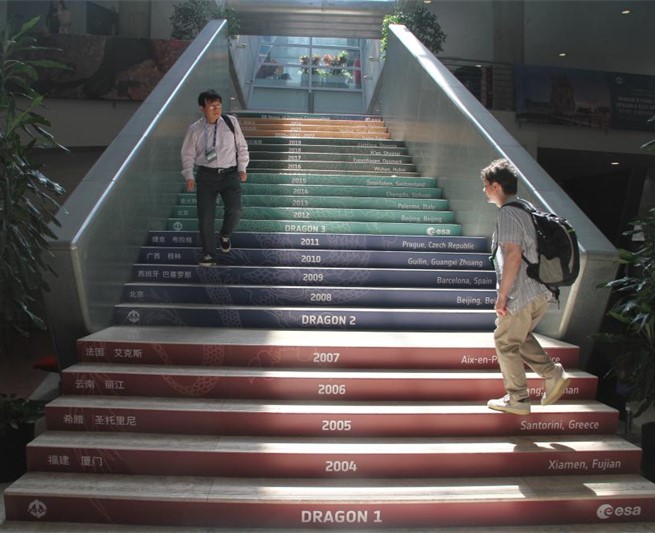
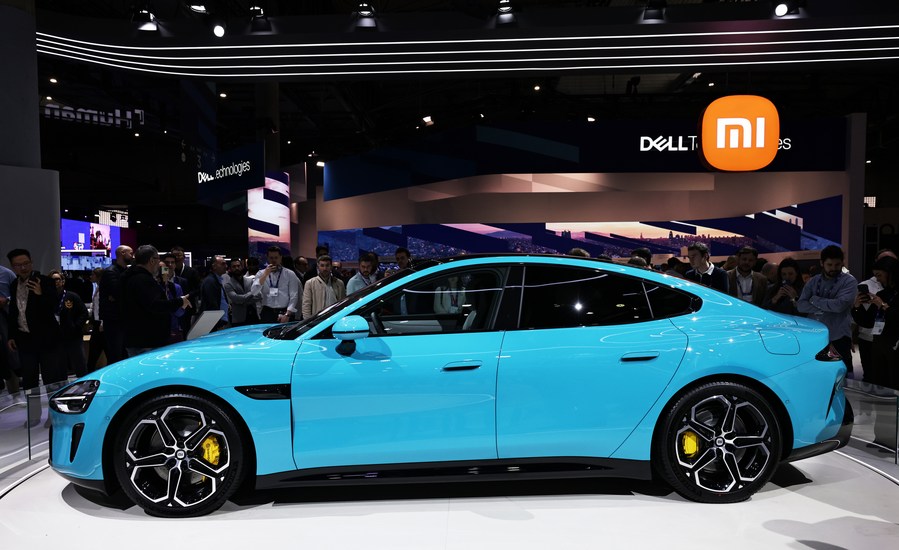
In the field of scientific research, China and Europe have established a variety of cooperative projects, such as the China-EU Innovation Cooperation Dialogue, the China-EU Co-Funding Mechanism (to support joint research and innovation projects), Dragon Cooperation Program, and the China-EU-ESA Dialogue on Space Technology Cooperation. Chinese tech companies such as Xiaomi have set up R&D centers in Europe.
Cultural cooperation between China and Europe is thriving too. Starting with the 2012 EU-China Year of Intercultural Dialogue, a variety of exchange activities have been held by both sides. Those in the 2018 EU-China Tourism Year, in particular, significantly enhanced exchange of visits and mutual understanding between their people.
Third, the HPPD is now a well-developed mechanism of expansive coverage, spanning seven areas – education, science and technology, culture, media, sports, youth, and gender equality. Its participants are also highly diversified.
On the Chinese side, the HPPD is headed by a vice premier in charge of culture, education, health, and sports. Its member units include the Ministry of Foreign Affairs, the Ministry of Education, the Ministry of Science and Technology, the Ministry of Culture and Tourism, the National Radio and Television Administration, the General Administration of Sport, the Central Committee of the Communist Youth League, and the Chinese Mission to the European Union.
On the European side, the HPPD is chaired by a commissioner of the European Commission responsible for education, culture, linguistic diversity, and youth. The participating organizations include departments and committees of the European Council and the European Commission.
This broad participation ensures the dialogue’s broad range of topics and its role as a strong driving force for healthy China-EU relations.
Fourth, the HPPD continued in the form of video conference during the COVID-19 years, and promptly resumed in-person meetings after the pandemic ended. This reflects the interdependence and convergence between China and Europe. People-to-people exchanges focused on enhancing understanding and eliminating prejudices are particularly valuable at a time when the U.S. suppression of China has intensified, conflicts grind on between Russia and Ukraine and between Israel and Palestine, and disputes keep flaring up between China and Europe on ideological and trade issues. As Chinese Foreign Minister Wang Yi said at a press conference in March this year, China and Europe do not have clashes of fundamental interests or geopolitical strategic conflicts, and their shared interests on issues far outweigh their differences.
Challenges
Influenced by the broader international situation, people-to-people exchanges between China and Europe currently face multiple challenges.
First, cultural barriers are unlikely to be removed for the short term. Situated in different continents, China and Europe have disparate natural environments and historical traditions, which have shaped their distinct cultures, values, and social systems. Although there are no clashes of fundamental interests or strategic geopolitical conflicts between them, they do not see eye to eye on issues such as human rights, religion, and ethnic policies. Such disagreement can easily lead to misunderstanding and preconception. The risk is further compounded by the growing tensions between the U.S. and China. Pursuing bloc confrontation, the U.S. tries to pull its allies into its campaign to contain China’s development, and endeavors to mislead international public opinion by hyping the narratives of “China’s threat,” “the rate of growth in China has peaked,” and “China-Russia alignment.” Some European politicians, motivated by their own political interests, are publicly leaning toward the U.S. position. This has negatively influenced public perceptions of China in Europe, discouraging their engagement with China.
Second, amid the shifting balance of power between the two sides, Europe is becoming increasingly wary of China. For decades, the EU had outperformed China in economy and technology, and hence developed a sense of superiority. Today China’s economic output has surpassed that of the EU as a whole, and the gap keeps widening. The EU’s institutional model and claims are challenged internationally, while China’s global influence continues to grow, especially among the Global South. All this has soured the EU’s attitude toward China, resulting in higher hostility in its China policies.
In recent years, the EU has defined China as a partner for cooperation, an economic competitor, and also a “systemic rival.” Some EU institutions and leaders advocate for a “de-risking” strategy, framing China as a rival and risk. These developments have poisoned the atmosphere of people-to-people exchanges.
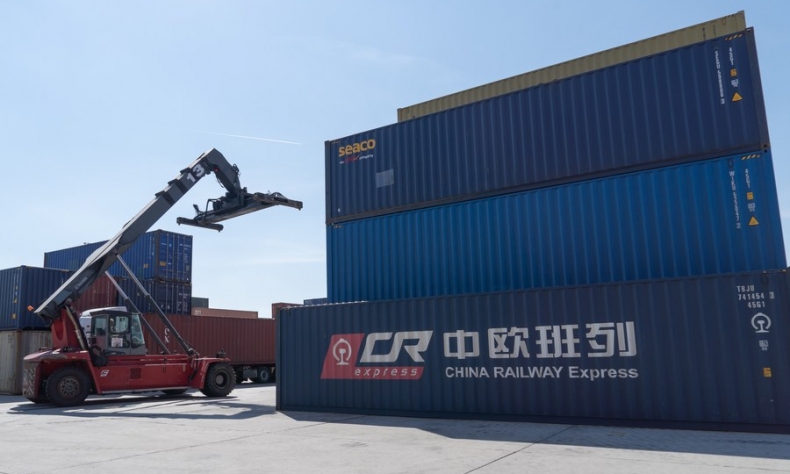
Third, certain technical barriers hold back people-to-people exchanges. Due to the impact of the COVID-19 pandemic, the movement of people between the two sides was severely hindered, and has yet to return to pre-pandemic levels. The Russia-Ukraine conflict has disrupted multiple international travel routes. Moreover, people-to-people exchange and cooperation between China and Europe remain geographically imbalanced, with the majority between China and larger European countries like France and Germany. Some countries in Central and Eastern Europe prioritize their relations with the U.S. due to geopolitical security concerns, which may negatively impact their exchanges and cooperation with China.
Meanwhile, elections in Europe over recent years have heightened political instability in the continent, which is another factor affecting exchanges with China. During several elections, including those of the European Parliament, certain politicians manipulated China-related issues for personal gain, abetting anti-China sentiments.
The future
Promoting deeper and substantive people-to-people exchanges between China and Europe requires long-term, systematic endeavors. The importance of such exchanges determines that the HPPD has bright prospects.
First, people-to-people exchanges are critical to China-Europe relations. As Chinese leaders have stressed on many occasions, friendship, derived from close contacts between peoples, holds the key to sound state-to-state relations. In the face of unprecedented changes in the world, both China and Europe feel the need for strategic stability in bilateral relations and the desire to avoid slipping into a new Cold War.
This is possible only by conducting practical cooperation and building consensus between peoples of both sides under programs led by the HPPD. Only through continuous exchanges can China and Europe dismantle ideological biases and cultural barriers, enhance strategic and political mutual trust, transform their differences into mutual attraction and appreciation, and thereby promote healthy, stable, and sustainable development of bilateral relations. As China continually expands its visa-free policy for European visitors, it is believed that the communication barriers and dialogue deficits between China and Europe will gradually be eliminated.
Second, people-to-people exchanges between China and Europe hold global significance. As President Xi Jinping pointed out, “China and the European Union are two important forces in the world, and China-EU relations are among the most significant bilateral relationships globally. In the current age of deepening economic globalization and multipolarity, the China-EU relationship is demonstrating higher strategic importance and exerting greater global influence.”
As China’s national strength and international influence continue to grow, it has both the capability and the responsibility to provide Chinese solutions to global challenges including deficits in peace and development, and give voice to progressive ideas. China and Europe share extensive common interests in multiple fields such as multilateralism, international governance, and peaceful development. They should become partners in promoting global peace, cooperation, and progress. This is exactly the goal of the sixth meeting of the HPPD, which focuses on joint efforts to create a greener and more sustainable future.
Third, people-to-people exchanges between China and Europe are significant for civilization. The year 2024 marks the 700th anniversary of Marco Polo’s death. China and Europe, as two great civilizations, have made numerous contributions to the progress of human civilization. In his Novissima Sinica (News from China) German philosopher Gottfried Wilhelm Leibniz compared China and Europe to two summits of human cultures, and predicted that strengthened cooperation and cultural exchanges between the East and West would create a perfectly harmonious world.
Civilizations thrive through exchange and mutual learning. China-Europe relations, under the guidance of high-level mechanisms including the HPPD, will become a model for seeking common ground while reserving differences and enhancing mutual trust. Together, China and Europe can jointly create a better future for humanity.
Lyu Yunmou is an assistant researcher with the Institute of European Studies of the China Institutes of Contemporary International Relations.