Creating Bridges of People-to-People and Cultural Exchanges
 Facebook
 Twitter
 Linkedin
 Google +

I can see that Chinese young people are much more professional than before because they have the opportunities to study and to receive?education.
Editor’s Note: April 23?is the World Book Day.?In an interview with Sun Chao, the author of Ambassadors’ views on Chinese Modernization, Isabel Cervera, Director of Cervantes Institute in Beijing,?shares her insights into how knowledge changes the world and the cultural exchanges between China and Spain. The excerpts of the interview follow:
Books carry knowledge and are the quintessence of human wisdom. Knowledge, the key to everything in daily life, should be acquired through reading.
April 23?is the World Book Day. It is a symbolic day?in world literature. It is the day?on which to memorize several prominent authors,?including?William Shakespeare, Miguel Cervantes and Inca Garcilaso de la Vega. This day?was a natural choice for UNESCO’s General Conference, held in Paris in 1995, to pay a world-wide tribute to books and authors on this day, encouraging everyone to access books?and to read.
Today?many countries, including?China, celebrate the World Book Day through various activities.?Sun Chao, the author of Ambassadors’ views on Chinese Modernization interviewed Isabel Cervera, Director of Cervantes Institute in Beijing.
The Cervantes Institute of Beijing?was first opened in 2007 in order to promote Spanish culture and offer the possibility to study the Spanish language to everyone outside Spain. With over 70 centers around the world, the Cervantes Institute of Beijing?was the first one?established in China.
In the 1980s, Isabel Cervera at the first time came to China as a student?of Spain. She personally believed that what’s most valuable throughout her stay in China is the people she has met during the past and the ones she will continue to meet, all of whom enrich her own vision of the world through their daily life and professional contributions.
Sun Chao: I know that Cervantes Institute in Beijing has done excellent job to promote reading, languages and cultural exchanges. Therefore, apart from language learning, what other Spanish cultural elements would you like to promote and share more with Chinese friends?
Isabel Cervera:?Spanish art, literature, cinema, painting, design, architecture, and the other aspects of our current lives, which are common to both Chinese and Spanish cultures as we face the same problems and realities. Therefore, I’d like to promote cultural activities with items that are accessible to everyone. For example, I work a lot with Chinese and Spanish architects to address issues in new cities and in our urban living, as these challenges, including concerns for children, the elderly, and traffic, are universal.
As for the solution to these problems, I’d like to facilitate exchanges to address the encounters between people from both cultures. I create opportunities for collaboration on research about future projects involving Chinese and Spanish individuals. Thus, this not only spreads culture in an unseen sense but also in a broader sense, and we have many global issues to consider nowadays.
We have a government agreement between the Spanish and Chinese governments for the establishment of the cultural center in Spain and in China. In Spain, we have a Chinese cultural center in Madrid, and in China, we have the Cervantes Institute in Beijing.
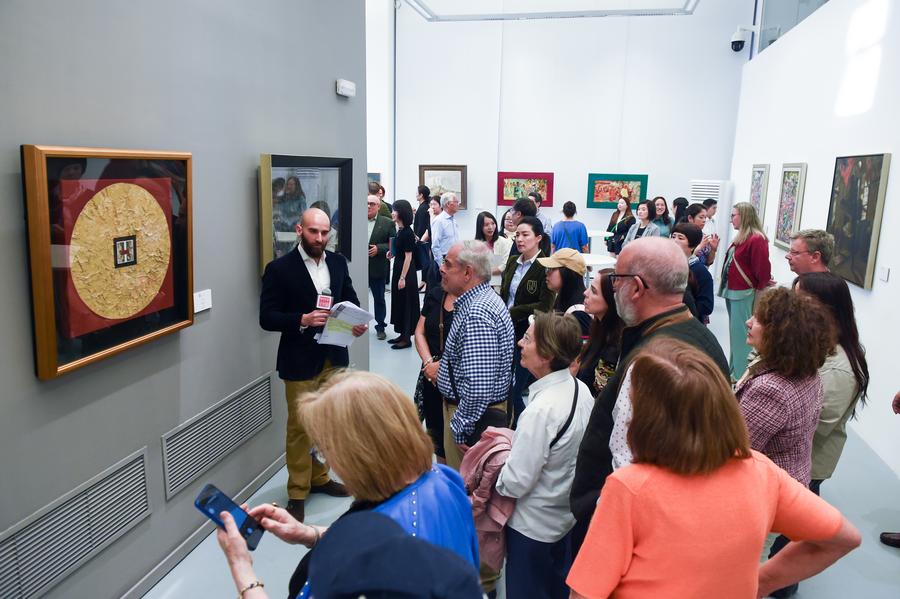
The Cervantes Institute of Beijing?is an independent institute. Our library is open to the public. However, if you would like to borrow books or DVDs, you need to have a membership. We have thousands of books available at the library and on our website. As we have a virtual library connected with the Cervantes network worldwide, you can access thousands of books in Spanish online.
The aim of the Cervantes Institute is not only to promote culture from Spain but also from Spanish-speaking countries. Although we teach Spanish (l’espa?ol), our work is dedicated to serving Spaniards in a broad sense, as well as Spanish speakers who reside not only in South America but also in Africa, including Equatorial Guinea, and in the Philippines and in many other countries worldwide.
Now Spanish is the most spoken language after English and Chinese.
Sun Chao: Spanish?is?one of the?most common languages?in?the?world?
Isabel Cervera:?Yes, you are right. English is the most widely spoken language, and considering only native speakers, Chinese has the most speakers because there are more than 1.4 billion Chinese speakers. There are around 600 million Spanish-speaking people in the world, so it is very important for us to collaborate with all the Spanish-speaking countries.
Many universities in China have departments that teach Spanish and have very good teachers, for example, at Peking University, Beijing Foreign Studies University, Beijing Language and Culture University in Beijing, and also in Shanghai, Tianjin, Chengdu and Dalian and other cities. There are about 99 places in China now where students can learn Spanish at the various schools. So, it’s very popular among students to learn Spanish, not only as a major but also as a second or even third foreign language. Consequently, more and more people in China are learning Spanish. This is significant because while many people speak English, fewer speak Spanish, which could be advantageous for their professional careers. And in summer and on weekends, our institute?has special programs for kids and parents.
Sun Chao: Nowadays?Spanish culture is more and more popular to Chinese and global audience. I remembered watching a great Spanish?movie?Contratiempo?(《看不見的客人》).
Isabel Cervera:?In Spain?we have very good creators and creative ideas in all types of arts, in movie, in animation, in writing, in theatre, in dance?and so on. Be more creative?is also something that Spain and China need to explore more together.
I came to China to strengthen the relationships between Chinese people and Spanish-speaking people. I believe that Spain and South American countries have appealing cultures that are very much appreciated by the Chinese people.
One of the challenges of the Cervantes Institute worldwide is to be a place not only for teaching or learning Spanish but also for understanding Spanish culture. This makes us an institute not just for language but also for culture and people-to-people exchanges.
Sun Chao: I know that you have deep knowledge and understanding on Chinese artists and culture. When I look around, I cannot?help noticing?that there are so many Chinese?books, paintings,?and arts?in your?office?and in the institute.?April 23 is the World Book Day, I wonder that what?is your favorite Chinese book?
Isabel Cervera:?It’s very hard for me to say only one favorite Chinese book. When I was a student, I studied a lot of Chinese classical literature, such as A Dream of Red Mansions?(《紅樓夢 》) which I like very much because it has been translated into Spanish, so I could read it in Spanish. One?other?my favorite books is the Peony Pavilion?(《牡丹亭》).
At the beginning?of my journey of learning Chinese, I?was?introduced to?the classical literature. Later I also read booked from Chinese contemporary writers and women writers.?Luckily, we have good?translators, so now we have the chances?to read more Chinese?books.
Furthermore, I think that we have a lot of things in common. One commonality is that our people are both very creative.?I also love?Chinese?pottery, ceramic, painting, calligraphy, and modern design. So I really enjoy?being?here in China.
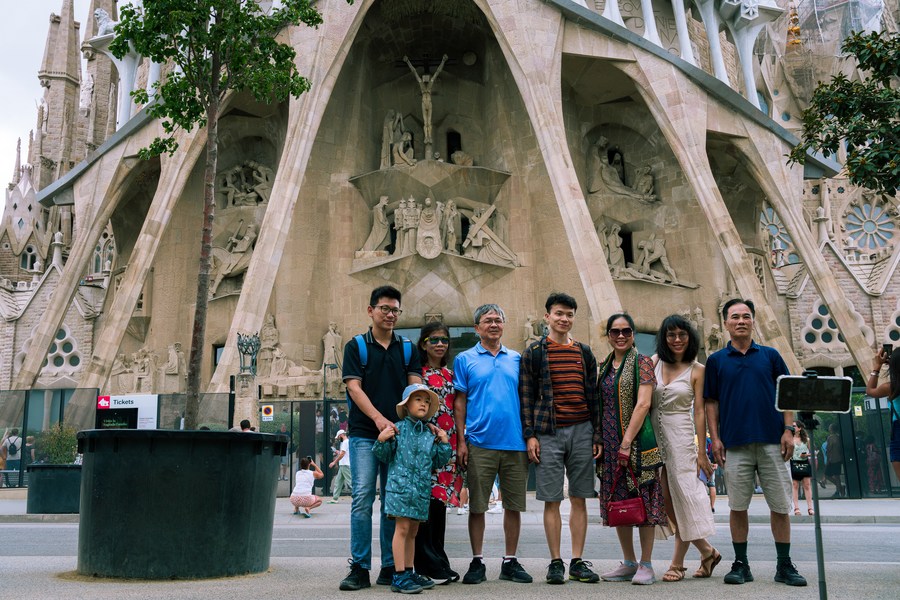
Sun Chao: You must have visited many Chinese cities. I am sure there are?many?interesting experiences?in?your trips.
Isabel Cervera:?In fact, I think China is so big and so fascinating that you have no time to visit it all?in your life.
When I first came to China as a student,?I had a lot of experiences?traveling through China. At that time, China was not like what it is today. I remember?vividly the?trips?to Xinjiang,?to Dunhuang?and to Mogao Caves. I love these places and I have been there several times.?I appreciate cultural heritages and unique landscapes?in China.
I also have a great fondness for modern art in China, where I can visit all the new places, buildings, architecture and so on. Because?I also teach contemporary Chinese art. Therefore, I believe we can appreciate both past and present cultures in China.?China has helped broaden my horizons and inspired me?with new concepts.
China has done a good job in terms of development. In about 40 years, everything has changed. Everything surprised you, everything interested you, and everything seized you. Nowadays, it is really nice?experience?to travel in China. For example, the high-speed train is an icon of Chinese modernization.
Moreover, I can see that Chinese young people are much more professional than before because they have the opportunities to study and to receive?education. They can speak foreign languages much better. They work very hard and they understand that they play an important role in their country.
Sun Chao: If?one day you leave China for home, what will you?miss most?
Isabel Cervera:?When I was?young, I?studied Chinese in Peking University and?Central Academy of Fine Arts?in?the 80s.?At that time, Central Academy of Fine Arts was in Wangfujing Street.
Later I work as a teacher and I teach Chinese culture at the University of Madrid. I’m very close to China and often come here for research with Spanish and Chinese colleagues, to conduct cultural activities, or to participate in exhibitions. I have maintained a close connection with China from that time until today, visiting at least once a year.
I like Chinese food very much. Although we have Chinese restaurants in Spain, they are not quite the same. My favorite Chinese dish is eggplant?because it can be cooked in various?ways.?Also, I like Beijing cuisine very much, like Peking Duck.
Chinese people love Spanish?cuisine?too. Firstly,?because our lifestyle is of high quality and the Spanish dishes are not expensive,?people?can enjoy many?things, such as food, wine, dancing, also shopping when they?visit Spain.
Secondly, Spanish people?are very friendly to Chinese people and?we are very close.?we both share the value of?family?and friends. I like Hutong in Beijing very much and I also see people outside just playing cards or playing yoga, which is the same in Spain. I love the daily life in Beijing. The experience of biking from one place to another, getting to know you, and having new experiences here are all memorable.?As for me, China will always be in my mind.
Sun Chao: As the tradition of my?program. I would like to invite you to share one your favorite sentence or motto.
Isabel Cervera: It is a sentence in Spanish. Please let me translate it into English which is below, We shouldn’t waste time to regret the past or worry about the future,?what matters is to complete the present.