Democratizing Global Governance: Challenges and the New Paradigm
 Facebook
 Twitter
 Linkedin
 Google +
The global challenges we face today impose the need for a new paradigm of global governance beyond just optimizing nation-states’ self-interests.
Editor’s Note: The Second International Forum on Democracy: The Shared Human Values attended by global experts has opened in Beijing on March 23. Koh King Kee, President of Centre for New Inclusive Asia, Malaysia, attended the forum and hosted a sub-forum for democracy and global governance as a moderator. He shares his insights into the global governance and challenges with China Focus during the forum.
At the G20 foreign ministers meeting held on March 2 in New Delhi, Indian Prime Minister Narendra Modi commented that multilateralism is in crisis today, and that “global governance has failed”. The developing countries would bear the brunt of the tragic consequences of this failure.
According to Mr. Modi, the architecture of global governance created after World War II has failed in preventing future wars, financial crisis, terrorism and in fostering global unity and international cooperation on issues of common interests to mankind such as pandemic and climate change.
There are ample evidences indicating that the contemporary global governance system has failed to manage the complex issues in today’s highly interdependent and interconnected world. The Covid-19 pandemic and the ongoing Russia-Ukraine military conflict are recent attestations to the failure of global governance.
The failure of global governance system
In fact, Mr. Modi is not the first to point out that global governance has failed. There are abundance of research and studies on the failure of global governance among the academia decades ago. However, the remarks coming from the leader of India, a partner of the U.S. under the Indo-Pacific Strategy and one which takes pride in being the biggest democracy on earth, bears particular significance in a world that has become increasingly divided due to the escalating geopolitical tensions between the big powers.
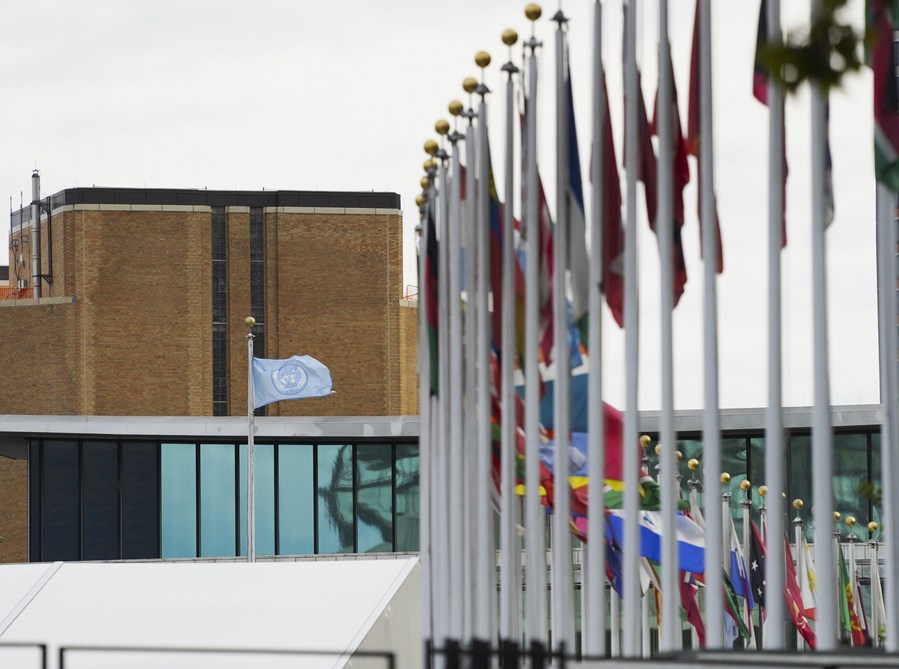
The leading institution of global governance today is the United Nations, which was founded in 1945 in the wake of the Second World War. Other key international institutions are the World Bank and International Monetary Fund created under the Bretton Wood system. The international institutions, together with the rules and norms established after WWII, constitute the structure of global governance. It is based on the concept of nation state and predominated by western values.
It is undeniable that the post WWII international system has brought peace and prosperity to the world. Globalization has propelled world prosperity to a level never in the history of mankind, albeit not evenly distributed among nations. China too has benefited from it and realized its growth and development within the prevailing international system.
When WWII ended, one-third of the world’s population was living under Western colonial rule. Since then, 80 former colonies have gained independence and UN’s membership has increased from 51 to 193.
The composition of the world GDP has changed dramatically during this period. The U.S. GDP as a percentage of world GDP has declined steadily, from 40 percent in 1960 to 24.7 percent in 2022, while China’s GDP has catapulted from a mere 4 percent in 1960 to 18.6 percent in 2022.
However, despite the sea change in the economic and political landscape of the world due to the rise of the global south, particularly the rise of China, the global governance structure has remained largely unchanged.
Failure of the global governance structure to reflect these changes has resulted in the undemocratic decision-making process of the global governance system, as the voices and legitimate rights of the developing countries are marginalized and not adequately represented proportionate to their contributions to the world economy and the size of their population.
The U.S. hegemony has becomea major cause of global governance deficit
The end of the Cold War saw the end of the bipolar world. The world became unipolar and the U.S. emerged as the sole superpower. Since then, maintaining its global supremacy has become America’s unchanged national strategic goal.
The Defense Planning Guidance for the years 1994-1999 prepared by the U.S. National Security Council in 1992, categorically declared that America’s global strategic goal is to prevent the emergence or resurgence of any rival power anywhere in the world that would constitute a threat to its global leadership. Simply put, the U.S. abandoned the collective governance system it created, instead it seeks to perpetuate its global primacy so that it could dictate its whims and will to the world.
William Kristol and Robert Kagan, co-founder of the Project for a New American Century, in an article published in Foreign Affairs in 1996 asserted that “the U.S. achieved its position of strength not by practicing a foreign policy of live and let live.”
They further argued that “American hegemony is the only reliable defense against a breakdown of peace and international order. The appropriate goal of American foreign policy, therefore, is to preserve that hegemony as far into the future as possible.”
America’s global strategic goal as stated in the Defense Planning Guidance drafted during the Bush administration has since been followed by successive U.S. presidents, from Bill Clinton to Joe Biden.
China’s meteoric rise, together with the rise of the rest of the world, has irreversibly shifted the global power dynamics. The 21st century world is no longer unipolar, but multipolar. However, rather than changing with time and global development, the U.S. deemed China’s rise as a challenge to its global supremacy.
The U.S. which is the main architect of the post WWII global governance system, has become the cause of global governance deficit due to its refusal to share power. In fact, it has become the main stumbling block to the democratization of contemporary global governance.
The U.S. propagates its own values and political system in the name of defending democracy and promoting human rights and good governance. It withdrew from international treaties and organizations such as UNESCO, the Paris Agreement and UN Human Rights Council. American exceptionalism and double standards are often the rule rather than the exception of U.S. foreign policy.
Security alliances were established on the basis of exclusive Western values and often targeted at a third country, stoking confrontation instead of promoting cooperation and coexistence. America’s economic might and domination of the global financial system are often being weaponized to serve its geopolitical interests. So are its technology and innovations, under the pretext of national security.
Democratization and reform of global governance
Globalization and technological advancements have obscured spatial bounders as the web of global economic connections grew deeper, broader, and more intricate. No country is an island in this hyperconnected and interdependent world. The tremor of a major incident in one corner of the world will reverberate across the continents and its impact be felt within days, if not hours.
Meanwhile, the world is facing a multitude of complex global issues such as climate change, terrorism, migration and food supply shortage that can only be mitigated or resolved with a holistic global approach. Western-centric framework of global governance is no longer sustainable.
There is no doubt that the world is becoming multipolar. And multipolarity has laid the foundation for the democratization of global governance. Solving global challenges require the collective resolve of all countries. No country in the world, no matter how powerful it is, whether economically or militarily, can individually solve global issues.
The global challenges we face today impose the need for a new paradigm of global governance beyond just optimizing nation-states’ self-interests. It must take into account the dynamics brought by the collective rise of the global south, globalization and technology advancement. Global governance institutions must not become tools and battlefields for great power competition.
To be effective, Global governance must base on international balance of power. The new paradigm should be one that is inclusive where power is equitably shared among several centers of influence, creating a more balanced, cooperative and sustainable global governance. Democratization of global governance is the way forward.
Global governance, that is, the collective management of common problems at the international level in the multipolar world must be one that is fair, equitable and just, based upon the spirit of multilateralism, inclusiveness and mutual respect. It must protect the interests and legitimate rights of all countries, particularly the rights and interests of the developing countries which now account for 83 percent of world population, not predominated by any grouping or superpower.
The article reflects the author’s opinions, and not necessarily the views of China Focus.