Dialogues and Removal of U.S. Tariffs Essential for China-U.S. Relations
 Facebook
 Twitter
 Linkedin
 Google +
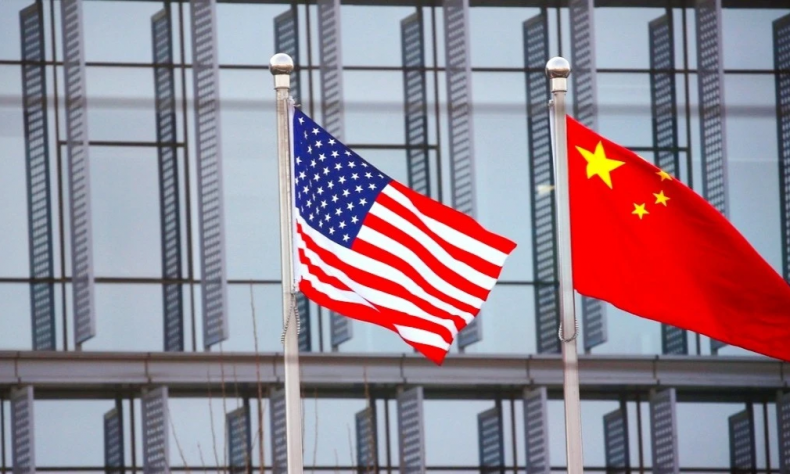
A stable and well managed China-U.S. bilateral relationship is of vital stake to peoples of both countries, and to a stable world.
The first month of Trump 2.0 saw the overall China-U.S.?bilateral relationship on two parallel tracks: track of dialogue, and track of tariff and counter-tariff.
In January, Chinese President Xi Jinping and Donald Trump had a frank phone conversation three days before the president inauguration, promising working together for a stable bilateral relationship. Four days after Trump returned to the White House, Chinese Foreign Minister Wang Yi had a phone conversation with U.S.?Secretary of State Marco Rubio during which Wang Yi reaffirmed the three principles of the China-U.S.?relationship: mutual respect, peaceful coexistence and win-win?cooperation. Secretary Rubio responded by non-support for?Taiwan independence.
On February 21, Chinese Vice-Premier He Lifeng and U.S.?Treasury Secretary Scott Bessent had a frank and constructive phone conversation on economic and trade issues, laying a foundation for institutional bilateral dialogue on economic and trade matters. All those dialogues have provided a new?beginning?for?the management of China and U.S.?bilateral relations.
In observing the general situation in the China-U.S.?relationship, three fundamentals are of key importance.
First, mutual respect for each other’s sovereignty and territorial integrity, non-aggression and non-interference of the internal affairs. The most important one among all the issues is China’s top red-line—Taiwan is part of China?and?Chinese central government has the sovereignty over Taiwan. Marco Rubio, in the conversation, repeated “one?China policy”. We have to watch closely what Trump Administration will do next and whether it will keep its words.
Second, peaceful coexistence. The White House issued a president memo “American First Investment Policy”, listing China as the chief adversary and thus blocking China from investing in U.S.?infrastructure, capital market and technology. It also issued a stern ban or strict restrictions on U.S.?business and technology investment in China. It shows that Trump Administration has further lifted China’s strategic position as a key adversary and competitor to the U.S. The strategy, with no big moves at this point, is most likely to evolve up in coming months with more containing and de-coupling on the way.
Thirdly, win-win?cooperation. The unilateral 10 percent tariff imposed by Trump on all Chinese exports to the U.S.?market just 11 days after his presidential inauguration, has?met a strong opposition and counter measures?from China. The 10 percent tariff on Chinese goods is not the end of the US tariffs. Trump said on Feb. 27 that additional 10 percent tariff on China will start on March 4, making the total new tariff 20 percent.?A reciprocal tariff mechanism has been announced on?February?2, and the revocation of China PNTR status is also in the process of law making. If?implemented, it will cause a serious setback in the bilateral trade relations between the world’s?two largest economies, and a major destruction to the multilateral trading system with WTO at the center.
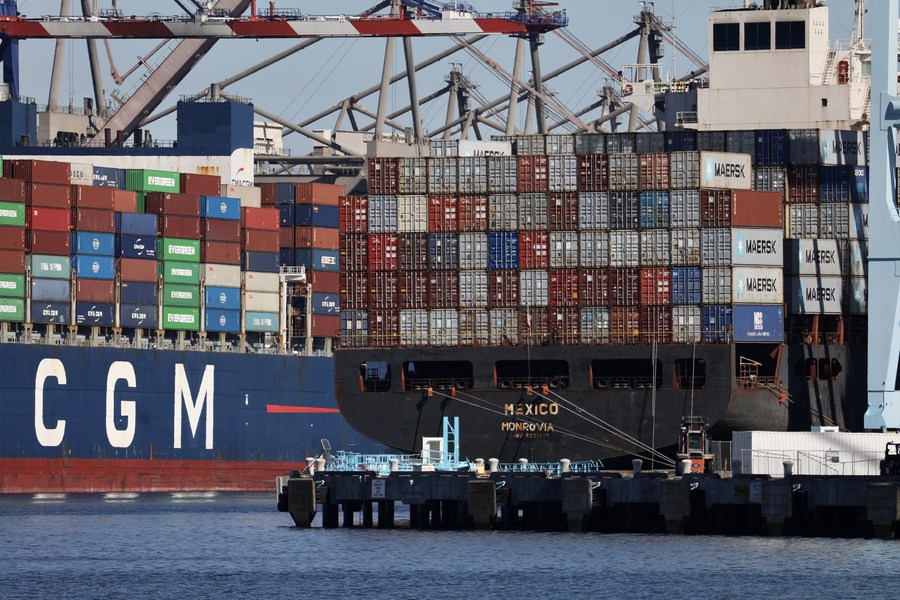
Both Vice-Premier He Lifeng and Commerce Minister Wang Wentao have expressed deep concerns and strong discontent on Washington’s new?tariff offensive, saying it will?severely damage the bilateral trade relations. China has also sued the U.S.?side at WTO.
Scott Bessent, the U.S.?Secretary of Treasury, listed three major concerns in his phone conversation?with?Chinese Vice Premier He Lifeng, including narcotics, trade imbalances and Chinese trade policies. However, none of the three concerns justifies for the tariffs.
The fentanyl and narcotics issue, already under China-U.S.?government collaboration over many years, is totally non-relevant to trade.
The chronicle trade imbalance is?caused by?the U.S.?economic and trade structure, not a China issue.
First, facts over the past 12 years have proved that tariffs accelerated the U.S.?trade deficits. During the second Obama term 2013-2016, while no substantive tariffs were imposed, total U.S.?global merchandise trade deficit only grew by $4.8 billion. During 2018-2024, when Trump imposed massive tariffs on Chinese goods and on steel and aluminum,?and Joe Biden continued the tariff?policy, total U.S.?global trade deficit swelled from $870.36 billion to $1202.21 billion, or by $331.86 billion during the past six?years, and in particular, it shot up by $139.95 billion in 2024 alone. It does not make sense to check trade deficit by tariffs.
Second, many countries and regions have contributed to the U.S.?trade deficit. China is not the only one. In 2024, the U.S.?had trade deficit with 99 countries and regions of the world, covering all the continents. In 2024, its trade deficits varied from $235.15 billion with North America (Canada and Mexico), $235.57 billion with EU and $509.82 billion with Trans-Pacific Area. Its trade deficit with China, at $295.40 billion, was actually 29.2 percent lower than that in 2018 ($417.26 billion), with China’s share in U.S.?global trade deficit halved from 47.9?percent in 2018 to?24.6?percent. The fastest deficit growth over the past six years came from Mexico and Canada (up $139.09 billion combined), Vietnam (up $84.00 billion), and EU (up?$66.22 billion). Hence, tariffing China will do nothing for trade rebalance.
Thirdly, the U.S.?trade deficit is a structural issue. The U.S. imports?hold?comparative advantages over its homegrown goods. In 2024 alone, the U.S.?exports of consumer goods fell by $879 million while its imports increased by $48.42 billion. Its exports of capital goods (not including automotives and parts) increased by $40.20 billion while its imports rose by $103.31 billion, showing a clear comparative advantage of imports over its own products. Total U.S.?imports in 2024 increased by $187.07 billion, or 6.0 percent, to $3295.58 billion, while its exports increased by $47.12 billion, or only 2.3 percent. The U.S.?trade deficit grew by $139.95 billion in a single year.
The U.S.?concerns on Chinese trade policies are no reason for its tariffs as well, as its unilateral tariff is totally breaking the WTO rules, especially the core of WTO multilateral trading system?— unconditional,?non-discrimination and most favor nation treatment to all WTO members. Tariffs can only be changed through bilateral, regional or multilateral negotiations. The U.S.?concerns on China’s trade policy should be shifted to its own trade policies which have been the largest breaker of WTO rules. Up to today, there are 633 cases in WTO dispute settlement mechanism, with 160 cases of U.S.?as respondent, over one quarter of the total, larger than China (52) and EU (97) combined.
A stable and well managed China-U.S.?bilateral relationship is of vital stake to peoples of both countries, and to a stable world. The issue of immediate urgency is revocation of U.S.?unilateral tariffs on Chinese goods, with refraining on further tariffs. Parallel to the trade track, effective dialogue track covering strategy, economy, trade, technology, culture, etc. should be set up in coming months for managing differences and enhancing cooperation. The future of the China and U.S.?relationship, improves or deteriorates, depends largely on the joint efforts, and on the right track over the next few months.
The article reflects the author’s opinions, and not necessarily the views of China Focus.