Ending the Chaos and Restoring Order
 Facebook
 Twitter
 Linkedin
 Google +
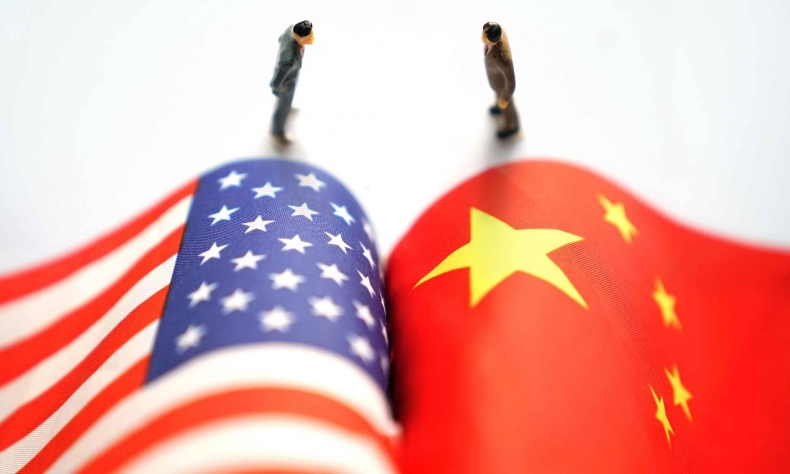
Bringing U.S.-China relations back to the normal track through dialogue and restarting bilateral cooperation in various fields will be a wise option for the new government.
As observers and scholars alike scramble to predict the future of U.S.-China relations under the incoming Biden administration, President Trump once again successfully proved that he is still the one who calls the shots. Being totally engrossed in his loss in the election, plotting schemes to overturn the election result, and continuously staying blind to his country’s spiking COVID-19 cases; on January 5, Mr. Trump found the time to sign an executive order banning transactions with eight Chinese software applications, including Alipay and WeChat Pay, according to the White House. Once again, national security is the outgoing administration’s major concern cited behind the move.
On his watch, President Trump has successfully altered the country’s China strategy with his signature erratic and haphazard decisions and moves. Starting a trade war, levying duties, sanctioning Chinese tech firms, and even attempting to delist Chinese telecom companies from the New York Stock Exchange, the Trump administration has almost used up all the tools in its arsenal to contain China, defying international practices and WTO rules. All seems to be an obvious attempt to serve his election campaign by pandering to his supporters. And National security is the major stated reason. Thanks to the administration’s relentless efforts to stigmatize, slander, and demonize the world second largest economy, Trump did successfully sell his tough stance on China, which has been widely accepted in both Republican and Democratic parties, further evidenced by the record high level of the American people’s unfavorable attitudes toward China.
Nonetheless, despite the last salvos of the commander in chief in his waning presidency, people now seem more concerned about the incoming administration’s stand and strategy on China. Is China the biggest national security threat to the U.S. for the new government? Will China-U.S. relations take a U-turn?
Rules and Order
“I think the biggest threat to America right now in terms of breaking up our security and our alliances is Russia. Secondly, I think that the biggest competitor is China. And depending on how we handle that will determine whether we’re competitors or we end up being in a more serious competition relating to force.” Biden first clarified his stance about China in an interview with CBS News’ “60 Minutes” in late October, responding to the interviewer’s question, “Which country is the biggest threat to America?”
Biden has been known for his endorsement of the U.S. granting China the status of permanent normal trading partner in 2000. He contended that integrating China into the global trading system would make China play by international rules and benefit American workers. Biden is right about his speculation of China in this sense.
Since its accession to the World Trade Organization in 2001, China has further improved its socialist market economy system, aligned its policies with multilateral trade rules in all areas, honored its commitments by removing barriers for trade in goods and services, and strengthened intellectual property rights (IPR) protection. China has reviewed and revised laws and regulations to make them in line with WTO rules, involving 2,300 laws, regulations, and departmental rules at the central government level, and 190,000 policies and regulations at the sub-central government levels, according to the white paper China and the World Trade Organization released in July 2018. Since 2001, intellectual property royalties paid by China to foreign copyright holders has registered an annual growth of 17 percent, reaching US $28.6 billion in 2017, the white paper states. In addition, China has led the world in invention patent applications for nine consecutive years.
“Notwithstanding COVID-19, the pace of opening-up in China has continued to quicken this year,” Chinese President Xi Jinping said in his keynote speech delivered at the opening ceremony of the third China International Import Expo in early November 2020. He pointed out that the items on the national negative list for foreign investment have been cut from 40 to 33; the number of pilot free trade zones has increased from 18 to 21; the Master Plan for the Development of Hainan Free Trade Port and the Implementation Plan for Further Reform and Opening-up in Shenzhen have both been released and taken effect.
Right before the beginning of 2021, China and the EU reached an investment deal. “The balanced, high-quality, and mutually beneficial agreement demonstrates China’s resolve and confidence to promote high-level opening-up,” President Xi said. It will promote recovery of the world economy, facilitate global trade and the global economy, boost the international community’s confidence toward economic globalization and free trade, and make important contributions to building an open world economy, he added.
Since China’s entry to the WTO, China has become closely integrated with the world as a firm supporter and defender of international multilateralism rules.
Biden is also known as someone who respects the international rules. At an interview with CNN in early December, Biden elaborated his approach toward the U.S.-China relationship, “If you (China) play by the international rule, we’ll play with you; if you don’t, we’re not gonna play.”
As for whether the U.S.-China relationship will take a U-turn, we still need to wait and see. The president-elect indicated in early December he would conduct a full review of the trading relationship with China and consult with allies to develop a coherent strategy before making changes to America’s trade terms about China. “I’m not going to make any immediate moves,” he said.
In spite of the many uncertainties, the volatile state of the bilateral relations is believed to soon come to the end as a stable situation seems to be coming into sight.
A False Proposition
“The conventional wisdom these days is that U.S. policy on China will not change,” A senior fellow at the Hudson Institute Bruno Ma??es pointed out in his article published in the Foreign Policy in December.With the zero-sum mentality, some politicians in Washington cannot seem to tolerate an ascendant China. They firmly believe that when it eclipses the U.S. economically, technically, and militarily, China will dominate the world.
To make sensible decisions, those American politicians should at least know something about Chinese culture and policies. Chinese culture values inclusiveness, harmony, and coexistence. Aggressiveness and combativeness has never been a trait of the Chinese nation. As the country’s symbolic monument, the Great Wall signifies, the country has paid more attention to securing peace by erecting fortifications to avoid war, instead of starting a war. As for China’s foreign policies, Xi Jinping Thought on Diplomacy makes clear the guiding principle, core values, and missions of the country’s diplomacy. Xi’s thought emphasizes that China should carry out its diplomacy with the mission to realize national rejuvenation, and advance the building of a community with a shared future for humankind with the aim to maintain world peace and promote common development, instead of seeking hegemony, waging wars, and bullying the weak.
Besides, China is still far from being a match for the United States in terms of economic and technological strength. For example, in the field of artificial intelligence, a study released in August 2019 by the Center for Data Innovation, a research institute based in Washington and Brussels, found, “The United States still leads in absolute terms.” The United States ranked first in four of the study’s six key metrics: talent, research, development, and hardware. China led in the other two, adoption of AI technology and access to data that feeds it.
However, U.S. policy today is, “To find any tool to act unilaterally against China — from tariffs to controls on US technology exports,” a CNN commentary piece by Michael Hirson and Paul Triolo states on December 6. It suggests to the next administration to “avoid seeing China as the bogeyman behind every corner,” as now American politicians portray virtually every issue touching China now as a national security threat. It further points out that taken too far, such arguments undermine US moral authority or are counterproductive in other ways.
Cooperation, the Right Option
Antagonizing China has not brought any benefit to the United States, but has taken a toll on American consumers and investors and the economy on the whole.
Influenced by the trade war, “U.S. economic growth slowed, business investment froze, and companies didn’t hire as many people. Across the nation, a lot of farmers went bankrupt, and the manufacturing and freight transportation sectors have hit lows not seen since the last recession. Trump’s actions amounted to one of the largest tax increases in years,” the Washington Post correspondent Heather Long observed.
A study by Moody’s Analytics in September 2019 found that the trade war had already cost the U.S. economy nearly 300,000 jobs and an estimated 0.3 percent of real GDP. Research from the Federal Reserve Bank of New York and Columbia University released in May 2020 found that U.S. companies lost at least US $1.7 trillion in the value of their stocks as a result of U.S. tariffs imposed on imports from China. As Ryan Hass, formerly the Director for China on the National Security Council during President Barack Obama’s second term, pointed out in his article “More pain than gain: How the U.S.-China trade war hurt America,” numerous studies have found that U.S. companies primarily paid for U.S. tariffs, with the cost estimated at nearly US $46 billion.
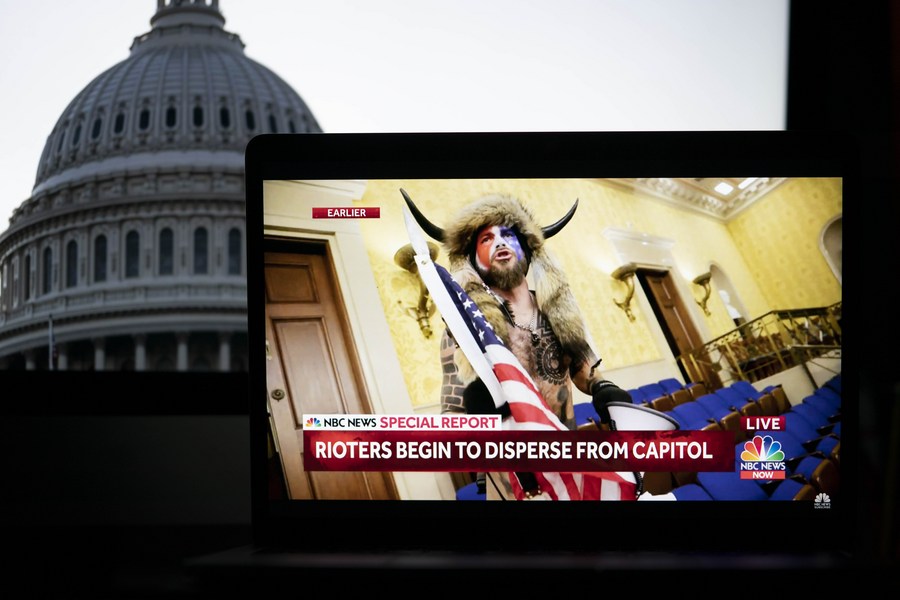
At the time of writing this article, the U.S. Capitol was besieged by rioters venting their dissatisfaction with the presidential election result and trying to thwart the power transfer. As a December 2020 CNN opinion piece goes, “Competing against China won’t heal our political divides, but both parties should strive to show that the United States can govern itself competently.”
Once in the Oval Office, containing the COVID-19, reinvigorating the economy, and coping with issues related to climate change are expected to be the incoming president’s top priorities. Bringing U.S.-China relations back to the normal track through dialogue and restarting bilateral cooperation in various fields will be a wise option for the new government.
“China’s policy towards the United States is always stable and consistent. With deeply interwoven interests between the two countries, neither can do without the other, remodel the other, or replace the other. The bilateral relationship is no zero-sum game; the success of one does not have to entail the other’s failure. While China-U.S. cooperation can make great things happen for the two countries and the entire world, China-U.S. confrontation would definitely spell disaster not only for both countries but also humanity as a whole,” China’s State Councilor and Foreign Minister Wang Yi said on the evening of December 18, 2020, during a videoconference with the Asia Society in Beijing.