Exchange of Ethnic Culture Brings Stability and Prosperity in a Multiethnic Country
 Facebook
 Twitter
 Linkedin
 Google +
In China, unity fosters diversity, and the diversity enriches the unity. The process of collision and integration was not aimed at eliminating each other but at enhancing each other, resulting in the emergence of a more inclusive civilization.
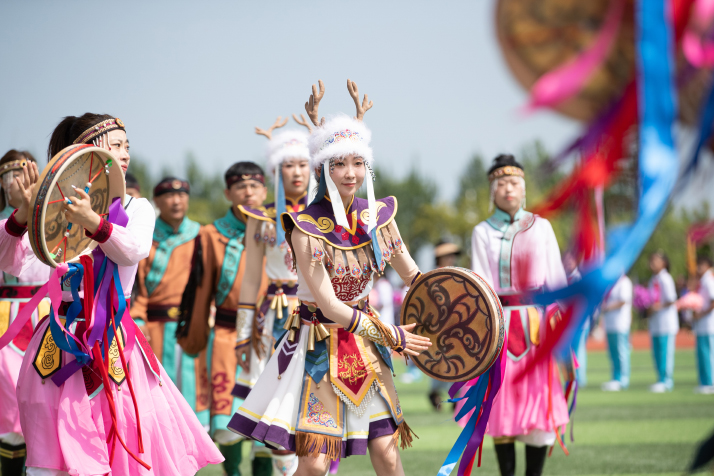
In a captivating video that has swept across Chinese social media in recent weeks, a middle-aged dancer moves with masculine energy, his bold and graceful gestures expressing the untamed spirit of the Mongolian grasslands. This leading performer is Jiang Tiehong, the 56-year-old dean of the College of Dance at Minzu University of China based in Beijing. Jiang is the fifth-generation lead of this iconic dance piece Keep Galloping. Many netizens commented that he epitomizes the idea of the “tough man with a gentle heart.”
Born into a family of dancers in the northeastern province of Heilongjiang, Jiang, a member of China’s Korean ethnicity, grew up in Inner Mongolia Autonomous Region, immersed in the rich cultural tapestry of the region. It was there that his father, a renowned dancer and choreographer, instilled in him a deep appreciation for the rhythmic, full-bodied movements of Mongolian folk dance.
Keep Galloping, created in the early 1980s, was a landmark work that drew inspiration from the spirited movements of Mongolian horse people. The dance captured the boundless energy and aspirations of China in transition since the initiation of reform and opening up in 1978.
“Keep Galloping has not only provided the spiritual nourishment that people sought during that transformative era, but also inspired generation after generation to forge ahead,” Jiang said. As the dance’s torch-bearer, he has dedicated himself to preserving its essential Mongolian character while continuously refining and evolving the piece. “We must preserve the original cultural flavors and build upon them to better express the essence of national identity through dance.”
As the video of Jiang’s performance spreads online, more people are discovering the power of this dance. Many netizens expressed in the comment section of his video their admiration for the artist, as well as for the charm of ethnic dances and culture.
“Helping more people understand the profundity and richness of Chinese ethnic culture is a truly meaningful endeavor,” Jiang added.
A multiethnic country
About 3,000 ethnic groups live in over 200 countries and regions in today’s world. The overwhelming majority of countries are inhabited by multiethnic groups. China is one of them.
China has 56 ethnic groups. The Han ethnic group has the largest population, accounting for 91.11 percent of the total, according to the seventh national census, conducted in 2020. The populations of the other 55 ethnic groups are relatively small, and so they are customarily referred to as ethnic minorities.
The Han Chinese population grew by 4.93 percent between 2010 and 2020, while the population of the ethnic minorities collectively grew by 10.26 percent. During that period, the ethnic minority population’s proportion of the total increased by 0.4 percentage points. The populations of the ethnic groups vary greatly in number. Some have a population of several million, while some only have several?thousand.
Some of China’s ethnic groups inhabit vast areas, while others live in individual compact communities in small areas or side by side with other groups. In some cases, minority peoples can be found living in compact communities in areas inhabited mainly by Han people, while in other cases the situation is the other way round. Many minority peoples have part of their population living in one or more compact communities and the rest are scattered across the country.
China’s Ethnic Policy and Common Prosperity and Development of All Ethnic Groups, a white paper published by the Information Office of the State Council, the country’s highest state administrative organ, in September 2009, detailed the diverse origins and development of China’s ethnic groups and the local conditions that had shaped them.
Some 4,000 to 5,000 years ago, five major ethnic groups—the Huaxia, Dongyi, Nanman, Xirong and Beidi—emerged on what is now the Chinese territory. Through continuous migration, living together, intermarriage and exchange, the five ethnic groups gradually became integrated into one, from which new ethnic groups continually sprang up. Some of the latter remain distinct to this day, while others have disappeared in the course of history due to wars, deterioration of the ecological environment or loss of identity. Although the origins and histories of ethnic groups in China are different, the overall trend of their development is to form a unified, stable country with multiple ethnic groups.
“As exchanges and fusion among various ethnic groups deepened, the distribution pattern of living together and complementing each other increasingly solidified the relationship of interdependence and common development,” the white paper said.
All ethnic groups enjoy the freedom of religious belief, have the right to use and develop their own spoken and written languages, and have the liberty to preserve or change their folkways and customs.
Over the years, the Chinese Government has adopted various methods to eliminate factors undermining the unity of all ethnic groups, and maintained this unity, striving to realize common prosperity and development through the concerted efforts of all ethnic groups.
Before the founding of the People’s Republic of China in 1949, most minority areas were economically and socially underdeveloped and lacked infrastructure. For example, Xinjiang Uygur Autonomous Region had no railway and Xizang Autonomous Region even had no highway. People of the ethnic minorities engaged mainly in traditional agriculture and herding.
The Constitution stipulates that “The state does its utmost to promote the common prosperity of all ethnic groups in the country.” Since the adoption of the reform and opening-up policy, the government has carried out several significant measures to quicken the advancement of the ethnic minorities and minority areas. With assistance from economically advanced parts of China and preferential policies, the ethnic minorities and minority areas have left behind stark poverty and backwardness and achieved tangible results in their economic and social progress.
From 2012 to 2022, the per-capita disposable income of urban residents in areas with large ethnic minority populations increased by an annual average of 7.7 percent, and that for rural residents increased by 10.2 percent, according to the National Ethnic Affairs Commission. Additionally, a large amount of infrastructure has been built in these areas, including railways and industrial parks.
“Helping people to improve their lives is the foundation of forging a strong sense of community for the Chinese nation, because they can keenly feel the support from the country,” Pan Wei, chair professor of the faculty of social sciences and Director of the Institute of Global and Public Affairs at the University of Macao, said at a forum on June 12.
He noted that over the past decade, enhanced exchange and interaction have helped people from different ethnic groups in China learn more about one another and become more united. This has in turn brought greater stability and prosperity to the country.
Unity in diversity
According to Pan Yue, head of the National Ethnic Affairs Commission, the Chinese civilization has always been inclusive and never sought to replace diverse cultures with a single one. “In China, unity fosters diversity, and the diversity enriches the unity. And the process of collision and integration was not aimed at eliminating each other but at enhancing each other, resulting in the emergence of a more inclusive civilization,” Pan Yue said at the forum on June 12.
Pan also emphasized that efforts to protect the cultural heritage of different ethnic groups will be further stepped up in the future, contrary to claims from some in the West that such efforts are being weakened. “It’s the Chinese nation’s responsibility to protect ethnic languages and cultures that have always been inseparable parts of the Chinese civilization,” he said.
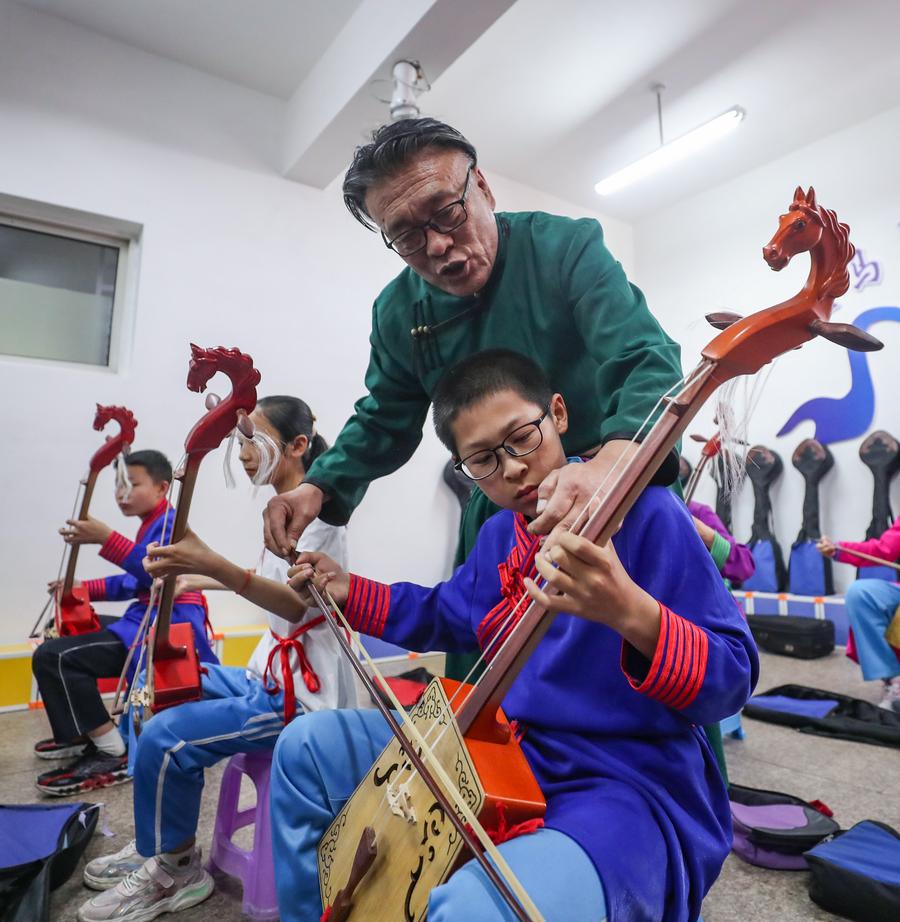
In addition to government initiatives, ethnic communities have also been proactive in sustaining their traditions at the grassroots level. Indigenous language education, folk festivals, and the passing down of artisanal skills from one generation to the next all contribute to the vibrant cultural mosaic that defines contemporary China. Social media and the Internet have further empowered minority groups to share their stories and connect with wider audiences through short videos, livestreams, photos and other media. For example, on Douyin, the Chinese version of TikTok, hashtags related to ethnic culture have attracted hundreds of billions of views. Douyin has also launched incentive programs for livestream anchors who focus on promoting ethnic music and dance.
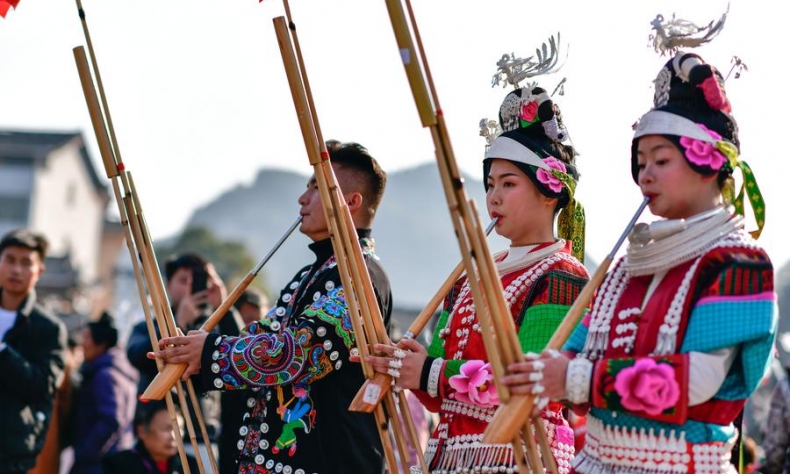
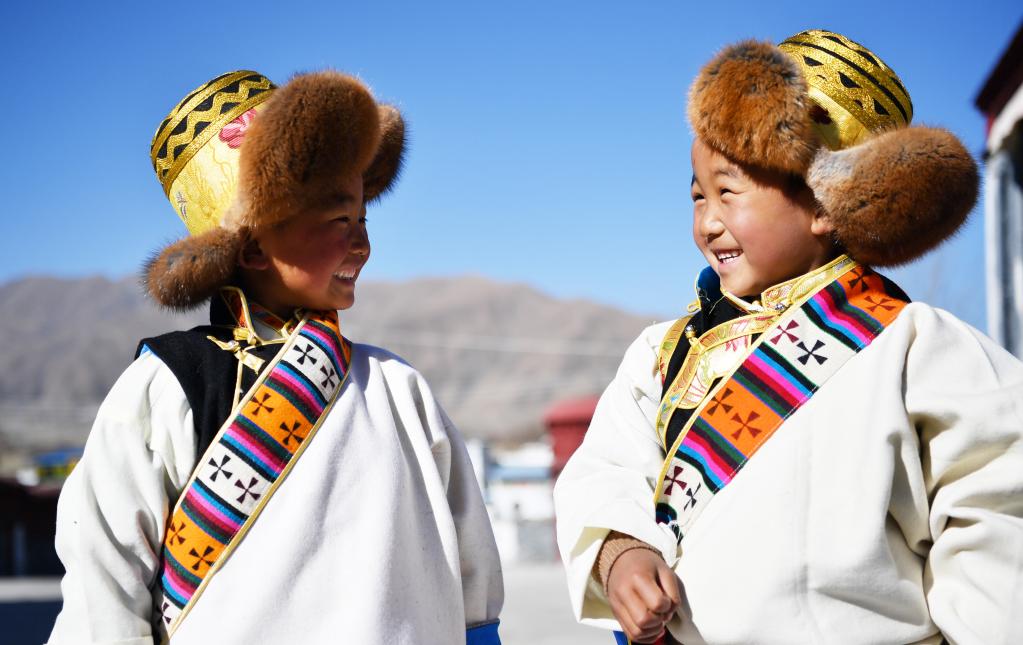
In recent years, there has been growing incorporation of traditional ethnic costumes and patterns into Chinese fashion. Designers have drawn inspiration from the vibrant textiles and intricate embroidery of distinct ethnic attire, reinterpreting these cultural elements for contemporary apparel and accessories. Garments featuring bold geometric patterns, vibrant colors and ornate embellishments inspired by Tibetan, Miao, Dong and other ethnic minority styles have become highly sought-after, both domestically and internationally. This cross-pollination of traditional craftsmanship and modern fashion has not only elevated the visibility of China’s diverse cultural heritage, but also allowed these time-honored designs to transcend their regional roots and reach a wider audience.
With the embracing of ethnic fashion trends, the active preservation of festivals and traditions, and greater digital exposure, it has become very commonplace for both Chinese and international tourists to immerse themselves in these vibrant ethnic cultural experiences when traveling around the diverse regions of China. These experiences have now become an integral part of the China travel experience.
“We have been seeing a sales increase in our products,” Pu Xinyuan, a salesperson at a workshop featuring Xilankapu, a type of brocade that is part of traditional Tujia ethnic culture, at a tourist resort in Chongqing, told Beijing Review. “Many tourists, especially young people, have bought them as souvenirs. Some even bought more online when they were back home and gave them to their friends.”
“The popularity of ethnic culture is benefiting the people of these ethnic groups as well, as it makes it possible for them to increase their incomes,” Pu added. “Take us as an example, the increased income of ethnic embroiderers and artists can ensure the sustained development of Tujia culture and Xilankapu, forming a virtuous cycle.”